
Federal Judge Deals Another Blow to Trump Mail Voting Restrictions
A federal judge has again ruled against the Trump administration's executive order that sought to limit mail-in voting, raising the stakes for a potential Supreme Court showdown less than 90 days before the November midterm elections. U.S. District Court Judge Indira Talwani's ruling on Tuesday reinforces an earlier injunction that blocked the core provisions of the order, which would have empowered the U.S. Postal Service to determine who receives ballots and required states to consult federally compiled voter lists.
The decision adds another legal obstacle for the administration as it pushes forward with an emergency appeal to the Supreme Court. Judge Talwani's opinion emphasized the urgency of preventing election rule changes so close to Election Day, writing that the timing "underscores the critical need for an injunction to prevent Defendants from changing election rules on the eve of the election." The latest ruling comes in response to a new challenge from Democratic state attorneys general, who have argued the order represents an unconstitutional federal overreach into state-run elections.
The order, signed by President Trump in March, was the second attempt by the administration to set national election rules. The initial version was already blocked in June when Judge Talwani sided with the plaintiffs in granting summary judgment. Tuesday's decision specifically addressed the revised order and its implementation, finding that the administration's proposals still violate the separation of powers by giving the Postal Service a role in voter eligibility determinations.
Why the Mail Voting Fight Matters for the 2026 Midterms
At the heart of the legal battle is a fundamental question about election administration: who has the authority to decide how ballots are distributed and collected? The Trump administration's executive order directed the Department of Homeland Security to compile lists of confirmed U.S. citizens eligible to vote for states to consult, and ordered the USPS to only deliver ballots to voters on each state's approved mail-in ballot list. This directly conflicts with existing state laws that govern absentee and mail voting procedures.
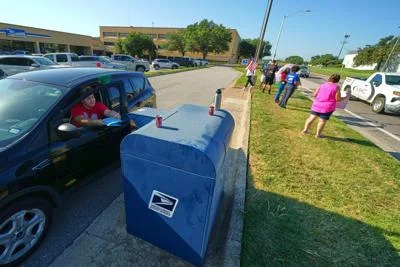
Election officials across the country have voiced concerns about the practical consequences of these changes, particularly regarding postal delivery timelines. Data from earlier this year shows that Postal Service operational changes have already affected how quickly mail is postmarked, with ballots placed in mailboxes no longer guaranteed to receive the same-day postmark that voters have historically expected. Washington state Attorney General Nick Brown has publicly urged voters to use locally controlled ballot drop boxes instead of the federal mail system, citing the risk of delays or potential interference.
"We, and me personally as a messaging issue, encourage people to use our ballot drop boxes rather than the mail system; just to avoid any potential delays or errors or frankly at this stage attempts to interfere by the federal government," Brown told USA TODAY. "Our ballot boxes are locally controlled and operated and don't involve the federal government. We generally encourage that as the best way to get people's votes in."
The case has become a flashpoint in the broader debate over election integrity and voting access. Supporters of the executive order argue that federal oversight is necessary to prevent voter fraud and ensure that only eligible citizens cast ballots. Opponents contend that the order is a solution in search of a problem, pointing to the absence of widespread voter fraud evidence and warning that restrictive changes could disenfranchise eligible voters, particularly those in rural areas or without reliable transportation to in-person polling places.
The Postal Service's Role Under Scrutiny
The inclusion of the U.S. Postal Service in the executive order has raised eyebrows among legal scholars and election experts. Historically, the USPS has served as a neutral delivery mechanism for ballots, without any role in determining voter eligibility. The order's directive to withhold ballots from individuals who do not appear on state-approved lists fundamentally alters this function, transforming the postal service from a passive carrier into an active arbiter of voting rights.
Judge Talwani's ruling addressed this transformation directly, noting that the order creates a system where federal personnel could make decisions about ballot delivery based on information that may be outdated or incomplete. The court found that this arrangement undermines state sovereignty over elections, a principle that has been consistently upheld throughout American legal history. The ruling also highlighted practical concerns, including the potential for administrative errors to prevent eligible voters from receiving ballots.
The Supreme Court Appeal and Its Implications
The Trump administration's request for the Supreme Court to intervene sets up a high-stakes legal confrontation with implications that extend well beyond the 2026 midterms. The administration filed its emergency appeal in late July, asking the justices to set aside the lower court decisions blocking the executive order. If the Supreme Court agrees to hear the case, it could result in a landmark ruling on the scope of executive power over federal elections.
The timing of the appeal is critical, as election officials in many states are already preparing to send out ballots. Any change to the rules at this stage could create confusion among voters and election administrators alike. Several states have already adjusted their guidance to voters, urging caution when using the mail system and promoting alternative voting methods such as drop boxes and early in-person voting.
Legal experts are divided on how the Supreme Court might rule. Some argue that the conservative majority could be sympathetic to the administration's arguments about election integrity, while others point to longstanding precedents that give states primary authority over election administration. The court's decision on whether to grant the emergency appeal could come at any time, potentially before the first ballots are mailed out in late September.
The case also intersects with ongoing political tensions surrounding the midterms. Control of both chambers of Congress is at stake, and mail voting is expected to play a significant role in determining turnout. Democrats have generally supported expanded mail voting options, while Republicans have sought stricter regulations. The executive order represents the most aggressive federal attempt to standardize mail voting procedures, making it a central issue in the campaign season.
Broader Trends and the Future of Election Administration
This legal battle reflects a broader trend of increasing federal involvement in election administration, a domain traditionally reserved for state and local governments. Over the past several election cycles, the question of who can vote, how they can vote, and what safeguards are necessary has become increasingly contested terrain. The Trump administration's executive order represents a significant departure from previous practice, asserting federal authority in ways that have not been seen in modern American history.
The implications of this case extend to public confidence in the electoral process. With each legal challenge and administrative change, voters are receiving mixed messages about the reliability and fairness of the system. Election officials on both sides of the political aisle have expressed concern that ongoing litigation could undermine trust, regardless of the eventual outcome. The promotion of alternative voting methods, such as drop boxes, is already reshaping how many Americans cast their ballots, with some states reporting record usage of these secure locations.
For the broader landscape of election reform, the case highlights the growing tension between federal standardization efforts and state-level flexibility. Proponents of centralized rules argue that a uniform approach ensures consistency and security across jurisdictions. Critics maintain that one-size-fits-all solutions fail to account for local needs and traditions. The Supreme Court's eventual decision could set a precedent that guides how future administrations approach election policy, regardless of which party holds the White House.
What This Means for Voters
For the average voter, the immediate practical implication of the ongoing legal fight is uncertainty. As the case moves through the courts, election officials are advising voters to plan ahead and use the most secure voting methods available. Drop boxes, in-person early voting, and careful attention to postal deadlines are all being emphasized in state guidance. Voters who choose to mail their ballots should be prepared for potential delays in postmarking and delivery, even if the courts ultimately strike down the executive order.
The situation also serves as a reminder of the importance of understanding one's own state's election rules. Each state has its own procedures for requesting and returning mail ballots, and those procedures may be affected by court rulings in ways that are not immediately apparent. Voters are encouraged to check with their local election officials for the most current information and to follow the guidance provided by state authorities.
As the November 3 election approaches, the legal landscape may continue to shift. The Supreme Court's decision on the emergency appeal will be pivotal, but it may not be the final word. Further litigation could follow, and Congress could potentially consider legislation to address the issues raised by the executive order. For now, election officials are focused on ensuring that the midterms proceed smoothly and that every eligible voter has the opportunity to participate.
The case also resonates with broader concerns about election security that have intensified in recent years. Debates over voter ID requirements, ballot harvesting, and electronic voting systems have all contributed to a complex and often contentious environment. The outcome of this case could influence how these other issues are resolved in the future, making it a significant development for anyone interested in the health of American democracy.
While the immediate focus is on the upcoming midterms, the legal principles at stake will have lasting consequences. The balance of power between the federal government and the states on election matters is a foundational question that has been debated since the nation's founding. The courts, and ultimately the Supreme Court, are being called upon to provide clarity on this fundamental issue. Whatever the outcome, the decision will shape the electoral landscape for years to come.
Comments