
Super El Niño Intensifies: Record Sea Levels and Flooding Risk for California
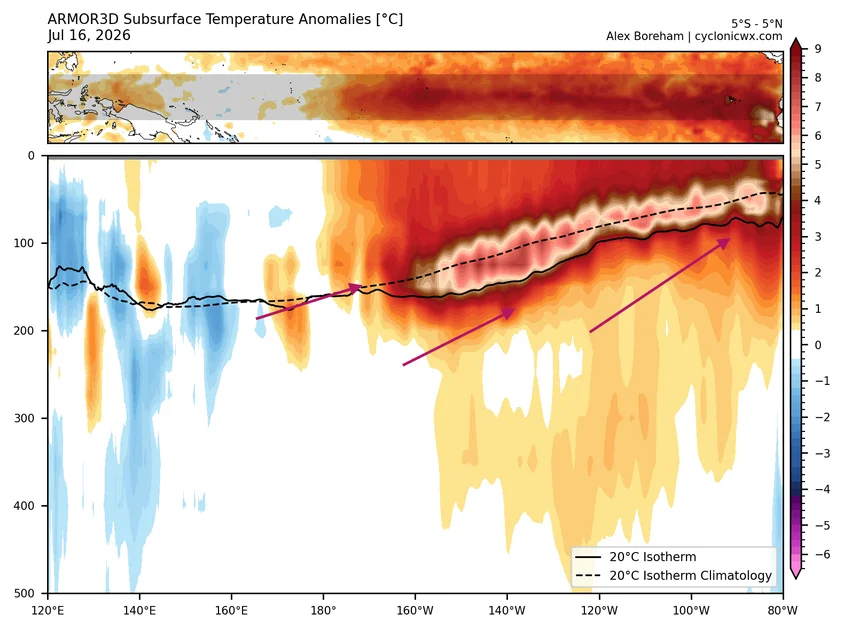
A powerful El Niño is strengthening in the Pacific Ocean, and climate scientists are warning that its impacts on the U.S. West Coast could be unprecedented. Forecasters say the event, already being labeled a "Super El Niño," is on track to become the strongest of the century, with sea surface temperatures in the eastern Pacific running more than 2°C above average.
According to the National Oceanic and Atmospheric Administration (NOAA), the weather system is expected to intensify through fall and persist into early spring 2027. The most immediate concern for California: sea levels that could rise to their highest ever recorded along the coast, leading to widespread flooding during high tides and winter storms.
"We're expecting likely the highest sea levels ever recorded on the California coast associated with this event," said Mark Merrifield, director of the UC San Diego Scripps Institution of Oceanography's Center for Climate Change Impacts and Adaptation. Speaking at a recent online town hall organized by State Senator Mike McGuire, Merrifield presented NASA satellite imagery showing sea levels in the eastern Pacific already more than half a foot above the reference state. By fall and winter, he said, "we should be seeing sea levels far above the average seasonal cycle."
The Science Behind the Surge
El Niño is a recurring climate phenomenon defined by above-average sea surface temperatures in the central and eastern equatorial Pacific. Changes in wind patterns allow warmer water to spread eastward, displacing colder water near the surface. Because warmer water expands, it causes sea surface height to rise. NASA data already shows elevated sea levels across a vast swath of the eastern Pacific, a clear signal of the unfolding event.
Daniel Swain, a prominent climate scientist at UCLA, noted during the same town hall that "the temperature of the ocean is the metric for how intense El Niño is. And right now, when we measure that temperature, it is literally higher than it has ever been for this calendar date." Swain emphasized that El Niño is not a single storm but an oscillation that reshapes the Pacific storm track, with "large-scale climate effects all around the world."
Why This Matters: The Stakes for California's Coast
California is no stranger to El Niño's destructive potential. The 1982-83 event destroyed 33 oceanfront homes and damaged 3,000 other residences, according to the California Coastal Commission. The 1997-98 El Niño brought massive flooding and 17 storm-related deaths. More recently, during the 2015-16 El Niño winter, state officials documented record coastal erosion on California beaches.
The current Super El Niño is projected to be even stronger than those historical events. The European Centre for Medium-Range Weather Forecasts gives California a 70%-100% chance of above-average rainfall along its coast this winter. That precipitation, combined with already elevated sea levels and high astronomical tides, sets the stage for repeated coastal flooding episodes.
"El Niño is never going to guarantee any particular outcome in any California winter," Swain cautioned. But he added that a weather event as strong as the one being predicted "shifts the odds in favor of a wet winter," which "will likely affect and increase the likelihood of coastal flooding, particularly during strong storm events or during king tide events."
The Compound Effect: Waves, Erosion, and High Tides
The danger is not just from rain. Merrifield and other oceanographers point to a compounding set of factors: elevated sea levels, enormous wave energy, and narrowed beaches. During El Niño events, "beaches across the entire state tend to move landward by about 30 meters (98 feet) or so," Merrifield said. That erosion removes the natural buffer that protects coastal infrastructure.
"That combination — high waves, high sea levels, high tides, and high rainfall — will contribute to considerable coastal flooding, intrusion of salt water into the groundwater, and coastal erosion," Merrifield explained. "Flooding along the Southern California coast is likely to be a major issue for the winter season."
Recent history has already offered a preview. During the 2023-24 El Niño, significant flooding struck portions of Ventura, Los Angeles, and San Diego counties. Now, with sea levels projected to be even higher, the risk is magnified.
Preparing for the Worst: Communities and Officials Respond
In anticipation of the upcoming winter, local governments are taking early action. In Long Beach, city workers have already constructed sand berms along the Alamitos Peninsula to protect against high tides and strong surf. Similar measures are being discussed in other coastal communities, from Santa Cruz to San Diego.
Senator Mike McGuire, who organized the August 4 town hall attended by nearly 6,000 people, framed the event as an effort to "separate hype from reality" and give residents "the straight scoop about what you can expect this fall and winter." The reality, according to the panel of experts, is that the conditions warrant serious preparation.
Beyond California: Broader Impacts
El Niño's effects extend far beyond the West Coast. The system is likely to alter weather patterns across the globe, influencing monsoon seasons in Asia, drought conditions in Australia, and hurricane activity in the Pacific. NOAA has warned that this El Niño could push millions of people into acute hunger in vulnerable regions, as crops fail and food supplies become disrupted.
But for the United States, the most immediate concerns are concentrated in the West. Coastal residents should expect to see high tide flooding more frequently, even on sunny days, as sea levels remain elevated throughout the winter. Inland areas could face heavy rain and the potential for landslides, especially where recent wildfires have stripped hillsides of vegetation.
The 2026 NFL Hall of Fame Class was recently enshrined in Canton, headlined by Drew Brees, Larry Fitzgerald, and Luke Kuechly, but the focus for Californians is on the looming storm season.
A Look Ahead: What This Means for the Future
The 2026 Super El Niño is a stark reminder of the growing influence of climate change on natural climate cycles. While El Niño itself is a natural phenomenon, scientists note that warmer baseline ocean temperatures are making these events more extreme. The record warmth currently observed in the eastern Pacific is both a driver of the El Niño and a product of long-term global warming.
Swain highlighted that this El Niño could turn into "an event we haven't seen before in living memory in California." The combination of a strong El Niño and a warming climate could push coastal sea levels beyond anything recorded in the modern era.
Merrifield emphasized the importance of monitoring and adaptation. "With less beach in front of the coastline, the waves will have even greater impact on the shoreline with more likelihood of flooding and undercutting of cliffs," he said. The state's coastal communities will need to invest in both short-term protections, like sand berms and seawalls, and long-term strategies, such as managed retreat and habitat restoration.
For now, the message from scientists is clear: the 2026-27 winter is likely to be wet, wild, and unpredictable. Californians should prepare for the possibility of significant flooding, coastal erosion, and travel disruptions. Residents are encouraged to stay informed through official weather forecasts and to heed any evacuation orders issued during storms.
How to Stay Informed and Prepare
Experts recommend that coastal residents take the following steps before the storm season begins:
- Check your property's flood risk and consider purchasing flood insurance.
- Keep emergency supplies, including sandbags, flashlights, and non-perishable food.
- Stay updated on NOAA forecasts and local emergency alerts.
- Be prepared for possible road closures and power outages during major storms.
- If you live in a coastal bluff area, watch for signs of erosion and report any concerns to local authorities.
As the Super El Niño continues to develop, ongoing monitoring and public communication will be critical. Scientists will be watching ocean temperatures and atmospheric patterns closely over the coming months, and they will provide updates as the winter outlook becomes clearer.
For those interested in understanding the full scope of the event, NASA and NOAA regularly publish data and imagery related to El Niño and its global effects. The situation is fluid, and new information is emerging almost daily.
In the meantime, the message from the experts is simple: take the forecasts seriously, plan ahead, and stay safe. The 2026 Super El Niño is a powerful natural phenomenon that deserves respect — and preparation.
Reporting from various sources, including the Los Angeles Times, The Guardian, The Press Democrat, and NASA's Earth Observatory, was used in this article.
Comments