
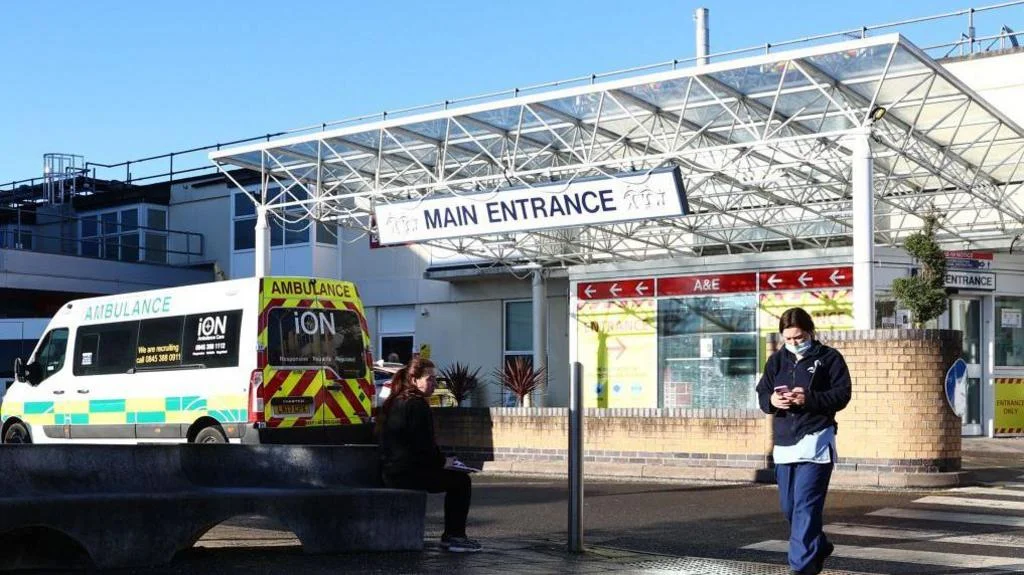
Frimley Park Hospital Preferred Site Revealed After Months of Secrecy
Frimley Health NHS Foundation Trust has confirmed its preferred location for a new £1.8 billion replacement for Frimley Park Hospital, ending months of speculation that had gripped the local community. The chosen site is land currently occupied by Pine Ridge Golf Club, part of the Frimley Fuel Allotments, a decision that has immediately drawn sharp criticism from the area's Member of Parliament.
The announcement, made public on Tuesday, June 16, 2026, follows a prolonged period during which the Trust remained bound by strict commercial confidentiality agreements. The new 800-bed hospital is intended to replace the existing Portsmouth Road facility, which was built using reinforced autoclaved aerated concrete (Raac) in the 1970s and has been described by the Trust as "reaching the end of its life."
Caroline Hutton, Deputy Chief Executive and Senior Responsible Officer for the rebuild, framed the decision as a generational opportunity. "This proposal is more than just building a hospital. It's an opportunity to create a legacy and transform local healthcare services," she said. The Trust has stressed that most outpatient, diagnostic, and community appointments will continue to be held at the existing hospital site even after the new facility opens.
Work on the new hospital is expected to begin in 2028 or 2029, with the project fully funded following a Government pledge of £1.5 billion granted in August 2025. Former Health Secretary Wes Streeting had confirmed to the BBC in January that the rebuild was "fully funded."
The Raac Crisis: Why a New Hospital Is Essential
The urgency behind the rebuild stems directly from the widespread presence of Raac in the existing hospital's structure. Built in 1974, roughly two-thirds of Frimley Park Hospital's current buildings were constructed using this lightweight concrete material, which has a limited lifespan and can collapse without warning when exposed to moisture.
The Raac issue has plagued public sector buildings across the UK, from schools to hospitals, forcing urgent remediation programmes. At Frimley Park, the Trust has assured the public that recent independent reports confirm the current Raac safety and structural maintenance works are "effective and suitable to keep services and people safe beyond 2030."
However, the Trust has also made clear that a full rebuild is the only long-term solution. A spokesperson stated: "The new hospital is essential and the only way to fully deal with the risk." In the interim, the Trust says it will continue to prioritise remedial works on the existing structures until the new facility becomes operational.
The safety concerns are not unique to Frimley Park. Across Surrey and the wider south east, several NHS facilities are grappling with ageing infrastructure. The Epsom and St Helier NHS Trust, which manages neighbouring hospitals, recently had its facilities rated by the Care Quality Commission (CQC). While Epsom Hospital was rated 'Good' overall, St Helier Hospital was downgraded to 'Requires Improvement', with inspectors highlighting emergency departments operating in spaces "not designed for it," including patients being treated in corridors.
MP's Fierce Opposition: 'Wrong Site, Wrong Place'
Despite the clear clinical need for a new hospital, the selection of the Pine Ridge Golf Club site has provoked immediate and forceful opposition. Dr Al Pinkerton, the Conservative MP for Surrey Heath, has described the location as "the wrong site, in the wrong place," warning that it would create "multiple generations-worth of challenges."
Dr Pinkerton's central concern is the pressure the new hospital would place on surrounding villages and communities. The site, located within the Frimley Fuel Allotments, is less urban than the current hospital location, raising questions about transport infrastructure, access for patients, and the impact on green space. The MP has suggested that the Trust did not adequately consider alternative sites that might have been more accessible or had less impact on local residents.
The Trust, for its part, has insisted that the site was chosen following a rigorous assessment process and that it fully aligned with the NHS 10-year plan for health. Caroline Hutton emphasised the collaborative nature of the decision, thanking the Trustees of Frimley Fuel Allotments for their input.
Local community groups have also voiced concerns, with some residents questioning whether the new location will be easily reachable by public transport or by those without cars. The Trust has promised extensive community engagement in the coming months to "help shape local care together."
Financial and Political Stakes of the Rebuild
The £1.8 billion price tag makes the new Frimley Park Hospital one of the largest single NHS infrastructure projects in the country. The Government's decision to fully fund the rebuild reflects the severity of the Raac problem and the political imperative to demonstrate progress on NHS renewal after years of underinvestment.
The financial commitment also comes against a backdrop of broader pressures on NHS capital budgets. In June 2025, the Government announced £750 million in new capital funding to address critical infrastructure and safety risks across the NHS, but many trusts argue that far more is needed to tackle the backlog of maintenance and rebuilding work.
The Frimley Park rebuild is part of the Government's New Hospital Programme, which promised to build 40 new hospitals by 2030, though that timeline has slipped for many projects. Trusts across the country are watching the Frimley Park process closely, as it could set a precedent for how future Raac-related rebuilds are handled, both in terms of site selection and funding arrangements.
Broader Implications for NHS Infrastructure and Community Trust
The controversy surrounding the Frimley Park site selection highlights a growing tension in NHS capital projects: balancing the clinical need for modern facilities against the legitimate concerns of local communities. The decision to build on green space, in this case a golf course within a fuel allotment, is likely to be replicated elsewhere as trusts struggle to find suitable brownfield sites large enough for modern hospitals.
This tension is not limited to Surrey. Across the country, similar battles are being fought over hospital rebuilds, with communities often split between those who welcome investment and those who fear the impact on their local environment and infrastructure. The Frimley Park case could become a touchstone for how the NHS manages these conflicts.
Moreover, the episode underscores the wider crisis of confidence in the UK's public infrastructure. The fact that a major hospital, built only 52 years ago, is already beyond economic repair due to a systemic construction flaw raises uncomfortable questions about procurement, oversight, and long-term planning in public sector building projects.
The CQC's recent inspection of neighbouring Epsom and St Helier hospitals found staff working "exceptionally hard" in facilities described as "crumbling" and "not fit for 21st century healthcare." While the Frimley Park rebuild is fully funded, the contrast between the two trusts illustrates the postcode lottery of NHS capital investment. Thames Water Nears Nationalisation as Government Blocks Creditor Rescue Deal similarly highlights the challenge of managing essential public infrastructure under financial strain.
For patients and staff at Frimley Park, the announcement provides some certainty after years of anxiety about the safety of their hospital. But the battle over the site location is far from over. Dr Pinkerton has indicated he will continue to campaign against the decision, and local residents are expected to mobilise. The Trust has committed to a period of public consultation, though it has not said whether it would reconsider the site if opposition proves overwhelming.
What is clear is that the new hospital will eventually be built, and it will transform healthcare delivery in the region. The question is whether it will do so with the support of the community it is meant to serve, or over its objections.
Comments