
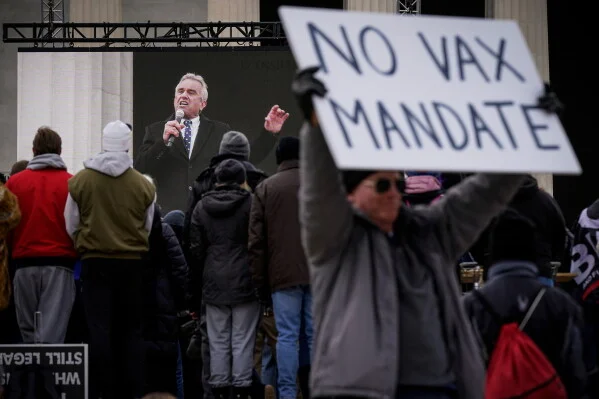
Vaccine Laws Under Siege: 200+ Anti-Vaccination Bills Introduced in 2026
Lawmakers across the United States introduced more than 200 bills this year aimed at dismantling vaccination rules or undermining public trust in vaccines, according to a New York Times analysis of state legislation. The bills, introduced in 34 states, targeted everything from school and daycare immunization requirements to the pamphlets patients receive before getting a shot.
Among the most aggressive proposals: a bill in Iowa that would have eliminated all vaccination requirements for elementary and secondary schools, and a Wisconsin measure that would have designated October as “Immunization Injury Awareness Month.” While only nine of these bills became law, public health experts warn that the sheer volume marks a dangerous escalation in the anti-vaccine movement’s political influence.
“Bills that would have died in committee in previous sessions are now passing one chamber, sometimes two,” said Jack McClure, who leads state policy efforts at the Association for Immunization Managers. “They may not be law yet, but legislators are taking them seriously.”
Pro-vaccine lawmakers, meanwhile, found themselves playing defense. A dozen states passed laws to preserve childhood vaccination recommendations after federal health officials moved to limit them. But the momentum, observers say, is increasingly on the side of those seeking to weaken the system.
Trump Pushes RFK Jr. for More Aggressive Vaccine Cuts
The state-level push is being amplified by the White House. According to a Wall Street Journal report, President Donald Trump is pressing Health Secretary Robert F. Kennedy Jr. to be more aggressive in cutting the U.S. vaccination schedule.
Trump, who has a long record of anti-vaccine statements, reportedly asked Kennedy at his northern Virginia golf course in May if the health secretary had the “yips” — not about golf, but about making enough cuts to the vaccination schedule. The president hopes to make “alleviating autism” a component of his legacy, the Journal reported, referencing Trump’s long-standing promotion of the debunked link between vaccines and autism.
Kennedy, a longtime vaccine opponent, earlier this year slashed the routine childhood immunization schedule in an unprecedented move. But Trump has taken issue with what he sees as Kennedy’s less aggressive changes in recent months. The White House had previously put a hold on further vaccine changes after polling indicated they were a losing issue in the upcoming midterm elections.
Tony Fabrizio, a top pollster for Trump, found that anti-vaccine moves are unpopular with voters in key districts, concluding in a December memo that “skepticism toward vaccine requirements is politically risky for both parties.” Nevertheless, Trump issued a memo two days after those poll results directing HHS to align with “peer” nations on vaccination recommendations — even though the U.S. was already making similar recommendations.
Measles Surge and Public Health Fallout
The legislative and executive push comes as the U.S. has already surpassed 2025’s record number of measles infections. The resurgence of the disease, once declared eliminated in the U.S., is directly linked to falling vaccination rates, according to public health officials.
Had all the anti-vaccine bills passed this year, the New York Times analysis said, they “would have led to a vast reduction in vaccine confidence and uptake, and eventually would have led to more outbreaks of disease.” Even with only nine becoming law, advocates for the measures consider the session a success because many others got closer to passage than in previous years.
Broader Implications: A Shift in the Vaccination Landscape
The 2026 legislative session represents a paradigm shift in how vaccine policy is debated in America. The anti-vaccine movement, emboldened by Kennedy’s position at HHS and Trump’s public support, has moved from fringe activism to mainstream legislative strategy.
Experts say the long-term consequences could be severe. Lower vaccination rates increase the risk of outbreaks of preventable diseases like measles, whooping cough, and polio. The financial and human costs, they warn, could be enormous — both in terms of healthcare spending and lives lost.
Meanwhile, the political calculus remains uncertain. While polling suggests aggressive anti-vaccine moves hurt incumbents at the ballot box, the movement’s grassroots energy shows no signs of abating. With midterm elections approaching, both parties face pressure to either embrace or reject the agenda.
In related news, the Bank of England Holds Rates at 3.75% as Iran War Cloud Darkens Inflation Outlook, highlighting how global instability continues to dominate headlines. But for public health officials, the war at home — in statehouses and the White House — may prove just as consequential.
Comments