
Floating City Dreams Resurface: The Freedom Ship Project Gains New Momentum
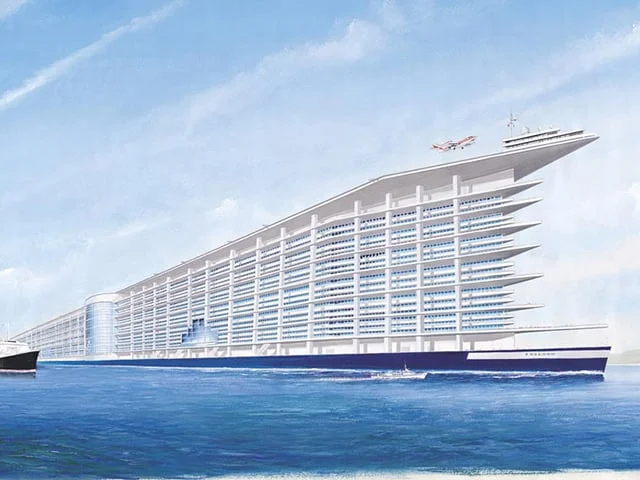
A long-dormant vision for a mile-long floating city capable of housing tens of thousands of people has resurfaced, reigniting debates about the future of maritime living. The Freedom Ship, a self-contained vessel designed to circle the globe continuously, is back in the headlines as its backers claim renewed interest and a small team is actively working on the concept. The project proposes a structure roughly a mile in length and 800 feet wide, rising 30 decks high, with an estimated construction cost of £12 billion.
The vessel is intended to carry up to 80,000 people, including approximately 50,000 permanent residents, 10,000 daily visitors, and 20,000 crew members. Unlike traditional cruise ships that follow fixed itineraries and dock at ports, the Freedom Ship would remain in international waters at all times, moving at a leisurely seven knots and completing a full global circuit roughly every two years. Passengers and supplies would be transferred via ferries or smaller vessels, while other cruise ships could potentially moor alongside.
What Life Would Look Like Aboard the Freedom Ship
Designs for the vessel envision a fully operational, self-sustaining city at sea. Amenities would rival those found on land, including schools from primary through college level, hospitals, retail spaces, banks, museums, a symphony hall, a two-story food hall, and even a water park. A 15,000-seat sports stadium, a convention center, an aquarium, and a nightclub are also part of the plans. Eight helipads would provide additional access for visitors and emergency services.
Why the Freedom Ship Matters: A Test for Floating City Viability
The revival of the Freedom Ship concept comes amid a broader wave of interest in floating cities and megastructures. While the project was first conceived in the 1990s by American engineer Norman Nixon, it has repeatedly struggled to secure the necessary funding and regulatory approvals. Project leader Roger Gooch of Freedom Cruise Line International now claims a 12-person team is actively working on the design and that investor interest is strong, though significant financial backing remains elusive.
A Crowded Sea: Other Floating City Concepts
The Freedom Ship is not the only ambitious floating city proposal making waves. The Italian design studio Lazzarini Design Studio has unveiled its own concept, the "Pangeos," a turtle-shaped vessel 550 meters long designed to hold 60,000 people. Like the Freedom Ship, Pangeos would function as a self-sufficient floating city with hotels, shopping centers, parks, and residential areas, capable of remaining at sea for extended periods without touching land. These competing designs underscore a growing fascination with permanent ocean-based communities, driven by concerns over rising sea levels, overpopulation, and the desire for alternative lifestyles.
Geopolitical Context: The Strait of Hormuz and Project Freedom
Interestingly, the term "Project Freedom" has also appeared in recent news in a very different context, creating potential for confusion. According to a report from HotAir, the U.S. Navy recently engaged Iranian forces near the Strait of Hormuz, destroying Iranian boats attempting to mine the waterway and striking radar sites near Bandar Abbas. The military operation was initially linked to a renewed push of "Project Freedom," a U.S. initiative to escort commercial vessels through the strategic shipping corridor. However, CENTCOM later clarified that the escort mission was not a formal restart of Project Freedom, but rather a limited operation to guide about a dozen vessels through the strait over several days.
Navigating the Naming Confusion
While the military's "Project Freedom" in the Strait of Hormuz shares a name with the floating city concept, the two are entirely unrelated. The coincidence highlights the growing nexus of global security and maritime innovation, as both military and civilian projects stake claims to the world's oceans. The geopolitical situation in the Persian Gulf remains tense, with Iran's Islamic Revolutionary Guards Corps continuing to patrol the area and vessels frequently disabling their AIS tracking systems to avoid detection during hostilities.
Broader Implications: The Future of Ocean-Based Living
The resurfacing of the Freedom Ship concept—alongside projects like Pangeos—signals a persistent human ambition to create permanent, self-sustaining habitats on the ocean. Technological advances in shipbuilding, renewable energy, and water purification could make such visions more feasible than ever before. However, significant hurdles remain, including astronomical costs, regulatory challenges in international waters, and questions about safety, waste management, and geopolitical stability.
What This Changes
If built, the Freedom Ship would represent a paradigm shift in how humanity uses the oceans—not just for transportation or temporary leisure, but as a permanent home for tens of thousands of people. It could serve as a template for future floating cities, potentially alleviating land scarcity in densely populated coastal regions. Conversely, the project's repeated failures to secure funding serve as a cautionary tale about the gap between visionary design and practical execution.
For now, the Freedom Ship remains a concept on paper, but its revival suggests that the dream of a true floating city is far from dead. As global conversations about climate adaptation and sustainable living intensify, the idea of a self-contained, mobile city may become increasingly attractive to investors and governments alike.
Editor's note: For more on futuristic settlements, see our coverage of Apple TV Launches 'Star City' Spinoff, Signaling Major Sci-Fi Universe Expansion.
Comments