
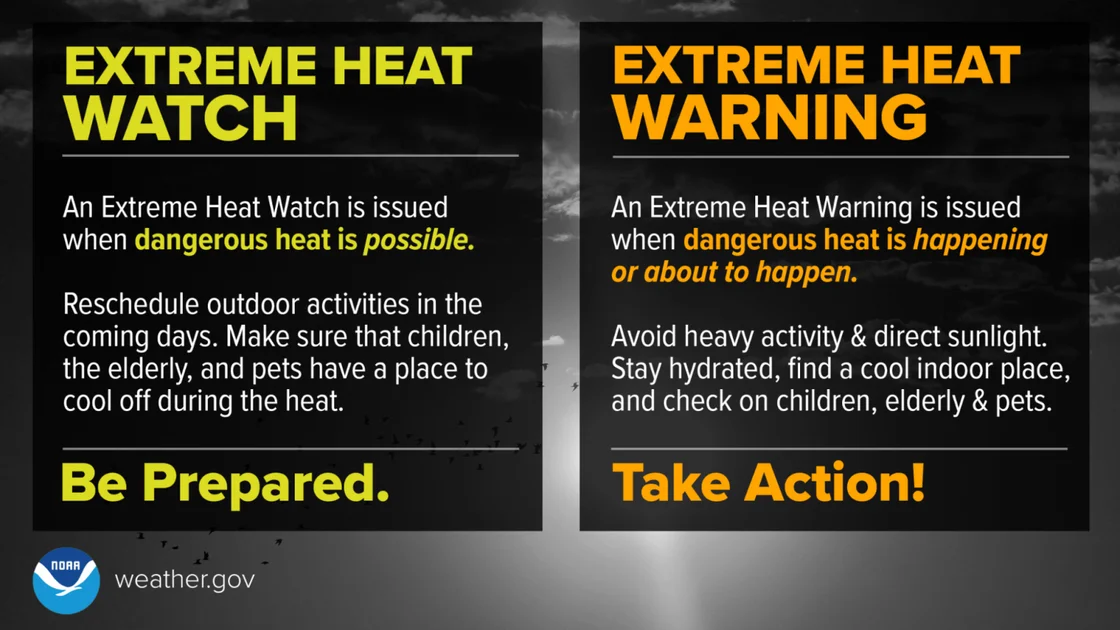
Urgent Heat Warning Issued for 450,000 Californians: 60-Hour Stay-at-Home Order in Effect
An extreme heat warning has been issued for hundreds of thousands of residents across Southern California’s desert regions, with the National Weather Service (NWS) urging people to remain indoors for a prolonged 60-hour stretch beginning this weekend. The warning is in effect from Sunday morning through at least Monday night, and in some areas into Tuesday evening, as a dangerous heat wave is expected to push afternoon highs well above 100 degrees Fahrenheit.
The alerts cover large portions of Imperial County, the Salton Sea region, the Coachella Valley, San Diego County deserts, and the San Gorgonio Pass near Banning—areas home to an estimated 450,000 residents. According to the NWS office in Phoenix, temperatures in western Imperial County and around the Salton Sea could climb between 105 and 112 degrees during the afternoons. Meteorologists have classified the threat as a “Major Heat Risk,” warning that the combination of extreme temperatures and prolonged exposure could quickly become dangerous, even for those accustomed to desert heat.
In the Coachella Valley, San Diego County deserts, and the San Gorgonio Pass, the NWS office in San Diego has issued a separate extreme heat watch from Sunday morning through Tuesday evening, with forecast highs expected to reach similarly dangerous levels. The alerts come as a “second surge of summerlike heat this spring” returns to the West, according to AccuWeather senior meteorologist Tyler Roys, who noted that temperatures will climb 20 to 30 degrees in just a few days, which can catch people off guard. Cities like Phoenix, Las Vegas, and Fresno could see their first 100-degree day of the year, with some daily records potentially challenged.
Texas Also Under Heat Advisory as Heat Index Surpasses 111°F
Meanwhile, thousands of residents across parts of southern Texas are also being urged to limit outdoor activity after the NWS issued a heat advisory warning on Wednesday. The alert is in effect from Wednesday afternoon into the evening, with forecasters warning that heat index values could reach between 111 and 116 degrees Fahrenheit. These elevated “feels like” temperatures are driven by a combination of high heat and humidity, creating conditions that significantly increase the risk of heat-related illness.
The advisory covers inland Kenedy, southern Hidalgo, inland Willacy, and inland Cameron counties—including cities such as McAllen, Edinburg, Pharr, Mission, Weslaco, Raymondville, Brownsville, Harlingen, and Sarita. The NWS cautions that prolonged exposure to this level of heat falls into the “danger” category, where heat exhaustion is likely, and heat stroke becomes possible. Direct sunlight can make conditions even hotter, raising the perceived temperature by up to 15 degrees.
Why This Heat Wave Matters: Health Risks and Unprecedented Timing
The stakes of this extreme heat event are high, particularly because it is occurring unusually early in the year. May is typically associated with mild spring weather in California, with coastal areas often experiencing “May gray” skies that keep temperatures relatively cool. However, this year, a powerful high-pressure system is bringing a blast of summerlike heat that could break records.
In the Central Valley, Fresno could see temperatures as high as 102 degrees by Monday. If that occurs, it would be the earliest in the year the thermometer has hit that mark since records have been kept, according to Brian Ochs, a meteorologist with the NWS office in Hanford. Fresno hasn’t seen 102-degree heat this early since 2013, when it hit that mark on May 12. Ochs warned that “people won’t be as used to it” at this time of year, meaning the heat may have a greater impact on health and well-being.
Forecasters also warned of elevated fire danger across Los Angeles, Ventura, Santa Barbara, and San Luis Obispo counties, as well as the Kern County desert and the slopes of the Mojave Desert. By Monday, Barstow could hit 102; Borrego Springs, 107; Palm Springs, 108; and Death Valley, 111. Afternoon temperatures could reach as high as 112 degrees in Imperial County.
Extreme Heat and the Human Body: A Dangerous Combination
Extreme heat is one of the most dangerous weather hazards, primarily because it directly affects the human body’s ability to regulate temperature. When heat and humidity rise, the body’s cooling system—sweating—becomes less effective. The core body temperature can then rise rapidly, increasing the risk of heat exhaustion, dehydration, and heat stroke, which can be fatal if left untreated.
The NWS emphasizes that heat-related illnesses increase significantly during extreme heat events. Overexposure can lead to heat cramps and heat exhaustion, and without prompt treatment, potentially fatal heat stroke. The heat index, also known as the “apparent temperature,” measures how hot it feels when humidity is factored in. In practical terms, a heat index of 111-116 degrees Fahrenheit can occur when air temperatures are typically in the mid-to-upper 90s, combined with high humidity. Under these conditions, sweat doesn’t evaporate as efficiently as normal, preventing the body from cooling itself down.
Protecting Vulnerable Populations: Children and the Elderly at Greatest Risk
Pediatricians at Valley Children’s Healthcare in Central California warn that children are particularly vulnerable during periods of extreme heat. Doctors say the middle of the day can be especially risky, when the sun is highest and temperatures peak.
“We see a lot of kids come in with signs of dehydration, including chapped lips, looking more tired, and appearing weaker,” said Dr. Gino Urbano, a pediatric resident. “If you notice those kinds of symptoms in your child, it’s best to get them checked.” Healthcare providers are warning parents to watch for heat-related illnesses such as heat cramps, heat exhaustion, and heat stroke. Of the three, heat stroke is the most serious.
“With heat stroke, that’s when you want to call 911 right away,” said Dr. Sanskriti Saxena, also a pediatric resident. “That’s when you have a really high fever, your child is not acting like themselves, and they have muscle cramps.”
Doctors recommend several preventive measures: staying hydrated is one of the most effective ways to prevent heat-related illness. Clothing choices also matter—wearing loose-fitting, light-colored clothes helps reflect sunlight, and applying sunscreen and reapplying it regularly is essential. In addition, health officials recommend limiting time outdoors during peak heat, finding air-conditioned spaces, and supervised pool time for children—while emphasizing constant supervision around water.
Recognizing Early Warning Signs
Health officials say planning ahead and recognizing early warning signs can help families stay safe during periods of extreme heat. Early symptoms of heat exhaustion include heavy sweating, weakness, cold and clammy skin, a fast but weak pulse, nausea, and fainting. If left untreated, heat exhaustion can progress to heat stroke, which is characterized by a high body temperature (above 103°F), hot and red skin, a rapid and strong pulse, and possible unconsciousness. Anyone experiencing these symptoms should seek medical attention immediately.
Broader Implications: A Sign of Things to Come?
This early-season heat wave has broader implications for public health, infrastructure, and emergency preparedness. As climate change continues to drive more frequent and intense heat events, communities across the United States—and around the world—are being forced to adapt. This week’s warnings affect hundreds of thousands of people in California and Texas, but similar extreme heat events have been observed in other regions, including parts of Europe and Asia. For context, severe weather warnings have also been issued elsewhere, such as the Amber Alert Systems Under Scrutiny as Severe Lightning Warning Issued in Sri Lanka, highlighting the global nature of weather-related emergencies.
Extreme heat is the deadliest weather hazard in the United States, killing more people each year than hurricanes, tornadoes, or floods. Unlike these more dramatic events, heat waves often go unnoticed until it’s too late. The NWS and local health departments are emphasizing that the key to survival is preparation: staying hydrated, avoiding outdoor activities during peak heat, checking on vulnerable neighbors and relatives, and never leaving children or pets in parked cars.
What This Changes for the Region
This heat wave is not just a short-term inconvenience; it could signal a shift in seasonal patterns. Meteorologists note that the heat is arriving earlier than typical summer peaks, which may strain power grids as air conditioning usage spikes, increase the risk of wildfires, and exacerbate drought conditions in the West. The early arrival of 100-degree temperatures in the Central Valley and desert regions could also affect agriculture, with crops and livestock needing additional water and shade.
Local authorities are opening cooling centers in affected areas to provide relief for those without air conditioning. Residents are urged to check the NWS website or local government social media channels for locations and hours of operation. For those under heat warnings, the advice is simple: stay indoors, stay hydrated, and stay informed.
Looking Ahead: Forecast and Safety Reminders
As the heat wave unfolds, forecasters expect temperatures to peak on Monday and Tuesday before gradually moderating later in the week. However, even after the extreme heat warning expires, lingering high temperatures could still pose a risk. The NWS advises residents to remain vigilant and continue taking precautions.
Here are key safety reminders:
- Stay hydrated: Drink plenty of water, even if you don’t feel thirsty. Avoid sugary, caffeinated, or alcoholic beverages.
- Limit outdoor activity: If you must go outside, schedule activities for early morning or evening when temperatures are cooler.
- Wear appropriate clothing: Light-colored, loose-fitting clothes help reflect heat. Wear hats and sunglasses, and apply sunscreen.
- Never leave children or pets in parked cars: The temperature inside a car can rise rapidly, even with windows cracked.
- Check on vulnerable individuals: Elderly neighbors, those with chronic health conditions, and pets are especially at risk.
- Know the signs of heat illness: Recognize symptoms of heat exhaustion and heat stroke, and seek medical help immediately if needed.
In a broader context, this heat wave serves as a reminder of the importance of preparedness for extreme weather events. Just as communities brace for Tornado Warning Tallahassee: Severe Storms Threaten North Florida and South Georgia or deal with M5 Traffic Chaos: Motorway Reopens After 14-Hour Tanker Crash and Fuel Spill, heat waves require equally serious attention. The NWS and local officials will continue to monitor the situation and provide updates as conditions evolve.
Comments