
Iran’s Missile Arsenal: A Resurgent Threat Ignites New Fronts in the US-Israel War
CIA Leak Reveals Iran’s Rapid Missile Recovery, Undermining War Gains
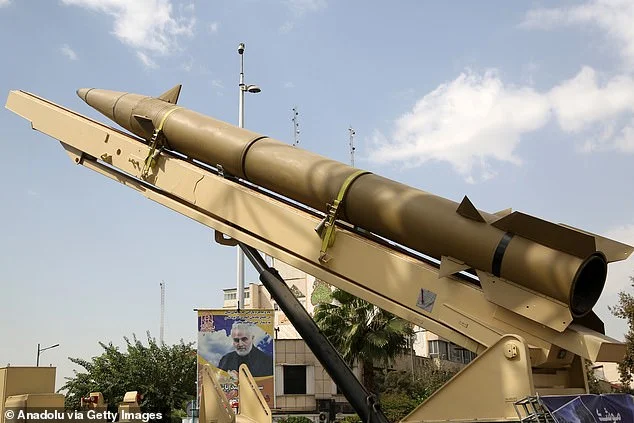
A new leak from CIA officials, published by the Washington Post over the weekend, has sent shockwaves through Washington and Tel Aviv, challenging one of the central “win” narratives of the ongoing US-Israeli war against Iran: that the Islamic Republic’s ballistic missile threat had been decisively degraded. According to the report, which The Jerusalem Post analyzed in depth, intelligence assessments now indicate that Iran has replaced approximately half of its lost missiles and launchers in just eight months — far faster than Israeli or American planners anticipated.
The revelation hits at a critical juncture. As of May 13, 2026, the war — which began with coordinated US and Israeli strikes on February 28 — is now in its third month, with a fragile and repeatedly violated ceasefire in place. The leak suggests that the core military objective of the campaign, reducing Iran’s ballistic missile capacity, may have been only partially achieved. Israeli Chief of Staff Lt.-Gen. Eyal Zamir had argued in February that attacking immediately was essential because Iran was producing 200 to 300 ballistic missiles per month and had already rebuilt its arsenal to roughly 2,500 units. Waiting six months, Zamir warned, could have left Iran with nearly 4,000 missiles — a threshold the IDF could not handle.
Iran’s Propaganda Machine Goes Viral with AI Lego Videos and Rap Soundtracks
While the missile threat evolves on the ground, Tehran has also scored unexpected victories in the information domain. The Islamic Republic’s propaganda apparatus, once dismissed as clunky and ideologically rigid, has reinvented itself for the age of short-form video. According to a detailed analysis by the EurAsian Times, Iran is now outperforming the United States in narrative effectiveness, producing slick, AI-generated Lego-style animations set to rap soundtracks that go viral on Western social media platforms.
These videos, which portray US President Donald Trump as living in a “cuckooland” and Israeli Prime Minister Benjamin Netanyahu as a puppet master manipulating Washington, are designed to exploit political fault lines. Tehran has grasped that modern influence operations require entertainment value, not just ideological messaging. The content targets not only domestic and Global South audiences, but also aims to sow dissent within the Western alliance itself. The choice of Lego-style animation and rap beats marks a dramatic departure from the somber, Shia martyrdom tropes of previous decades.
The Gulf War: UAE Strikes Iran, Israel Deploys Iron Dome Abroad for First Time
UAE’s Secret Military Role Expands as Gulf States’ Alliance Deepens
In a development that reshapes the regional balance of power, the United Arab Emirates has been revealed as the only other country to join the US and Israel in active military strikes against Iran. According to a Wall Street Journal report, the UAE carried out an attack on a refinery on Iran’s Lavan Island in the Persian Gulf in early April, around the time Trump announced a ceasefire. The strike, which Abu Dhabi has not publicly acknowledged, prompted Iran to retaliate by firing missiles and drones at the UAE and Kuwait.
This military cooperation is unprecedented. While other Gulf states have refused to actively join the conflict, the UAE appears to have calculated that its long-term security depends on a decisive weakening of Iran. The Journal noted that Washington positively received Abu Dhabi’s participation, viewing it as a critical demonstration of regional unity. Iran, for its part, has launched sustained attacks on the UAE, firing some 550 ballistic and cruise missiles and more than 2,200 drones, according to Emirati defense officials. That makes the UAE the most targeted country in the region, even more than Israel.
Israel Sends Iron Dome to UAE in Historic First
The deepening relationship between Israel and the UAE was further underscored by the revelation, first confirmed publicly by US Ambassador to Israel Mike Huckabee on May 12, that Israel had deployed Iron Dome anti-missile batteries and personnel to the UAE to help defend against Iranian strikes. This marks the first known instance of Israel’s advanced air defense system being operated outside its borders since its development.
“They were the first Abraham Accord member. But look at the benefits that they have had as a result: Israel just sent them Iron Dome batteries and personnel to help operate them,” Huckabee said at an event in Tel Aviv. “How come? Because there’s an extraordinary relationship between the UAE and Israel.”
This deployment is a stark contrast to Israel’s previous refusal to send Iron Dome to Ukraine during the war with Russia. It also underscores the realignment of Middle Eastern alliances: the UAE and Bahrain remain the only Gulf states with formal ties to Israel under the Abraham Accords, and both are now effectively co-belligerents against Iran.
Huckabee’s Ultimatum: ‘Which Side Do You Want to Be On?’
Huckabee’s comments did not stop at praising the UAE. The US envoy directly addressed other Gulf states, calling on them to “pick a side” between Israel and Iran. “Israel is not your natural enemy. Israel is not out to destroy you. Israel is not trying to take over your land,” he said. “It’s not sending missiles into your civilian territories. Who’s doing that? Iran is.”
The message is clear: the war is forcing a historic binary choice in the Persian Gulf. Iran has threatened to strike US bases and has already blocked the Strait of Hormuz, choking off a key global energy route. Meanwhile, Kuwait recently said it foiled an infiltration operation by Iran’s Islamic Revolutionary Guard Corps, adding to the sense that no Gulf state can remain neutral.
Broader Implications: A War Without End?
Nuclear Threat vs. Ballistic Missile Threat: A Misplaced Debate?
The CIA leak has revived an old debate: which poses a greater threat — Iran’s nuclear program or its ballistic missile arsenal? The Jerusalem Post analysis argues that the focus on missiles is actually more immediate. Iran’s ability to produce 200–300 missiles per month means that even if the nuclear program is frozen, the conventional missile threat can overwhelm Israel’s multi-layered air defenses, including the vaunted Iron Dome. The war may have degraded Iran’s missile infrastructure, but it has not destroyed Iran’s industrial capacity to rebuild.
However, the propaganda war complicates the picture. Iran’s AI-generated Lego-style videos are not just entertainment; they are a form of psychological warfare designed to erode American public support for the conflict. The EurAsian Times notes that these videos consistently portray the war as a disaster for Washington, showing a divided Western camp and suggesting that Trump has been manipulated by Netanyahu. This narrative, if it gains traction, could influence the 2026 US midterm elections and the broader American political debate about military engagement in the Middle East.
The Yemen Factor: A New Front?
Meanwhile, the conflict continues to spill over. Iran has reportedly targeted states across the Persian Gulf, and the UAE has reported that Iranian strikes likely restarted in the past week, despite the fragile ceasefire. Iran also fired missiles and drones at Kuwait, which has no formal ties with Israel. The risk of a wider regional war — one that could draw in Saudi Arabia, Oman, and others — remains high.
In a related development, the Pentagon recently gave a new $29 billion price tag for the Iran war, downplaying concerns about munitions shortages. This suggests that the US military is preparing for a prolonged campaign, even as Trump’s messaging remains confused and contradictory.
Conclusion: What the CIA Leak Means for the Future
The CIA leak is more than a political embarrassment for the Trump administration; it is a strategic warning. The assumption that the war had crippled Iran’s missile capabilities is now in doubt. The Iran that emerges from this conflict may be weakened but not broken — and it will have learned valuable lessons about the effectiveness of both its military industrial base and its propaganda machine.
For Israel and the UAE, the war has forged a de facto military alliance that would have been unthinkable a decade ago. For the US, the conflict has exposed the limits of military power in an age of information warfare. And for the world, the Strait of Hormuz remains a flashpoint that could trigger a global economic crisis.
As the conflict enters its next phase, one question looms: if the missiles are coming back, what can stop them?
For more analysis on how regional conflicts intersect with global entertainment, read our piece on Eurovision 2026 Semi-Final 1: Finland, Israel Advance Amid Political Tensions. Also, explore how propaganda tactics compare to marketing strategies in KPop Demon Hunters Merch Blitz and Seoul Pop-Up as Netflix Hit Fades From US Top 10.
Comments