
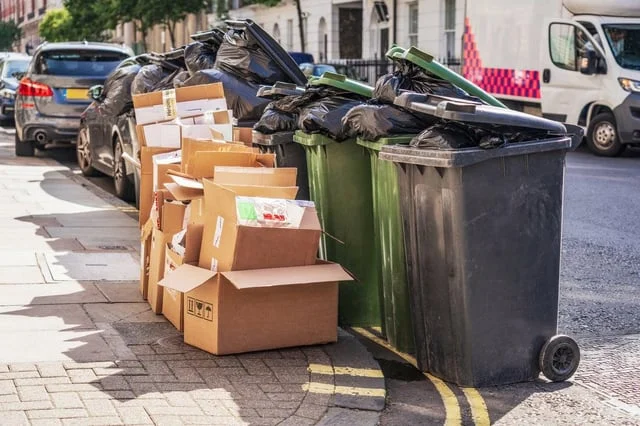
Households Face £80 Fines as New Bin Collection Rules Roll Out Across England
Millions of households across England are being warned that failing to comply with new bin collection rules could result in fines of up to £80, as councils begin rolling out major reforms to rubbish and recycling services. Under the new waste collection arrangements, which have been introduced this year, local authorities are required to provide separate collections for food waste, paper and card, glass, and metal and plastic packaging. However, residents who place the wrong items in their bins risk having their collections refused or, in repeated cases, receiving a fixed penalty notice.
The Department for Environment, Food and Rural Affairs (Defra) has confirmed that councils have the power to issue fines where households persistently fail to follow waste rules. According to guidance, the maximum penalty is set at £80 per offence, though fines can only be imposed in specific circumstances. Households that block pavements, leave bins out for days after collection, or allow waste to attract vermin such as rats and foxes are among those who could face enforcement action.
Key Changes Taking Effect Now
Many councils are currently delivering new bins to households as part of the overhaul. South Staffordshire Council, for example, has begun distributing new food waste caddies this month, with collections set to start in June. Residents will receive two bins: a small indoor caddy and a larger outdoor container, along with liners and an information booklet. Similar rollouts are happening across the country, though timings vary by local authority.
The new rules are designed to improve recycling rates and reduce contamination. However, they have also prompted confusion among residents about what can and cannot be placed in each bin. Councils are now expected to provide clear guidance on sorting, but mistakes can still lead to bins being left unemptied or tagged with warning stickers.
Why the New Bin Rules Matter: The Stakes for Households
The introduction of separate food waste collections and stricter recycling rules is part of a broader government push to increase recycling rates and reduce landfill. According to Defra, contaminated recycling loads—where non-recyclable items are placed in the wrong bin—can render entire collections unusable, forcing councils to send them to incineration or landfill instead. This costs local authorities money and undermines environmental targets.
For households, the stakes are both financial and practical. A fixed penalty notice of £80 can be issued if waste causes an obstruction or nuisance to neighbours, such as blocking access for wheelchair users or parents with buggies. Bins or rubbish bags left on pavements or roads for several days after collection may also trigger fines. Furthermore, waste that is left out too early or stored improperly can attract vermin, leading to health concerns and potential penalties.
When Fines Cannot Be Issued
It is important to note that minor mistakes will not result in fines. According to official guidance, councils cannot penalise households for accidentally placing an item in the wrong bin, forgetting to close bin lids properly, or leaving bins out for a few hours before collection. These are considered trivial breaches and are not subject to enforcement.
Fixed penalty notices are reserved for more serious or repeated violations. The process begins with a written warning explaining why the rules have been breached. If the household fails to comply, a notice of intent may be issued, followed by a final notice 28 days later specifying the sum to be paid. The maximum penalty remains £80.
Perspective: Broader Trends in Waste Enforcement
The new rules in England come amid a wider trend of stricter waste enforcement across Europe. In France, for example, fines for incorrectly sorting rubbish have recently been increased to up to €450 for serious cases. French authorities have also introduced so-called “bin police” who can search waste to ensure proper sorting, with penalties for depositing rubbish outside authorised days or using unsuitable containers.
While England’s fines are significantly lower than France’s maximum penalties, the direction of travel is clear: governments are increasingly willing to use financial deterrents to enforce recycling rules. The English system focuses on repeated non-compliance and public nuisance rather than one-off mistakes, but households should be aware that councils are ramping up enforcement as new collection services bed in.
The Impact on Daily Life
For most households, the immediate impact of the new rules is the arrival of extra bins and the need to sort waste more carefully. Food waste must now be separated into dedicated caddies, which are collected weekly in many areas. This change alone represents a significant shift in daily habits, particularly for those unaccustomed to composting or separating food scraps.
Councils are also reminding residents that bins should not be left out on the street for extended periods. In some areas, leaving bins on the pavement for days after collection could result in a fine, particularly if they cause an obstruction. The rules also require households to secure their waste to prevent torn bags or overturned bins, which can create an unsightly environment.
What Residents Need to Know to Avoid Fines
To avoid penalties, households should follow a few simple guidelines:
- Sort waste correctly: Ensure that only permitted items go into each bin. Check your council’s guidance for specific rules on recycling and food waste.
- Put bins out at the right time: Do not place bins on the street more than a few hours before collection, and bring them in promptly after collection.
- Avoid obstruction: Do not block pavements, driveways, or access routes with bins or rubbish bags.
- Secure your waste: Make sure bin lids are closed and bags are not torn, to prevent attracting vermin.
Households that receive a warning sticker should remove any incorrect items before the next scheduled collection to avoid escalation. If a fixed penalty notice is issued, residents have the right to appeal through their local council’s procedures.
Local Differences
While the national framework is set by Defra, individual councils have discretion over how strictly they enforce the rules. Some may issue warnings before fines, while others may take a harder line on repeat offenders. Residents are advised to check their local council’s website for specific guidance and to sign up for updates on collection schedules.
The rollout of new services is not uniform across England. Some councils have already introduced separate food waste collections, while others are still in the process of distributing bins and information. Households in areas with later rollouts should still familiarise themselves with the rules, as enforcement will begin once collections start.
Broader Implications for England’s Waste Strategy
The new bin collection rules are part of a wider government strategy to reduce waste and increase recycling. By 2035, the UK aims to recycle at least 65% of municipal waste, and the separate collection of food waste is seen as a key step towards that goal. Food waste that is properly collected can be processed through anaerobic digestion to generate energy, rather than ending up in landfill where it produces methane, a potent greenhouse gas.
The introduction of fines for non-compliance is intended to encourage participation and prevent contamination. However, critics argue that the penalties may disproportionately affect low-income households, who may have less time or space to manage multiple bins. Councils are encouraged to provide support, such as free liners and educational materials, to help households comply.
The Role of ‘Bin Police’ and Future Enforcement
While England has not yet introduced the kind of ‘bin police’ seen in France, some councils are increasing monitoring of waste collections. In London and other major cities, enforcement officers may photograph bins that are left out incorrectly or contain prohibited items. The use of technology, such as cameras on collection vehicles, is also being explored to identify repeat offenders.
The trend towards stricter enforcement is likely to continue as recycling targets become more ambitious. Households that fail to adapt may find themselves facing fines, but for the majority, the new rules represent a manageable change to daily routines. As one local authority spokesperson put it: “We want to help residents recycle correctly, not punish them for mistakes. But where people persistently ignore the rules, we will take action.”
Conclusion: Staying Informed and Compliant
With new bin collection rules now in effect across England, households are advised to stay informed about their local requirements to avoid unnecessary fines. The maximum penalty of £80 is reserved for serious or repeated breaches, but even a warning sticker can be a nuisance. By following council guidance on sorting, timing, and storage, most residents should be able to comply without issue.
The changes are part of a broader shift towards more sustainable waste management, mirroring trends seen across Europe. While the immediate focus is on food waste and recycling, future reforms may include further restrictions on single-use plastics and packaging. For now, the message is clear: sort your waste, put your bins out at the right time, and keep the streets clear—or risk a fine.
Comments