
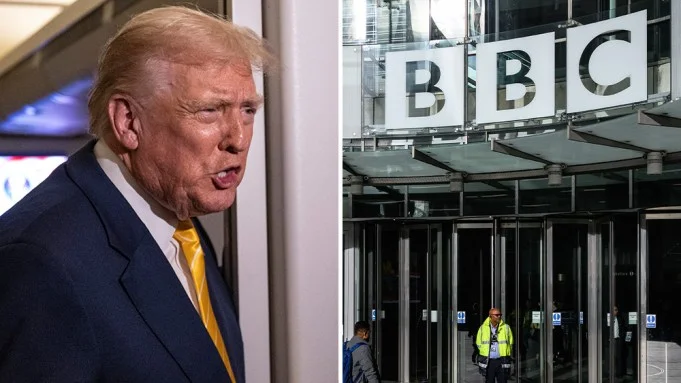
Judge Orders Trump to Release Financial Records in BBC Panorama Defamation Case
A federal judge has dealt a significant procedural blow to President Donald Trump in his $10 billion defamation lawsuit against the British Broadcasting Corporation, ordering him to turn over years of financial documents from his family trust. The ruling, issued by U.S. Magistrate Judge Enjoliqué Lett during a discovery hearing on Tuesday, compels The Donald J. Trump Revocable Trust to produce financial records dating from January 1, 2023, to the present. The decision marks a critical juncture in the legal battle stemming from a 2024 BBC Panorama documentary that—according to Trump’s legal team—misleadingly edited his January 6, 2021, speech.
The judge determined that the BBC’s subpoena for financial documents was “not unreasonable or unduly burdensome,” particularly given the president’s claims of extensive economic harm to his businesses, reputation, and future financial prospects. The BBC is seeking to use these records to argue that Trump’s wealth has actually increased since the documentary aired, directly contradicting his assertion of damages. The ruling also grants the BBC permission to subpoena dozens of members of Trump’s inner circle—including Donald Trump Jr., Steve Bannon, and Stephen Miller—to probe the president’s thoughts and intentions on January 6.
The Controversial Documentary and the Edited Clip
The legal dispute centers on a BBC Panorama documentary titled “Trump, A Second Chance,” which examined the former president’s political resurgence. The program included a scene depicting Trump’s speech on January 6, 2021, delivered just before his supporters stormed the U.S. Capitol to disrupt the certification of President Joe Biden’s electoral victory. The BBC’s edit spliced together lines from different parts of the speech to create a condensed sequence that made Trump appear to directly urge his supporters to attack the Capitol.
In the edited clip, Trump says: “We’re gonna walk down to the Capitol and I’ll be there with you and we fight. We fight like hell, and if you don’t fight like hell, you’re not gonna have a country anymore.” However, the original speech contained two separate segments. Near the beginning, Trump said: “We’re gonna walk down, and I’ll be there with you, we’re gonna walk down, we’re gonna walk down any one you want but I think right here, we’re gonna walk down to the Capitol and we’re gonna cheer on our brave senators and congressmen.” The phrase “And we fight. We fight like hell. And if you don’t fight like hell, you’re not going to have a country anymore” appeared near the end of the address. The BBC later issued a correction and apology but refused to offer any financial settlement.
Stakes of the Lawsuit: $10 Billion in Damages
Trump filed the defamation suit in December 2025, seeking $10 billion in damages for harm to his businesses, reputation, and future financial prospects. The president’s legal strategy has long relied on using multibillion-dollar lawsuits to punish critical media outlets, but Tuesday’s ruling highlights a potential drawback: by claiming such enormous economic harm, Trump has opened the door to invasive discovery into his personal and business finances. The judge’s order forces the president to provide years of financial documents from The Donald J. Trump Revocable Trust, potentially revealing details about the first family’s multiple ventures.
“The BBC scored a blow against President Donald Trump in its defense against the defamation suit,” noted Yahoo News, summarizing the ruling’s immediate impact. The BBC is anticipated to use the financial records to demonstrate that Trump’s wealth has not suffered, but rather grown, since the documentary aired. Meanwhile, Trump’s legal team, led by attorney Alejandro Brito, has indicated it intends to appeal the decision. Brito also told the court that he plans to amend the complaint to limit the scope of damages, arguing that the documentary only caused reputational harm—not economic loss—in an effort to make the financial disclosures unnecessary.
Legal Maneuvering and the Fight Over Discovery
The judge also addressed the BBC’s broader discovery requests, including subpoenas aimed at Trump family members and key advisers. The broadcaster wants to find evidence of Trump’s thoughts and intentions on January 6, which could become relevant if the case proceeds to trial. Trump’s lawyers have pushed back, arguing that relitigating January 6 is not at issue in this lawsuit. Fox News reported that the judge sided with Trump on that point, limiting the BBC’s ability to use the discovery process to reexamine the events of the Capitol riot. However, the financial records and inner-circle subpoenas remain in play.
Historical Context: Trump’s Long History of Suing Media Outlets
Trump’s defamation suit against the BBC is part of a larger pattern. Since his entry into politics, Trump has filed numerous lawsuits against media organizations, including a $15 billion suit against The New York Times and a separate action against CNN. His administration also targeted the BBC in other contexts, including visa disputes and public funding arguments. The BBC case is distinct, however, because the broadcaster is a foreign public service entity, raising questions about jurisdiction and the reach of U.S. defamation law. The case is being heard in federal court, and the BBC has maintained that Trump’s claims have no merit.
The edited clip controversy also evokes earlier disputes over media coverage of January 6. The BBC’s apology and correction were unusual steps for the broadcaster, which typically stands by its journalism. The decision to apologize likely reflects the gravity of the editing error, which could be seen as altering the public record of a pivotal historical moment. Trump’s own legal team has argued that the edit was “deliberately misleading” and intended to harm his reputation.
Perspective: Broader Implications for Media Defamation Law
The ruling in the BBC case could have significant implications for the media landscape. If the discovery process proceeds without a settlement, it may set a precedent for how courts handle defamation claims against news organizations, particularly when plaintiffs claim astronomical damages. Legal experts note that Trump’s $10 billion figure is likely inflated for negotiating purposes, but by making such a claim, he has put his own finances in the crosshairs. The judge’s decision also underscores the principle that a plaintiff cannot claim massive economic harm without being willing to prove it with financial records.
For the BBC, the ruling offers a measure of vindication, allowing the broadcaster to fight the suit on substantive grounds rather than procedural ones. The corporation has argued that Trump’s lawsuit is an attempt to chill free speech and intimidate the press. For Trump, the decision represents a setback, as it forces transparency around his business dealings at a time when his administration is already facing scrutiny over denaturalization efforts and other policies. The case also touches on broader tensions between the U.S. government and foreign media, especially given the ongoing Iran conflict, which has dominated headlines this month.
Potential for Settlement or Escalation
Both sides now face critical decision points. Trump’s legal team could seek to settle the case to avoid further financial exposure, or they could appeal and continue fighting. The BBC has shown no willingness to offer payment, despite its apology over the editing error. The amended complaint, if filed, may limit the scope of discovery, but the judge has already allowed the BBC to proceed with its subpoenas. The timeline for the next steps remains uncertain, though the judge set a deadline for the Trust to produce documents. Meanwhile, the BBC is preparing to argue that Trump’s wealth has grown, undercutting his defamation claim.
Conclusion: A New Chapter in the Trump-Media Legal War
The ruling in the BBC case marks a notable moment in Trump’s ongoing legal battles with the media. By ordering the release of his financial records, the judge has ensured that the case will involve more than just rhetorical attacks. The discovery process could shed light on Trump’s financial empire at a time when he is also dealing with other lawsuits and investigations. For readers, this development underscores the high stakes of defamation litigation and the risks plaintiffs face when they seek damages calculated in the billions.
As the case moves forward, both sides will likely continue to jockey for advantage. The BBC’s right to access Trump’s financial documents represents a procedural victory, but the broader legal fight over the edit and its impact remains unresolved. For now, the eyes of the media and legal worlds are fixed on the federal courthouse as this lawsuit enters a new, more invasive phase.
This article includes reporting from Yahoo News, Fox News, and The Guardian.
Comments