
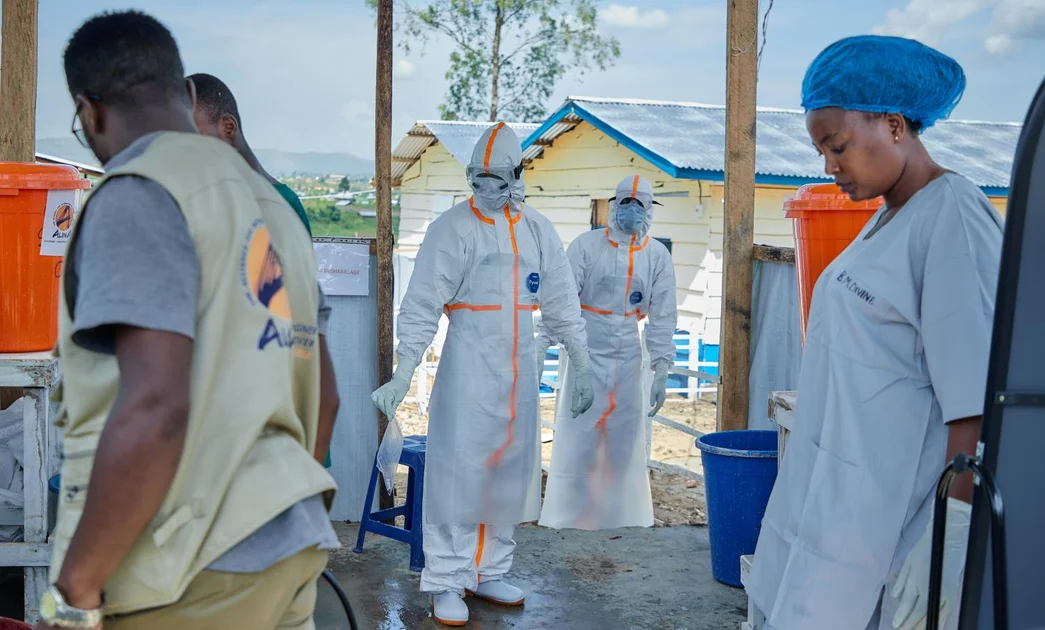
Ebola Outbreak in Congo: Cases Surge Past 800 as WHO Warns of Undetected Spread
One month after the Democratic Republic of Congo declared an Ebola outbreak in its northeastern region, the virus continues to spread at an alarming rate, with confirmed cases now exceeding 800 and the World Health Organization warning that the true scale of the crisis remains unknown.
Congolese health authorities reported 72 new cases in a single 24-hour period on Sunday, bringing the total number of confirmed infections to 782, according to the Ministry of Health. However, data from international responders and local health officials suggests the actual figure is significantly higher. The WHO has confirmed that the outbreak—caused by the rare Bundibugyo species of the virus—is still "increasing" in its "geographic spread" within Congo, and new cases are being reported daily across three affected provinces.
At the epicenter in Ituri province, the situation is dire. More than 140 people have died from the Bundibugyo strain, which has no approved vaccine or specific treatment. The overall fatality rate stands at 23%, with 181 confirmed deaths. Yet health workers and aid organizations say these official numbers mask a more troubling reality.
Data Gaps and Community Resistance Complicate Response
According to Reuters, medical charity Medecins Sans Frontieres (MSF) stated that "no one knows the true scale or exactly where the disease is spreading in DRC." Testing remains one of the weakest links in the response, with many communities, particularly those in active conflict zones, lacking access to test kits. Treatment centers are also facing significant delays receiving laboratory results.
A senior Congolese public health official, speaking anonymously to Reuters, explained that data from three separate sources—laboratories, hospitals, and epidemiological surveillance teams—is extremely difficult to harmonize. This creates distortions: cases may be overcounted when patients cross health zones and are tested multiple times, while many people continue to die in communities without ever coming to the attention of health authorities. The official believes the virus may have begun circulating as early as February.
Community resistance continues to hamper the response. Congolese security forces recently fired warning shots to disperse an angry crowd attempting to take the body of an Ebola victim home for burial, despite health workers' warnings that the deceased remained highly contagious. Such incidents reflect deep-seated local myths, including beliefs that the disease is caused by a "coffin curse" and that treatment centers are the source of the problem rather than the solution.
Contact tracing coverage has also dropped sharply. The Ministry of Health reported that only 56% of known contacts are being monitored, down significantly from the previous week. This means roughly 3,000 possible contacts remain unaccounted for, allowing the virus to continue spreading undetected.
A Race Against Time: Regional Spread Threatens Wider Crisis
The stakes could not be higher. This outbreak is already the third deadliest on record, and the WHO has warned that "intense community transmission continues" in the Central African region. The true number of cases is believed to be higher because the outbreak was confirmed on May 15, weeks after it is suspected to have begun.
In neighboring Uganda, authorities are on high alert. As of June 10, the WHO reported at least 19 confirmed cases in Uganda, including two deaths. Uganda's National Director of Public Health, Dr. Daniel Kyabayinze, told CBS News that all of Uganda's cases have been imported from Congo. Despite the official closure of the nearly 500-mile border, people continue to move freely across it, raising the risk of further cross-border transmission.
Efforts to contain the outbreak are intensifying. The WHO is ramping up testing, contact tracing, and treatment, and tons of supplies have arrived in Congo. The Africa Centers for Disease Control and Prevention is deploying technical expertise and supporting laboratory systems. However, the WHO's Incident Manager, Dr. Marie-Roseline Belizaire, expressed deep concern: "One month after the outbreak has been declared, I'm still feeling concerned." She noted that deaths continue to be reported by the community, which means "we are missing cases."
Background: A Familiar Threat in a Fragile Region
The Democratic Republic of Congo has faced 16 previous Ebola outbreaks, most caused by the more common Zaire virus, for which a vaccine exists. However, the current outbreak is caused by the Bundibugyo species, which has no approved vaccine or treatment. This makes the response particularly challenging, as health workers must rely on supportive care and rigorous infection control measures.
The outbreak is unfolding in one of the world's most challenging regions, characterized by active armed conflict, displacement camps, and weak health infrastructure. In Ituri's Nizi health zone, for example, local health officials reported 19 positive cases and 17 deaths, yet the national situation report logged only 11 cases and one death—a gap that illustrates the difficulty of tracking the virus in real-time.
Broader Implications: What This Outbreak Changes
This outbreak serves as a stark reminder of the persistent vulnerabilities in global health security. The lack of testing capacity, the difficulty of harmonizing data across multiple sources, and the prevalence of community mistrust are not unique to Congo. These are systemic issues that could undermine efforts to contain any future pandemic.
The situation also highlights the dangers of emerging pathogens. The Bundibugyo virus, first identified in 2007, remains poorly understood. Its fatality rate in this outbreak—23%—is lower than that of the Zaire strain, but its ability to spread undetected and resist containment measures makes it a serious threat.
For the international community, the message is clear: the window for action is narrowing. The WHO and Africa CDC have called for urgent mobilization of resources to strengthen the response and save lives. But as long as data gaps persist and community resistance continues, the true scale of the outbreak—and the risk of its escalation—will remain unknown.
Meanwhile, moments of hope persist. At the epicenter in Ituri, health workers celebrated the recovery of Daniel Kitambala, a 49-year-old patient who spent three weeks in treatment and emerged free of the virus. "Grace has been shown to us," they sang. But with the virus still spreading, such moments remain rare—and the race to contain the outbreak is far from over.
Comments