
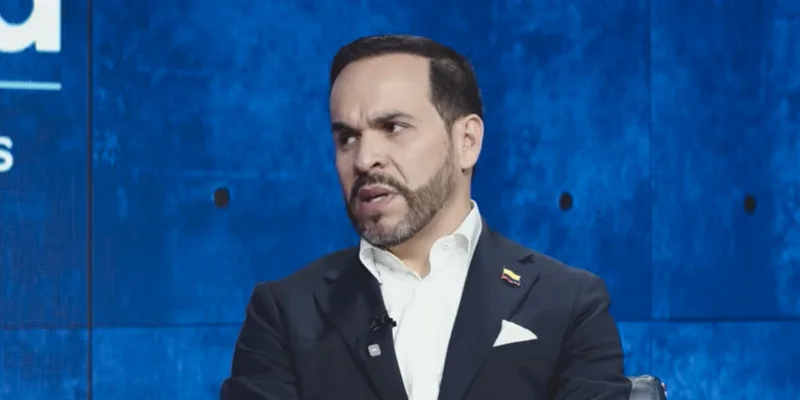
Trump-Backed Millionaire Wins by the Slimmest Margin in Recent History
Colombia’s presidential runoff on Sunday, June 21, 2026, ended with a stunningly narrow victory for far-right millionaire Abelardo de la Espriella, a political novice who secured just over 49.66% of the vote against left-wing senator Iván Cepeda. With nearly all ballots counted, de la Espriella led by roughly 250,000 votes out of more than 25.6 million cast — the tightest margin in any Colombian presidential election in decades.
The preliminary tally, released by electoral authorities late Sunday, showed de la Espriella with 12.96 million votes compared to Cepeda’s 12.7 million. A further 1.6% of ballots were cast blank, reflecting the deep divisions in the country. The result marks a sharp swing back to the right after four years under President Gustavo Petro, Colombia’s first leftist leader, who was constitutionally barred from seeking re-election. De la Espriella, who earned the endorsement of former U.S. President Donald Trump after the first round, celebrated his victory from behind bulletproof glass in Barranquilla, promising to respect the constitution and be a president for “all Colombians.”
But the outcome is far from settled. Cepeda, a close ally of Petro, immediately announced that his party would challenge the results at roughly 33,000 polling stations across the country, alleging irregularities in vote counting. President Petro himself sowed doubts about the integrity of the election, claiming without providing evidence that funds from abroad may have influenced the outcome. Election officials have not formally declared a winner, and a final count is expected in the coming days.
A Contest of Visions: Heavy-Handed Security vs. Dialogue
The campaign pitted two dramatically different approaches to Colombia’s most persistent crisis: violence fueled by drug cartels, guerrilla groups, and criminal gangs. De la Espriella, a business owner, lawyer, and self-styled “outsider,” promised a heavy-handed “iron fist” approach. He pledged to “disembowel” the left — a remark he later dismissed as a figure of speech — and to crack down on armed groups without negotiation. His platform resonated with voters weary of the country’s decades-long armed conflict and frustrated by the perceived failures of Petro’s peace efforts.
Cepeda, a senator and heir to Petro’s political movement, defended the outgoing administration’s strategy of seeking dialogue with illegal armed groups. However, those efforts largely failed, with ceasefires collapsing and violence persisting. The election was widely seen as a referendum on Petro’s legacy: his ambitious social and environmental reforms had won him a devoted base but also fierce opposition from conservatives and business elites. While Petro was barred from running, he campaigned heavily for Cepeda, even alleging without evidence that the first-round vote had been manipulated when Cepeda finished second.
The runoff took place against a backdrop of record voter turnout, with more than 41.4 million Colombians eligible to vote, including 1.4 million abroad. The high participation underscored the stakes: Colombians were choosing not just a leader but a path forward on security, the economy, and the country’s relationship with the United States.
Background: The Petro Presidency and the Shift to the Right
Gustavo Petro’s election in 2022 was historic: he became Colombia’s first leftist president, promising sweeping reforms to tackle inequality, transition away from fossil fuels, and negotiate peace with armed groups. Yet his presidency was marked by legislative gridlock, a stagnating economy, and persistent violence in rural areas. While Petro’s approval ratings remained above 40% among his base, opponents painted him as a radical whose policies had failed to deliver security or prosperity.
The constitution barred Petro from seeking a second term, and his endorsement of Cepeda was seen as an attempt to preserve his legacy. But the political landscape had shifted dramatically. Across Latin America, far-right candidates have been gaining momentum, winning recent presidential elections in Honduras (Nasry Asfura) and Chile (José Antonio Kast), while Keiko Fujimori currently leads the vote count in Peru. De la Espriella’s victory fits into this broader regional trend, fueled by voters’ frustration with incumbents and a desire for tough-on-crime leadership.
De la Espriella himself is a controversial figure. A millionaire lawyer from Barranquilla, he had never held public office before this campaign. His admiration for Trump and his aggressive rhetoric — including threats to “disembowel” opponents — stirred fears of democratic backsliding reminiscent of recent political tensions in the region, echoing concerns about instability seen in events like the M40 Crash Chaos: Multiple Incidents Shut Motorway Across Oxfordshire and Warwickshire. Yet in his victory speech, he struck a more conciliatory tone, promising to respect the rights of those who did not vote for him.
Perspectives from the Ground: A Polarized Electorate
Colombians went to the polls deeply divided. In affluent neighborhoods of Bogotá, voters waved the national flag and wore the iconic yellow soccer jersey, which de la Espriella had adopted as a campaign symbol — a move that prompted legal challenges from Cepeda’s camp. Retired economist Víctor Duque, 72, captured the mood: “We have had an armed conflict and a drug trafficking problem for too long, and this has greatly polarized the country. I believe it is one of the most important elections that has taken place in Colombia this century.”
For many voters, the choice was between two fears: the fear of a return to the unchecked violence of the past under de la Espriella’s iron fist, or the fear of continued instability under Cepeda’s failed dialogue. The razor-thin margin reflects a nation split nearly in half, with no clear mandate for either candidate’s agenda.
The Allegations of Irregularities and What Comes Next
Cepeda’s decision to challenge the results adds a layer of uncertainty. His campaign announced it would scrutinize ballots from thousands of polling stations, alleging that the count was tainted by irregularities. President Petro reinforced this narrative, claiming that the election had been “protected” and that his movement would provide details about “all the accounts and funds that were transacted from abroad.” No evidence has yet been presented, but the allegations threaten to undermine the perceived legitimacy of the outcome.
De la Espriella, for his part, urged his opponents to accept the result. In his victory speech, he said: “I want to speak especially to those who did not vote for me … Your rights, even if you did not vote for me, will be respected. Your opinions will be heard. You will never have to fear thinking differently.” Yet such reassurances may not be enough to calm the political tensions. The final official count is expected within days, but the electoral authority has not yet certified a winner. This situation is reminiscent of recent contested elections in other parts of the world, where narrow margins and allegations of fraud have led to prolonged uncertainty, much like the complexities involved in the Ukraine Fuel Strikes Paralyze Crimea as Russia Pushes for Donbas Breakthrough.
Broader Implications: A Win for the Far Right in Latin America
De la Espriella’s victory is the latest in a series of electoral wins for the far right across Latin America. In Honduras, Nasry Asfura took office earlier this year after a campaign centered on anti-corruption and law-and-order promises. In Chile, José Antonio Kast won the presidency by tapping into voters’ discontent with crime and immigration. In Peru, Keiko Fujimori — herself a controversial figure — holds a lead in the ongoing vote count. These leaders share common traits: they campaign as outsiders, criticize the establishment, and promise to crack down on crime with an iron fist.
The trend has been linked to global disillusionment with incumbents and a backlash against progressive policies. In Colombia, de la Espriella’s victory also signals a strengthening of ties with the United States under Trump, who congratulated him on social media with the message: “He Won, BIG!” The new president has vowed to build a “very close alliance” with Washington, focusing on security and trade. This alignment could shift Colombia’s foreign policy away from the multilateralism and regional autonomy favored by Petro, and toward a more transactional, U.S.-centric approach.
What Changes: Colombia at a Crossroads
The immediate impact of de la Espriella’s victory will be felt in security policy. He has promised to deploy the military more aggressively, to renegotiate or scrap peace deals with armed groups, and to target drug cartels with full force. Critics warn that this approach could escalate violence and lead to human rights abuses, echoing the darkest days of Colombia’s past. Supporters, however, see it as a necessary response to years of failed negotiations.
Economically, de la Espriella is expected to roll back Petro’s environmental and social reforms, including restrictions on oil and mining and efforts to redistribute land. His pro-business platform is likely to attract investment from conservative financiers, but it could also widen inequality and deepen the urban-rural divide.
On the global stage, Colombia’s shift to the right could further consolidate the region’s conservative turn. If Peru also elects Fujimori, South America’s most populous countries will be led by right-wing or far-right leaders, reshaping alliances on issues like climate change, drug policy, and migration.
Yet all these changes hinge on whether the election result holds. Cepeda’s challenge and Petro’s allegations could drag the country into a prolonged legal battle, testing the resilience of its democratic institutions. For now, Colombia waits — as does the world — to see whether the razor-thin margin will ultimately open a path to de la Espriella’s iron-fist presidency or to a deeper crisis of legitimacy.
The race may have been decided at the ballot box, but the fight over what that decision means is only beginning.
Comments