
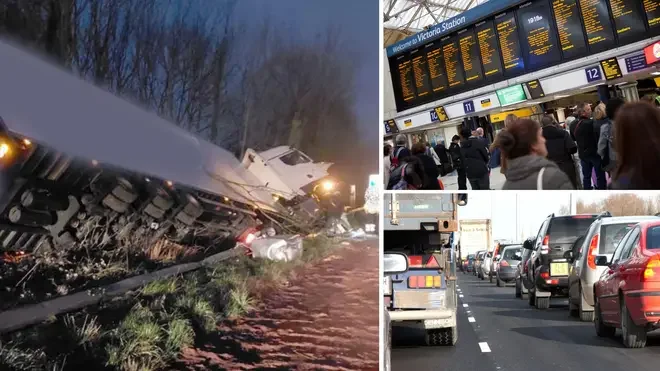
Major Disruption Across M40 After Spate of Crashes Leaves Emergency Services Stretched
Multiple serious collisions on the M40 motorway on Monday and Tuesday have triggered widespread closures, lengthy diversions, and significant delays for commuters and freight traffic across Oxfordshire and Warwickshire. Emergency services have been deployed to at least three separate incidents, including a lane closure near High Wycombe and a full motorway closure south of Warwick, compounding what has become a crisis for motorists relying on one of England's busiest arterial routes.
Lane Closure Near High Wycombe Causes Delays
On the morning of Tuesday, June 23, two lanes of the M40 were closed between Stokenchurch and High Wycombe following a crash that required immediate emergency response. The Oxford Mail reported that emergency services were on scene near Junction 5, and heavy delays were expected for motorists traveling through the area. The specific cause of the crash has not yet been confirmed, but the closure has sent traffic backing up onto surrounding roads, including the A40 and local routes through the Chilterns.
Full Motorway Closure Between J15 and J16 Warwickshire
In a more severe incident overnight on Monday, the M40 in Warwickshire was closed in both directions between Junction 16 (Hockley Heath) and Junction 15 (Warwick) after a late-night collision. According to Birmingham Live, the road was initially closed southbound before the severity of the incident forced authorities to shut the northbound carriageway as well. Warwickshire Police and Warwickshire Fire and Rescue are on scene, and National Highways traffic officers are managing diversions. The event was reported as ongoing into Tuesday morning.
A43 and M40 Junction Crash Adds to Woes
A third crash has been reported at the junction of the A43 and M40 near Bicester, where multiple vehicles were involved in a collision that caused a truck to roll over and spill fuel. The Oxford Mail noted that the incident has caused major traffic in the area, with the AA warning of significant disruption. The fuel spillage has required specialized cleanup crews to attend, adding to the complexity of the response and further delaying the reopening of affected carriageways.
Why These Crashes Matter: Impact on Regional Transport and Emergency Services
The M40 is a critical corridor linking London, the South East, and the Midlands. It carries tens of thousands of vehicles daily, including a high volume of freight trucks. The simultaneous incidents near High Wycombe, Warwick, and Bicester have created a logistical nightmare for travelers and businesses reliant on just-in-time deliveries. With diversions in place, local roads in Warwickshire and Oxfordshire are seeing a surge in traffic, raising concerns about secondary incidents and increased pollution in residential areas.
Emergency Services Stretched Across Multiple Scenes
The spate of crashes has placed considerable strain on local emergency services. Warwickshire Fire and Rescue has deployed multiple appliances and specialist rescue teams to the J15-J16 closure, while Oxfordshire crews are dealing with the fuel spill and the High Wycombe lane closure. This simultaneous demand comes at a time when many UK emergency services are already reporting capacity issues due to budget constraints and increasing call volumes.
Diversion Routes and Commuter Chaos
National Highways has published detailed diversion routes for the Warwickshire closure. Southbound traffic is being diverted via the A3400 towards Henley-in-Arden, then onto the A4189 and B4463 before rejoining the M40 at J15. Northbound drivers are being directed via the A46, A4177, A452, and A45 to the M42. These long detours involve narrow rural roads and suburban routes not designed for heavy traffic, leading to congestion in towns like Stratford-upon-Avon, Henley-in-Arden, and Warwick itself.
Freight and Logistics Impact
The M40 is a vital artery for freight movement between the Port of Southampton and the industrial Midlands. With closures, trucking companies are facing delays that could disrupt supply chains for retailers and manufacturers. The fuel spill near Bicester also poses additional risks, as fuel contamination can damage road surfaces and require lengthy cleanup operations before carriageways can be reopened to traffic.
Broader Implications: What This Means for Road Safety and Infrastructure
These incidents are not isolated. They occur against a backdrop of increasing traffic volumes on UK motorways and growing concerns about the resilience of road infrastructure. The M40 has seen a rise in collisions in recent years, partly linked to high speeds, heavy freight traffic, and driver distraction. The frequency of multi-vehicle crashes involving trucks is also a concern, given the potential for fuel spills and prolonged closures.
Calls for Improved Safety Measures
Experts are likely to renew calls for improved safety measures on the M40, including better signage, enhanced emergency response protocols, and possibly additional variable speed limits. The crash near High Wycombe and the multi-vehicle A43 incident highlight the dangers of junctions where high-speed motorway traffic meets local roads. There may be pressure on National Highways to review junction designs and consider remedial works.
Lessons from Other Infrastructure Crises
While the World Cup in North America dominates global headlines, with England facing Ghana with a knockout berth at stake, domestic issues like road safety remain pressing for British motorists. The chaos on the M40 echoes similar disruptions on other major routes, such as the M6 and M1, where closures can have cascading effects on regional economies. The event also parallels other infrastructure emergencies, such as the ongoing Boyle Heights fire in Los Angeles, where rapid response and effective traffic management are critical to preventing further harm.
What This Changes for the Region
For commuters and businesses in Oxfordshire, Warwickshire, and the Midlands, the immediate impact is clear: weeks of disrupted travel and supply chain delays. In the longer term, these crashes may accelerate calls for investment in alternative transport modes, such as expanded rail freight services or improved dual carriageways for local traffic. They also underscore the importance of robust emergency planning and public communication during major incidents. National Highways has advised drivers to avoid the area if possible, check live travel updates, and plan alternative routes for the coming days as investigations and repairs continue.
Conclusion: A Wake-Up Call for Motorway Management
The M40 closures serve as a stark reminder of the fragility of the UK's road network and the cascading consequences when multiple incidents strike simultaneously. With emergency services stretched and diversions causing significant knock-on effects, the authorities will need to review their response protocols and invest in infrastructure improvements to prevent such chaos in the future. For now, drivers are advised to remain patient, follow official diversions, and stay updated via National Highways and local news outlets.
Comments