
Crimea Faces Severe Fuel Shortage After Ukrainian Drone Strikes
Russian-backed authorities in occupied Crimea have suspended all fuel sales to the public after a series of Ukrainian drone attacks targeted oil depots and logistics facilities on the peninsula and in southern Russia. The move marks the most severe fuel restriction imposed on the region since Russia’s full-scale invasion of Ukraine began in February 2022.
Sergey Aksyonov, the Moscow-appointed governor of Crimea, announced the halt in a statement on Sunday, saying that fuel would now be reserved exclusively for government agencies responsible for the peninsula’s “functioning and security.” Individuals and private businesses were turned away from petrol stations as long queues formed across the region.
“Further decisions regarding the current situation in the republic’s fuel market will be announced at a later date,” Aksyonov said.
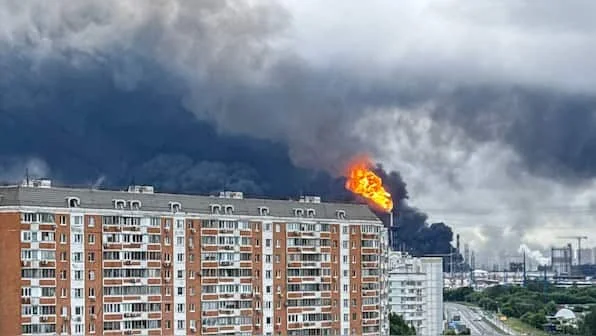
The announcement came just hours after a Ukrainian drone attack on an oil depot in the port city of Kerch, at the eastern tip of Crimea, killed at least four people and injured 28 others, according to local authorities. Social media footage showed a massive blaze erupting at the facility, sending plumes of black smoke over the city. The Kerch Strait bridge, which connects Crimea to Russia’s Krasnodar region, was temporarily closed to traffic, and ferry services were suspended.
Ukrainian President Volodymyr Zelensky confirmed the strikes, describing them as a “just response to Russia’s brutal attacks.” He said Kyiv also hit a logistics facility used for oil transportation in Russia’s Krasnodar region, where one person was killed on a passenger ferry. Military logistics facilities and radar systems—including four S-400 radar stations and two Pantsir systems—were also struck.
Intensified Campaign Against Russian Infrastructure
The attack on Crimea is part of a broader escalation in Ukraine’s long-range drone campaign. Over the past week, Kyiv has struck oil refineries in Moscow, St. Petersburg, and the Tyumen region in western Siberia. On June 18, a drone assault on a Moscow oil refinery was described as the largest Ukrainian attack on Russian soil since the war began. Russia’s Defense Ministry said it intercepted 239 Ukrainian drones overnight on Sunday alone.
Ukraine’s strategy is twofold: to disrupt Russia’s military supply chains and to bring the war home to ordinary Russians far from the front line. By targeting fuel depots, refineries, and transport hubs, Kyiv aims to degrade Moscow’s ability to sustain its offensive operations in eastern and southern Ukraine.
Why Kostyantynivka Matters: The Gateway to Donbas
While Ukraine presses its long-range attacks, the ground war remains brutal and fluid. Russian forces have intensified their assault on the strategic city of Kostyantynivka in eastern Ukraine’s Donetsk region, a city that commanders on both sides describe as the key to controlling the rest of the Donbas.
Russian troops have infiltrated the city and are now trying to surround it, Ukrainian soldiers told the BBC. The entire city is effectively in a “grey zone,” no longer under full Ukrainian control. A Ukrainian drone pilot operating in the area said Russian forces “get into areas behind our backs and in urban conditions it’s extremely difficult to push them out.”
If Kostyantynivka falls, Russian forces would be able to push toward Ukraine’s last remaining strongholds in the east: Kramatorsk and Sloviansk. Seizing those cities would bring Moscow closer to its long-stated goal of capturing the entire Donbas region.
Stalemate or Shifting Frontlines?
For months, the front line in eastern Ukraine has been largely static, with neither side able to achieve a major breakthrough. But in recent weeks, Russian forces have made incremental gains south of Kostyantynivka, and Moscow claims its troops are now advancing in the south-western part of the city.
Ukrainian commanders acknowledge the threat but insist the situation remains under control. They note that Kyiv’s forces have recaptured more territory this year than they have lost, partly by disrupting Russian supply lines between the border and Crimea. The fuel crisis on the peninsula is a direct result of that strategy.
The Fuel Crisis: A Summer Blow to Crimean Tourism
Crimea has been experiencing logistical difficulties and fuel shortages for weeks, but the latest attacks have pushed the region into a full-blown crisis just as the summer holiday season begins. The peninsula, which Russia illegally annexed in 2014, is a popular destination for Russian tourists. But with fuel now rationed and deliveries delayed, the tourism sector expects millions of visitors to stay away this year.
Mikhail Razvozhayev, the Moscow-appointed governor of Sevastopol, said fuel deliveries were being delayed and that a petrol allocation for private motorists scheduled for Sunday had been canceled. Power outages were also reported in several areas after damage to electricity networks.
“Fuel is available only for official services,” Razvozhayev said on Telegram.
The crisis highlights a key vulnerability for Russia: its reliance on a narrow set of supply routes into Crimea, including the Kerch Strait bridge and ferry crossings, both of which have been repeatedly targeted by Ukrainian drones and missiles. Ukraine’s ability to strike deep behind Russian lines has forced Moscow to divert resources to protect critical infrastructure, stretching its already strained logistics network.
Broader Implications: War of Attrition and Escalation
The dual developments—a fuel crisis in Crimea and a Russian push on Kostyantynivka—underscore the shifting dynamics of a war now in its fifth year. Neither side appears capable of a decisive knockout blow, but both are pursuing strategies designed to erode the other’s will and capacity to fight.
Ukraine’s Long-Range Strategy
Ukraine’s drone campaign is not just about military logistics; it is also about psychological warfare. By striking targets deep inside Russia, including Moscow and St. Petersburg, Kyiv aims to remind ordinary Russians that the war has consequences beyond the front line. President Zelensky framed the latest attacks in those terms, saying, “Russia understands only strength, and our long-range strength is certainly working for peace.”
The strategy carries risks. Escalation could provoke a harsher Russian response, including renewed strikes on Ukrainian energy infrastructure and civilian targets. Over the weekend, at least seven people were killed in Russian attacks, with children among the dead, according to Zelensky.
Russia’s Donbas Gambit
For Moscow, capturing the Donbas remains a top priority, even as it struggles to defend its own territory from Ukrainian drones. The offensive on Kostyantynivka signals that Russia is willing to commit significant resources to achieve a breakthrough, even at the expense of its positions elsewhere.
But the fuel crisis in Crimea could complicate those plans. Without reliable fuel supplies, Russian forces operating in southern Ukraine may face logistical constraints that limit their ability to sustain offensive operations. The Kremlin will have to balance its ambitions in the east with the need to protect its hold on Crimea, a strategic and symbolic prize.
A War of Attrition
The current phase of the war resembles a grinding war of attrition, with both sides trading blows in different arenas. Ukraine is targeting Russia’s energy infrastructure and supply lines, while Russia is pressing its advantage in manpower and artillery to seize territory in the east.
The outcome may depend on which side can sustain its efforts longer. For Ukraine, continued Western military aid—including long-range drones and missile systems—will be critical. For Russia, the ability to maintain domestic support for the war while absorbing the economic and logistical costs of attacks on its soil will be tested.
What This Changes: A New Phase in the Conflict
The convergence of events—Crimea’s fuel crisis and the battle for Kostyantynivka—marks a new phase in the war. For the first time, Ukraine has demonstrated a credible ability to disrupt Russia’s control over Crimea, a territory Moscow has treated as inviolable since its annexation in 2014. At the same time, Russia’s grinding advance in Donbas shows that it is far from defeated.
Crimea’s Strategic Vulnerability
The fuel suspension is a stark reminder that Crimea is not impervious to attack. Ukraine’s sustained campaign against supply routes has exposed the peninsula’s reliance on a fragile logistics network. If Ukraine can maintain pressure on those routes, it could force Russia to rethink its military posture in the south.
Donbas: The War’s Decisive Theater
Meanwhile, the fight for Kostyantynivka may determine the war’s trajectory in the east. If Russia captures the city, it will have a clear path to Kramatorsk and Sloviansk, potentially collapsing Ukraine’s defensive line in Donetsk. If Ukraine holds, it will have blunted Russia’s most significant offensive in months.
Global Repercussions
The war continues to reverberate beyond Ukraine’s borders. Energy prices have fluctuated as attacks on Russian refineries raise concerns about global supply. The conflict has also influenced domestic politics in countries that provide aid to Kyiv, with some Western leaders facing pressure to scale back support.
In the United States, the 2026 midterm elections are approaching, and Ukraine aid remains a contentious issue. In Europe, divisions persist over the pace of sanctions against Russia and the level of military assistance.
For now, the situation on the ground remains fluid. But one thing is clear: the war is entering a new, more volatile phase. Ukraine’s ability to strike at Russia’s rear areas, combined with Russia’s determination to seize the Donbas, suggests that the conflict will continue to exact a heavy toll on both sides—and on the millions of civilians caught in between.
Comments