
All 8 Flock Cameras Stolen in Winona, $24K Loss Highlights Surveillance Debate
Winona police are investigating the coordinated theft of all eight of the city’s Flock Safety automated license plate reader cameras, a brazen act that occurred between July 29 and August 1. Officers discovered the cameras missing on Saturday night after noticing a complete absence of activity from the devices. Upon checking the known camera locations, they found the steel poles had been cut down near the base and discarded in nearby weeds, with the camera units themselves removed.
The stolen equipment was positioned at four key highway entry and exit points across the city, with two cameras at each location: Highway 61 and Bundy Boulevard, Highway 61 and Highway 14, Highway 14 and Knopp Valley Drive, and Highway 43 and Homer Road. Each camera and pole combination costs approximately $3,000 to replace, putting the total financial loss at roughly $24,000—a direct hit to the Winona Police Department’s budget. Two additional Flock cameras owned by Buffalo County on the Mississippi River Bridge were also stolen in the same manner, according to reports from Valley News Live.
As of August 4, none of the cameras had been recovered and no suspects have been identified. The Winona Police Department is asking anyone with information to contact them at 507-457-6302 or submit a tip online. The investigation remains active.
A Statewide Pattern of Theft and Vandalism
The Winona theft is not an isolated incident. It is the latest and most complete example in a growing pattern of Flock camera theft and vandalism across Minnesota. Communities including Duluth, Plymouth, Faribault, Edina, and Anoka County have all reported cameras being stolen or damaged in recent months, according to KSTP.
Duluth has been hit particularly hard, with at least five cameras stolen and another damaged in June and July. In Anoka County, a deputy reported a damaged Flock camera in Nowthen in May. Late last month, a man in his 40s was charged in Faribault for allegedly stealing a camera with the intent to take it apart. Closer to the Twin Cities, Edina police report four cameras have been vandalized since the city adopted the technology in 2023, and in Plymouth, two cameras were damaged in late July—one found in pieces near its mount and another with its power cord severed.
The repeated incidents have forced city officials and law enforcement agencies to confront a dual challenge: the physical security of the devices and the escalating public debate over their use.
The Flock Camera System: How It Works
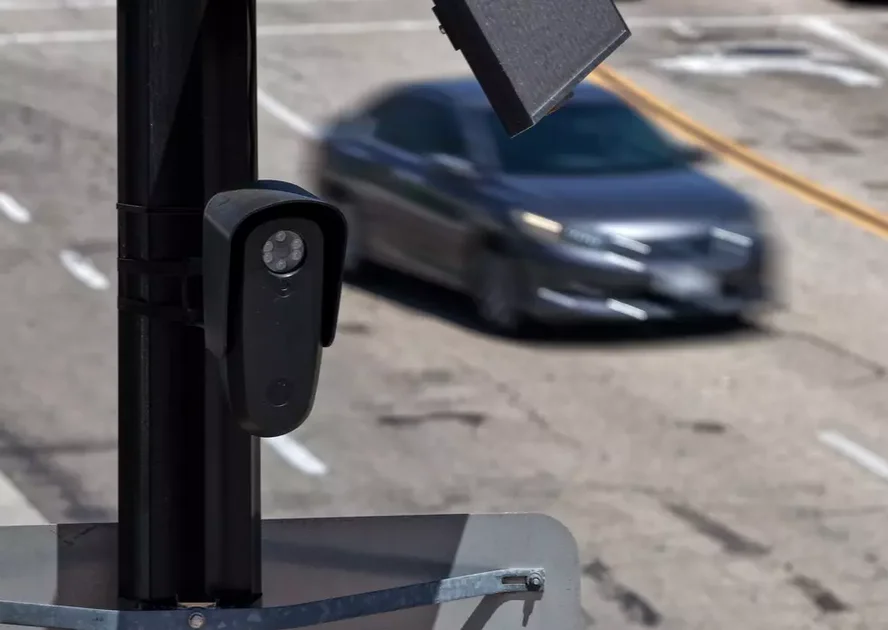
Flock Safety cameras are automated license plate readers (ALPRs) that capture images of every passing vehicle’s license plate, along with its make, model, and color. The data is uploaded to a cloud-based system that police departments can search to track vehicles associated with crimes, such as hit-and-runs, stolen cars, or missing persons investigations. The cameras are often mounted on existing poles or dedicated posts at high-traffic intersections and highway ramps.
Winona police have stated that the data collected by their cameras is owned by the department and permanently deleted after 30 days. The department has used the technology to assist in criminal investigations, but the recent thefts have now created a $24,000 gap in their surveillance infrastructure.
The Debate Over Surveillance and Privacy
The thefts occur against a backdrop of intensifying public scrutiny of Flock cameras and automated license plate readers. Civil liberties advocates argue that the technology expands government surveillance in ways that erode privacy, particularly for individuals not suspected of any crime. Concerns have also been raised about the potential for data sharing with third-party companies or federal agencies, as well as the risk of misuse or inaccurate tracking.
A recent case involving a Minnesota journalist who was incorrectly tracked by a Flock camera has renewed questions about the technology’s accuracy and oversight, as noted by FOX 9. The incident has amplified calls for stricter regulation and community control over how the data is collected, stored, and accessed.
In June, the city of Columbia Heights voted to end its contract with Flock and remove its 12 cameras, citing community concerns and accusations of “Big Brother” overreach. That decision, which followed sustained public pressure, marked a significant victory for privacy advocates and a clear signal that municipalities are increasingly willing to abandon the technology.
What This Means for Flock Safety and Local Policing
The Winona theft is a stark illustration of how the surveillance debate has moved from city council chambers to direct action. While Columbia Heights’ removal was a formal, democratic process, the Winona theft represents a more radical and unlawful form of resistance. The use of bolt cutters and saws to physically dismantle a surveillance network is a dramatic escalation that police departments across the state will need to address.
The financial impact on Winona is not just about replacing equipment; it’s about the loss of a crime-fighting tool that officers had integrated into their daily operations. Police have described the cameras as valuable for solving crimes and locating missing persons, and their sudden absence leaves a void in the city’s investigative capabilities.
The broader trend has also caught the attention of other jurisdictions that are weighing the benefits of Flock cameras against the risks of vandalism and community opposition. Cities considering the technology must now factor in the potential for continued theft and the associated replacement costs, which are not insignificant for smaller departments.
The Physical Security Challenge
One of the most difficult aspects of the thefts is the vulnerability of the cameras themselves. Flock cameras are typically mounted on poles in public rights-of-way, making them accessible to anyone with the right tools. While the cameras are designed to be sleek and relatively unobtrusive, they are not fortified against determined thieves.
Law enforcement agencies will likely need to explore more secure mounting solutions, such as higher poles, tamper-resistant enclosures, or concrete barriers, to prevent future thefts. However, these measures would add to the cost and could make the cameras more conspicuous, potentially fueling further opposition.
The Winona police have not yet commented on whether they plan to replace the stolen cameras or if they will reconsider their use of Flock technology altogether. The decision will likely depend on the outcome of the investigation and the level of support from the community.
A Lightning Rod in a National Debate
The thefts in Winona are also a symptom of a national movement against ALPR technology. Across the country, Flock cameras have been spray-painted, bagged, and physically removed by activists who view them as an infringement on civil liberties. The company has defended its product, emphasizing its role in solving serious crimes and its data retention policies.
Yet each incident of vandalism reinforces the narrative that the technology is deeply polarizing. For supporters, the cameras are a practical crime-fighting tool. For detractors, they represent an unwarranted intrusion into everyday life, capturing the movements of law-abiding citizens without their consent.
The fact that all eight cameras in Winona were removed in a coordinated operation suggests a level of organization and intent that goes beyond random vandalism. Investigators are likely considering whether the theft was the work of a single group or a demonstration staged to make a political point.
The case has also drawn attention to the broader civic debate about surveillance, with some residents questioning whether the city should reinvest in the system or follow the lead of Columbia Heights and reconsider its use entirely. The Winona City Council and police department will face mounting pressure to clarify their position on Flock cameras in the coming weeks.
The Road Ahead for Winona
For now, the Winona Police Department is focused on the investigation and the hope of recovering the stolen equipment. The department has released the specific locations where the cameras were taken and is urging residents to report any suspicious activity or information that could lead to an arrest.
The loss of the cameras is a significant setback, but it is not insurmountable. The department will need to decide whether to allocate funds for replacement units or explore alternative investigative methods. The decision will likely shape the city’s approach to public safety and surveillance for years to come.
In the meantime, the theft serves as a reminder of the volatile intersection of technology, privacy, and public opinion. As Minnesota cities continue to grapple with these tensions, the Winona case may become a touchstone for both sides of the debate—highlighting the lengths to which opponents will go, and the financial and operational consequences that police departments face.
The Changing Landscape of Community Surveillance
The events in Winona and across Minnesota signal a turning point in how automated license plate readers are perceived and managed. What was once a niche tool adopted quietly by police departments has become a focal point of civic engagement and protest.
Cities like Columbia Heights have shown that public pressure can lead to policy changes, while the thefts in Winona demonstrate that some individuals are willing to take matters into their own hands. This volatile mix of democratic debate and direct action is now forcing lawmakers and law enforcement to reconsider how surveillance technologies are deployed—and at what cost.
Law enforcement agencies that continue to use Flock cameras will need to invest not only in the hardware but also in community outreach and transparency. The data retention policies, access controls, and oversight mechanisms will all come under increased scrutiny. The Winona theft, while a financial blow, has also opened a window into these broader questions.
The investigation is ongoing, and it remains to be seen whether the perpetrators will be caught. But regardless of the outcome, the message has been sent: the use of automated surveillance in public spaces is no longer a settled matter. It is a contentious, evolving issue that will require careful navigation by elected officials, police chiefs, and residents alike.
For those following the story, the Winona case is a clear indicator that the debate over Flock cameras is far from over. It has moved from the abstract to the concrete, with real financial and operational repercussions. Whether Winona decides to rebuild its surveillance network or pursue a different path, the decision will be closely watched by cities across the state and the nation.
Comments