
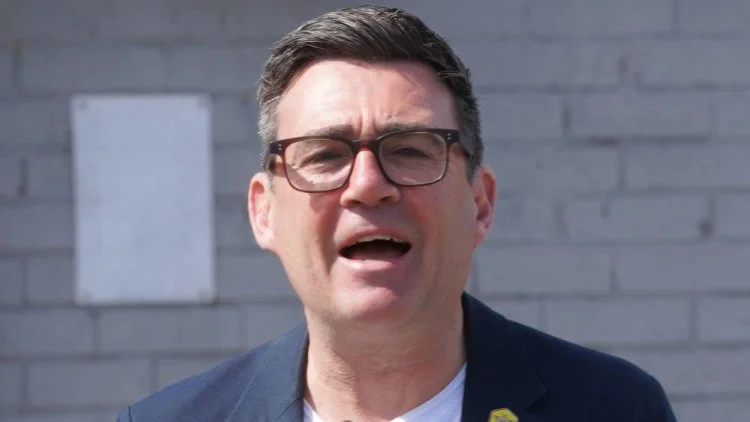
Burnham Unveils ‘Devolution Revolution’ to Rewire Britain’s Economy
Andy Burnham, the frontrunner to become Britain’s next prime minister, will deliver a landmark speech in Manchester on Monday outlining a sweeping devolution agenda that promises to be the biggest transfer of power from Whitehall in modern times. The Makerfield MP is expected to pledge that devolution will be “at the heart of Downing Street” as he sets out a 10-year mission to raise living standards through reindustrialisation, housing, infrastructure, and utilities reform.
According to sources familiar with the speech, Burnham will call for a “circuit-breaker” for Britain, arguing that the current economic model is broken and that his generation of politicians must take responsibility for declining public trust. The speech, which allies describe as his “reintroduction to the country,” will focus on handing power back to local communities that have been neglected for 14 years. Key proposals include allowing combined authorities to keep 100% of any increase in business rates they generate to attract investment, and exploring the possibility of mayors raising income tax to spend in their own regions.
Burnham is also expected to announce plans to move part of his prime ministerial operation to the North, creating a “No 10 in the North” to symbolise the shift in focus. The former Greater Manchester Mayor, who served from 2017 until earlier this month, will argue that the South has been paying the price for economic failures in the North and that additional powers given to Manchester have driven its rapid growth. “Devolution will be at the heart of Downing Street, with more powers for communities that have been overlooked,” a source told the Mirror. “It’s about rewiring politics to work for working people.”
Why It Matters: The Stakes of the Devolution Shift
The speech comes at a critical juncture. Burnham is widely expected to enter Downing Street as soon as July 20, barring a last-minute challenger for the Labour leadership. His devolution-first agenda represents a sharp break from the outgoing government of Sir Keir Starmer, who also focused on technical education and regional growth but failed to deliver the scale and speed of change Burnham now promises.
The stakes are high. Britain has seen seven prime ministers in 10 years, a period marked by political chaos, Brexit fallout, and economic stagnation. Burnham’s allies argue that the current system forces regional leaders to go “on bended knee” to Westminster, a dynamic he described in his book Head North. By giving mayors control over social housing, welfare, and post-16 education, Burnham hopes to end the North’s reliance on “hand outs” from the South and unlock local economic potential.
Leeds has already been a test case for keeping business rates, and Burnham would roll this out across all combined authorities. His ally, Labour deputy leader Lucy Powell, told the BBC: “I have shared a lot of the same frustrations that he has shared in the lost opportunity that could have come were more powers and resources spread out around the country and given to local areas to determine for themselves. Greater Manchester was the fastest growing region in the country by some distance.”
The speech also touches on broader reforms. Burnham is expected to commit to “buying British” through public procurement reform, aiming to revive industry and secure more apprenticeships and work placements. Education reforms will seek “true parity” between academic and technical routes, a balance Starmer also pursued but which Burnham believes requires local control to succeed. He has spoken to former Labour minister Alan Milburn, who is reviewing unemployment among 16-to-24-year-olds, and wants local leaders to play a stronger role in helping young people get off benefits.
Perspective: What This Changes for Britain’s Political Landscape
Burnham’s devolution revolution signals a fundamental shift in how Britain is governed. If implemented, it would move decision-making from Whitehall to town halls and mayoral offices, empowering regions that have long felt ignored. The plan also carries political risks: giving mayors power to raise taxes could be unpopular, and the “psychodrama” of bringing David Miliband (foreign secretary under Gordon Brown) and Ed Miliband into his Cabinet has already sparked internal Labour anxieties.
Nevertheless, Burnham’s message resonates with voters weary of Westminster gridlock. The speech is designed to show that he recognises the system is broken and that he is willing to change it. His call for a “decade of rewiring Britain” suggests he hopes to fight and win at least two general elections, embedding devolution as a permanent feature of British governance.
The broader trend is clear: across the UK, regions are demanding more autonomy. The devolution revolution Burnham is championing could serve as a model for other countries grappling with centralised power. If successful, it would not only transform Britain’s economy but also restore faith in a political system that many feel has failed them. As one source put it, “This is a real moment for change.”
In other news, the DHS Faces Backlash Over Election Grants, Immigration Rule, and Iran World Cup Policy, while Cyberpunk Edgerunners Season 2 Sets Fall 2026 Release With Darker Tone and New Crew.
Comments