
Big Sur's Timber Fire Grows as Crews Battle Steep Terrain and Rising Threats
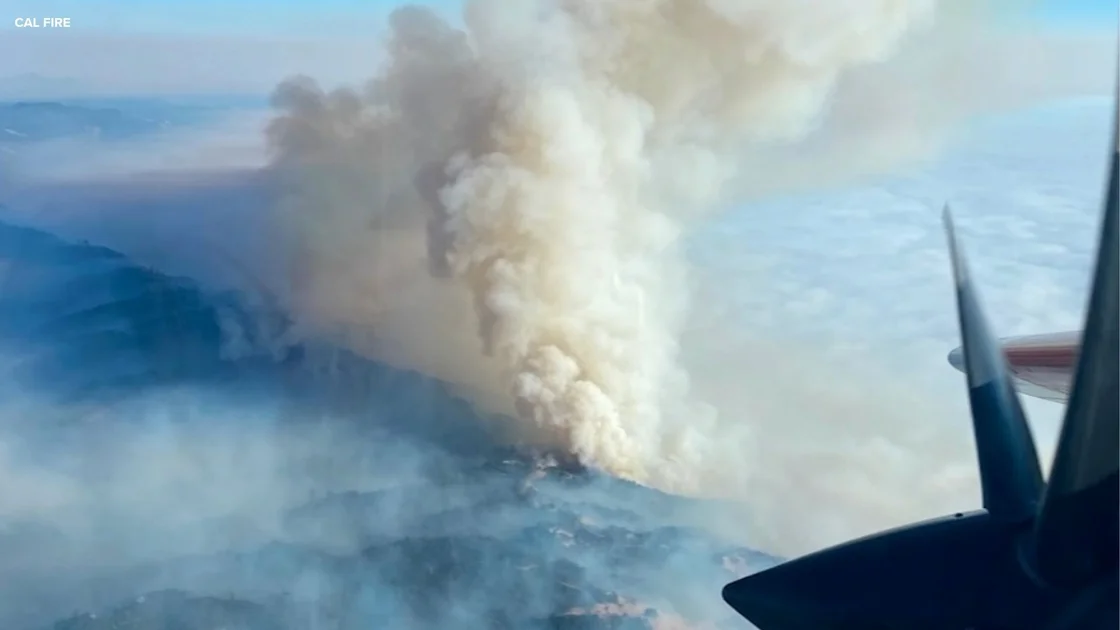
Evacuation orders have expanded along California's famed Big Sur coast as the Timber Fire in Monterey County grew to nearly 3,000 acres by Tuesday evening, according to Cal Fire. The blaze, which started Sunday in the Los Padres National Forest, has prompted mandatory evacuations for iconic tourist destinations including the Nepenthe restaurant, the Henry Miller Memorial Library, the Alila Ventana resort, and several state parks during one of the region's busiest travel weeks.
Nearly 500 fire personnel are now assigned to the incident, supported by eight helicopters, 36 engines, five bulldozers, and 13 hand crews. As of Tuesday morning, containment stood at just 5%, with fire activity concentrated along the northern and eastern flanks of the burn area. A portion of the Pacific Coast Highway in Monterey County remains closed to non-residents, and officials are urging visitors to avoid the region entirely.
The fire currently threatens 259 structures, with 254 homes and businesses inside the evacuation zone. Crews are working to strengthen containment lines along the Highway 1 corridor while conducting structure defense in Big Sur and the Ventana Wilderness. The cause of the fire remains under investigation.
Shifting Winds Push Fire Toward Ventana Wilderness
Battalion Chief Josh Silveira of Cal Fire Monterey County said the blaze is moving northeast, climbing into the steep Ventana Wilderness, a rugged, largely unpopulated area where ground access is extremely limited. "The terrain becomes more difficult to navigate," Silveira said. "Moving east to west across the range, the terrain is mostly too steep for access roads, meaning firefighters must travel on foot, cutting defensive lines by hand — old school, with shovels and picks."
Firefighters are bracing for continued challenging conditions. While there is a 15% chance of rain in the coming days, Silveira said it is unlikely to significantly alter the situation. "Even though we may get wetting rain… it's not really going to dramatically affect the fuel moisture," he said. "It'll dry out pretty quickly."
The fire is spreading primarily along the ground through grass, brush, and oak woodland, and has not yet moved into the treetops. However, officials say the "chess game" of positioning crews ahead of the fire is critical to preventing it from menacing other communities beyond the immediate evacuation zone.
A Regional Crisis: Wildfires Stretch Resources Across the West
The Timber Fire is just one front in a severe outbreak of wildfires across the American West, fueled by scorching heat, dry fuels, and gusty winds.
North of Reno, Nevada, the Bug Fire has merged with the Fred Mountain Fire, creating a massive combined burn area that had grown to 66,505 acres by Tuesday. The merged wildfire, burning in Washoe County, has forced new evacuation orders for rural areas from Seven Lakes Mountain to Dogskin Mountain, with additional warnings issued for parts of Spanish Springs. Officials report containment at just 4%, with hot, dry, and unstable conditions expected to drive significant fire movement. The Nevada National Guard and Military Police have been deployed alongside resources from Las Vegas and California, with crews focusing on protecting communities, road corridors, and utility infrastructure.
In British Columbia, Canada has put its military on standby to help battle deadly wildfires. At least one woman has died, and about 20,000 people have fled their homes. Nearly half of the fires in the region are burning out of control, according to authorities. The mayor of Summerland — a town of about 12,000 ordered to evacuate over the weekend — warned that affected areas remain too dangerous to enter and that the full scope of destruction is still unknown.
Firefighters in Spokane, Washington, are also strengthening containment lines around three destructive blazes, allowing some evacuated residents to return home. A fast-moving fire just north of Reno forced 5,500 people to flee on Monday.
Strained Resources and the Challenge of Multiple Fronts
The simultaneous nature of these fires is testing the capacity of firefighting agencies across state and national lines. Cal Fire noted that the Timber Fire response includes crews from Contra Costa and Alameda counties, the California Office of Emergency Services, the Big Sur Fire Brigade, and the U.S. Forest Service. "That number's expected to grow over the next couple days as we start to get our resources making their way to the incident from around the state," said Chief Silveira.
In Nevada, the interagency coordination includes federal land management agencies such as the BLM, along with military police, reflecting the severity and complexity of the Bug Fire's rapid growth. The expanded evacuation zones around Reno underscore how quickly a fire can move from a remote start to threatening suburban neighborhoods.
The strain on resources comes at a time when extreme heat warnings are sweeping the globe, contributing to what experts describe as an unprecedented fire season. The U.S. Pacific Northwest is said to be reckoning with a summer of historic wildfires, and the current conditions suggest the peak of the season may still be weeks away.
The Looming 'New Normal' of Western Wildfire Seasons
The convergence of multiple large fires in California, Nevada, Oregon, and Washington — along with devastation in British Columbia — points to a broader trend that is reshaping firefighting strategies and community planning across the region. Fire behavior, once heavily dependent on local weather patterns, is now being driven by multi-year drought, sustained high temperatures, and a warming climate, creating what scientists and officials increasingly call the "new normal."
For communities like Big Sur, the stakes are particularly high. The region is not only a global tourist destination, but also home to a tight-knit year-round population that has repeatedly faced wildfire threats. The closure of Highway 1 — the region's lifeline — has an immediate economic impact, affecting tourism, local businesses, and residents. Firefighters' emphasis on preventing the fire from crossing the highway illustrates the critical importance of that infrastructure.
The difficulty of fighting fires in rugged, inaccessible terrain is also a defining feature of modern fire seasons. As fires increasingly move into wilderness areas like the Ventana Wilderness and the mountain ranges around Reno, strategies must adapt. "The chess game is, where do we engage the fire… to corral this thing out ahead of it to prevent it from impacting other communities," said Chief Silveira. This requires proactive planning, controlled burns, and the construction of defensible perimeters that can contain fires in places where crews cannot safely operate.
Evacuation Orders and the Human Cost
The human impact of these fires is immediate and profound. In Monterey County, the evacuation of the Nepenthe restaurant and the Henry Miller Memorial Library — institutions that have served as cultural landmarks for decades — is a reminder that no location is immune. The resort guests and residents forced to leave their homes face an uncertain wait, not knowing if their structures will be standing when they return.
The situation in Summerland and Peachland in British Columbia, where the danger of re-entry remains high, offers a somber preview of what may await some evacuated residents in the U.S. As the mayor warned, determining the full scope of destruction can take days, and the risk of further flare-ups remains. Local authorities across the West are now operating under protocols designed for an era of larger, more volatile fires, which includes preparing for prolonged evacuations.
An Uncertain Forecast: What Comes Next for Firefighters and Residents
As of Tuesday evening, the Timber Fire near Big Sur is moving slowly, but the rugged terrain and dry conditions continue to make it a significant threat. The decision by officials to close the Pacific Coast Highway to non-residents, while disruptive, is a preventive measure aimed at ensuring the safety of both travelers and fire crews. Officials have urged visitors to avoid the area entirely, recommending they check local road conditions and air quality advisories before planning any travel.
For the nearly 500 personnel assigned to the Timber Fire, the work is expected to continue for the foreseeable future. Crews will focus on extending containment lines on the north and east flanks and monitoring the fire's behavior as it moves into the wilderness. The 5% containment figure underscores the challenges ahead, but officials emphasize that no structures have been lost so far.
Similar efforts are underway in Nevada, where the Bug Fire's massive scale is now a major drain on regional firefighting resources. With containment at just 4%, and strong afternoon winds expected to push the fire further, evacuation zones remain fluid. In both states, authorities are urging residents to remain vigilant, prepare emergency kits, and heed all evacuation orders — as the situation can change in a matter of hours.
The coming days will be critical. Weather forecasts are a mixed bag: a slight chance of rain in California offers slim hope, but not enough to materially alter fuel moisture levels. In Nevada, conditions are expected to remain hot, dry, and unstable. As firefighters continue to battle multiple large blazes across the West, the question of federal and state resource allocation becomes ever more pressing. The scale of the current crisis is a stark indicator that the 2026 wildfire season is on track to be one of the most challenging in recent memory, and its long-term impacts on the region's ecology, economy, and communities will be measured for years to come.
Residents across the affected areas are encouraged to stay informed through official channels such as Cal Fire, the U.S. Forest Service, and local sheriff's offices. For more on this season's emergency response, see our coverage of the Bug Fire Surges to 11,400 Acres Near Reno as Evacuations Strain Resources. As always, the guidance from authorities is clear: prioritize safety, follow evacuation orders, and stay connected to reliable updates.
Comments