
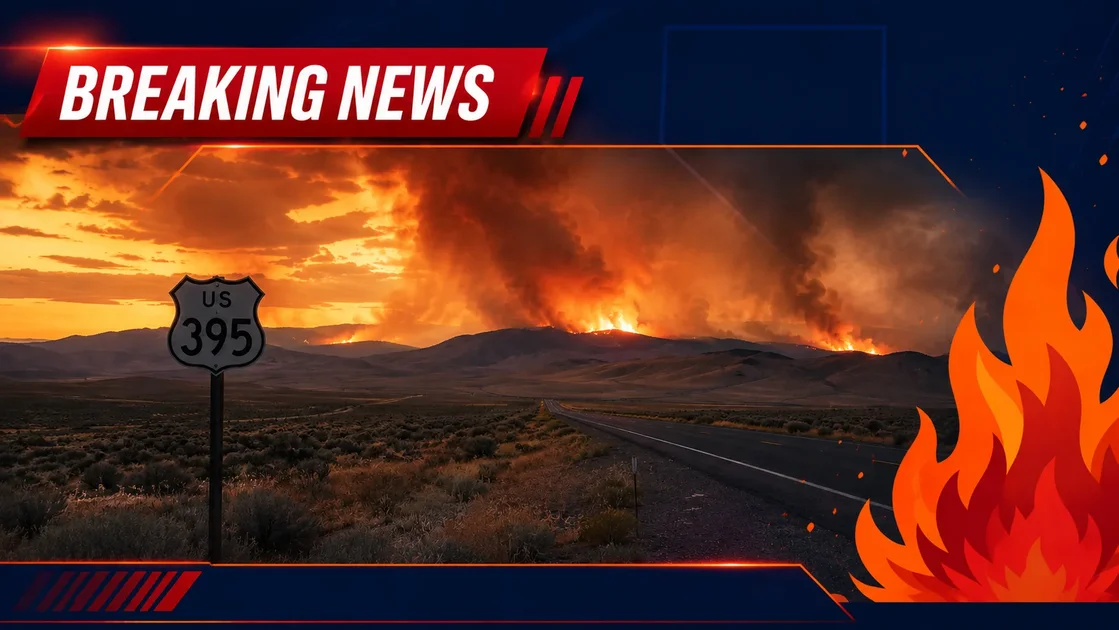
Bug Fire Explodes to 11,400 Acres, Containment Drops to 3% Amid Fast-Moving Conditions
Fire crews battling the Bug Fire north of Reno faced a rapidly deteriorating situation Sunday evening as the blaze surged to 11,405 acres, forcing containment down to just 3%. The wildfire, which ignited Saturday afternoon near Hallelujah Junction along the California-Nevada border, spread explosively through dry brush and grass fuels, prompting urgent evacuation orders and warnings across Washoe, Sierra, and Lassen counties.
According to the latest update from CAL FIRE, the fire's forward progress has not been stopped, and Truckee Meadows Fire Protection District Chief Rick Edwards urged residents in evacuation zones to leave immediately. "The fire is moving extremely quickly," Edwards said. "If you are told to evacuate, do not wait."
The fire, which initially burned just over 4,000 acres on Saturday, made a significant run overnight into Sunday, growing to 6,528 acres by morning. By 5:50 p.m., it had expanded to 7,500 acres, and by 9 p.m., it had reached 11,400 acres. Officials attribute the rapid growth to challenging terrain, dry conditions, and abundant available fuels. Air support, including water drops from Washoe County Sheriff's Office helicopters, has been deployed, but containment remains minimal.
Evacuation Orders Expand, Shelters Open
Evacuation orders remain in effect for parts of Washoe County, particularly in the Cold Springs and Silver Knolls areas, with warnings expanded Sunday afternoon to include neighborhoods near Matterhorn Boulevard and Argonaught Way in Reno. The Washoe County Sheriff's Office and Truckee Meadows Fire Protection District are coordinating response efforts, and residents are urged to monitor official evacuation maps and alerts.
A evacuation center has been established at the Evelyn Mount Community Center at 1301 Valley Road in Reno. Displaced residents and those under evacuation orders are directed to report there for assistance. The center's operations are being wound down as some evacuations were lifted Sunday afternoon, but officials caution that conditions could change rapidly.
For livestock owners, the Reno-Sparks Livestock Events Center at 1350 N. Wells Avenue is accepting animals, with more than 150 animals already housed. Washoe County Animal Services is also supporting pets, with small animals being taken to the shelter at 2825 Longley Lane. Residents are encouraged to self-evacuate animals to friends or family if possible, as resources and space are limited.
Road Closures and Air Quality Concerns
U.S. 395 near the fire has been intermittently closed, with northbound lanes open to one-way traffic as of Sunday afternoon. Offramps on U.S. 395 North that were previously closed have reopened, but Red Rock Road between Moya Boulevard and American Flat Road and Lemmon Drive at Ramsey Way remain closed and will be re-evaluated Monday. Commuters should expect delays and check real-time traffic updates.
Smoke from the Bug Fire is affecting air quality across northern Nevada and northeastern California. Northern Nevada Public Health reports current conditions in the "good" to "moderate" range for most of Washoe County, but residents in affected areas should monitor air quality indexes and limit outdoor exposure. Fire officials remind residents that even the smallest spark can start a wildfire in these hot, dry conditions.
The fire is burning in Lassen, Sierra, and Washoe counties, with the cause still undetermined. Governor Joe Lombardo stated on X that he is being updated on the fires in Reno. No structures have been lost and no injuries reported so far, but officials emphasize that the fire remains unpredictable.
Background: Fast-Moving Wildfire Threatens Suburban Reno
The Bug Fire ignited on Saturday, August 8, 2026, in a remote area near Hallelujah Junction, a crossroads on U.S. 395 at the California-Nevada line. Within hours, it had spread to over 4,000 acres, driven by high temperatures and low humidity. By Sunday morning, the fire had more than doubled in size, reaching 6,528 acres, with zero containment. The blaze's proximity to residential communities in Cold Springs, Silver Knolls, and other northern Washoe County neighborhoods prompted immediate evacuation orders.
As of Sunday afternoon, about 3,800 households had been evacuated, though some zones were later reopened after crews achieved 20% containment on portions of the fire. The containment figure fluctuated through the day, reflecting the fire's erratic behavior. A couple of spot fires flared up, but forward progress was largely stopped in some areas, allowing residents in previously evacuated zones off White Lake and Village Parkway to return home. However, officials cautioned that the fire remains a threat, and residents in yellow warning zones should be prepared to leave immediately if conditions worsen.
The Bug Fire is just one of several wildfires burning in the region. The Fred Mountain Fire off Red Rock Road has grown to more than 1,300 acres, and a separate Double Spring Fire prompted evacuation warnings that were later lifted. The confluence of these fires underscores the heightened wildfire risk across the western United States this summer, as climate change continues to exacerbate drought conditions and lengthen fire seasons.
For evacuees, local businesses have stepped up: Grand Sierra Resort, Peppermill Hotel, Eldorado, Circus Circus, and Silver Legacy are offering reduced rates and waived resort fees with proof of residency. The National Weather Service has issued red flag warnings for the area, and residents are urged to stay informed through official channels, including the Perimeter Map for Washoe County and the Genasys Evacuation Map for Sierra and Lassen counties.
Perspective: A Community on Edge as Wildfire Season Intensifies
The Bug Fire's rapid escalation highlights the growing challenges faced by firefighting agencies in the region. With containment dropping to just 3% despite aggressive air support and ground crews, the incident illustrates how extreme fire behavior can outpace suppression efforts. The fire's location near the California-Nevada border complicates coordination, requiring seamless cooperation between state and local agencies.
The fire's impact extends beyond immediate evacuations. Air quality degradation poses health risks, particularly for vulnerable populations. The closure of U.S. 395, a major transportation corridor, disrupts commerce and travel between Reno and Susanville. The psychological toll on residents forced to flee their homes, some for the third or fourth time in recent years, cannot be overstated.
This event also serves as a stark reminder of the need for community preparedness. Officials stress the importance of having evacuation plans, emergency kits, and insurance coverage. The Washoe County Sheriff's Office has been assisting with livestock evacuation, highlighting the unique challenges of rural-urban interface fires. As fire season extends and intensifies, experts predict more frequent and severe incidents like the Bug Fire, making proactive mitigation and adaptation essential.
The Bug Fire is a test of resilience for northern Nevada. The region's response—coordinated evacuations, shelter operations, and community support—reflects lessons learned from previous wildfires. However, as the climate continues to warm, the pressure on resources will only increase. The long-term implications include higher costs for fire suppression, stricter land-use regulations, and a need for sustained investment in fire-adapted communities.
For now, crews remain focused on containing the Bug Fire and protecting lives and property. Residents are advised to stay alert, follow official guidance, and check on neighbors, especially those with limited mobility. The situation is fluid, and officials will provide updates as conditions evolve. As Chief Edwards warned, "We are not out of the woods yet."
Comments