
Opening
Russian Ambassador to the United States Dies at 66
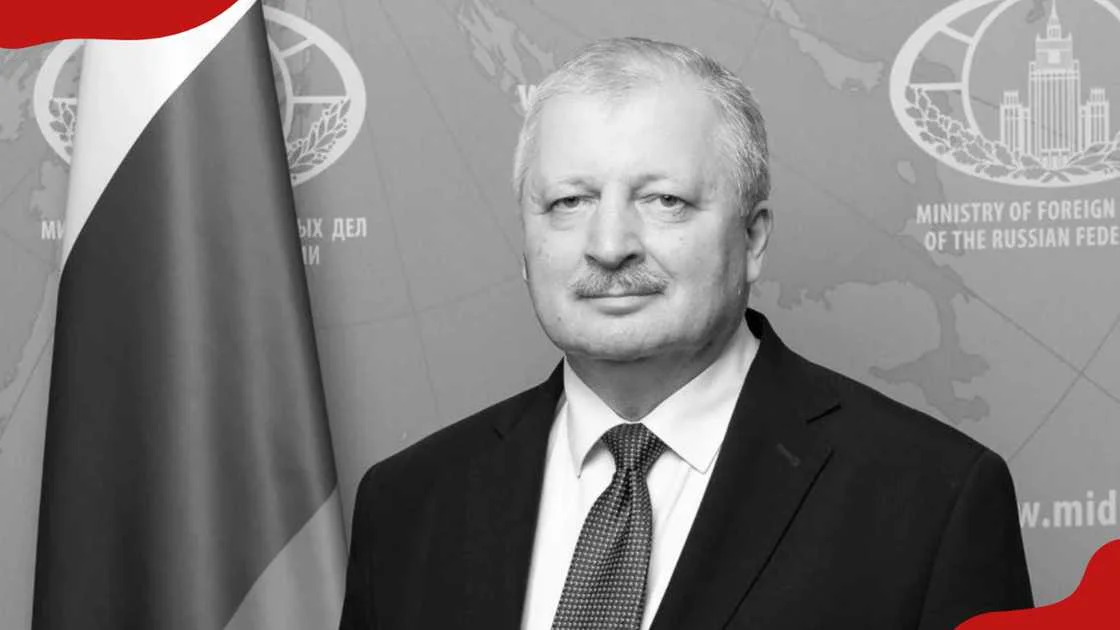
Alexander Darchiev, Russia's ambassador to the United States, died Wednesday at the age of 66, the Russian Foreign Ministry announced. The diplomat, who had headed the Russian Embassy in Washington since March 2025, "passed away suddenly," the ministry said in a brief statement published on X. No cause of death was immediately disclosed.
The announcement described Darchiev as "an outstanding diplomat, an experienced leader, a kind friend, and a mentor," adding that he was "a consummate professional and a brilliant expert on American affairs" who "served in one of the most critical areas of Russian foreign policy." The Kremlin did not immediately comment, and U.S. officials had not issued any statements as of Wednesday afternoon.
A Veteran Diplomat at a Critical Juncture
Darchiev's death comes at a delicate moment in U.S.-Russia relations. He replaced Anatoly Antonov as ambassador in early 2025, amid a sudden thaw in ties following President Donald Trump's return to the White House. A seasoned diplomat, Darchiev previously served at Russia's Embassy in Washington in the late 2000s before holding positions within the Foreign Ministry. He later spent six years as Russia's ambassador to Canada and headed the ministry's North American Department for four years.
According to Boris Bondarev, a former Russian diplomat in Geneva who publicly resigned in protest of the invasion of Ukraine, Darchiev was a protegé of Yury Ushakov, President Vladimir Putin's foreign policy adviser. At the time of his appointment, observers said they did not believe Darchiev was likely to wield much influence, as Moscow and Washington have handled most major issues at a higher level in recent years.
Context
A Career Spanning Decades
Darchiev's diplomatic career spanned more than three decades, with much of it focused on North American affairs. His tenure as ambassador to Canada from 2014 to 2021 gave him firsthand experience navigating Western capitals at a time of deteriorating relations following Russia's annexation of Crimea. He returned to Moscow to lead the North American Department, a key post within the Foreign Ministry, before being tapped for the Washington assignment.
His appointment in early 2025 was seen as part of a broader realignment of Russian diplomacy under the new U.S. administration. While observers doubted his influence on major policy decisions, his role as the face of Russia in Washington carried symbolic weight, particularly as both sides explored avenues for dialogue. Darchiev was known for his repeated condemnations of the West, consistent with Moscow's confrontational posture during his tenure.
Unanswered Questions
The sudden nature of Darchiev's death has raised questions, though no official details have been released. The Russian Foreign Ministry's statement offered no indication of illness or circumstances surrounding his passing. The lack of immediate comment from the Kremlin or U.S. officials adds to the uncertainty, leaving observers to speculate about the implications for bilateral relations. In recent months, relations had remained tense despite the earlier thaw, with disputes over arms control, sanctions, and regional conflicts persisting.
Perspective
Implications for U.S.-Russia Relations
Darchiev's death creates a void in Russia's diplomatic presence in Washington at a time when channels of communication between the two powers are already limited. His replacement will need to navigate a complex landscape, balancing Moscow's hardened rhetoric with the potential for engagement on shared interests. The ambassador's passing may also prompt a reevaluation of Russia's diplomatic strategy in the U.S., particularly if his successor is seen as more or less influential.
Beyond the immediate diplomatic fallout, the incident underscores the fragility of U.S.-Russia ties. With major issues handled at higher levels, the ambassador's role has often been more symbolic than substantive, but the sudden loss of a seasoned envoy could disrupt ongoing backchannel discussions. As Moscow and Washington continue to grapple with issues ranging from Ukraine to cybersecurity, the absence of a key diplomatic figure in the U.S. capital may complicate efforts to maintain stable communication.
Darchiev's death also highlights the personal risks borne by diplomats serving in adversarial environments. While no cause has been given, the sudden passing of a high-profile envoy inevitably draws attention to the pressures and challenges of representing a nation in a hostile political climate. As both sides await further details, the focus will shift to how Russia fills the vacancy and whether his successor can effectively manage the delicate bilateral relationship.
Comments