
Opening
Ukrainian Drones Target Russian Missile Ship and Oil Port
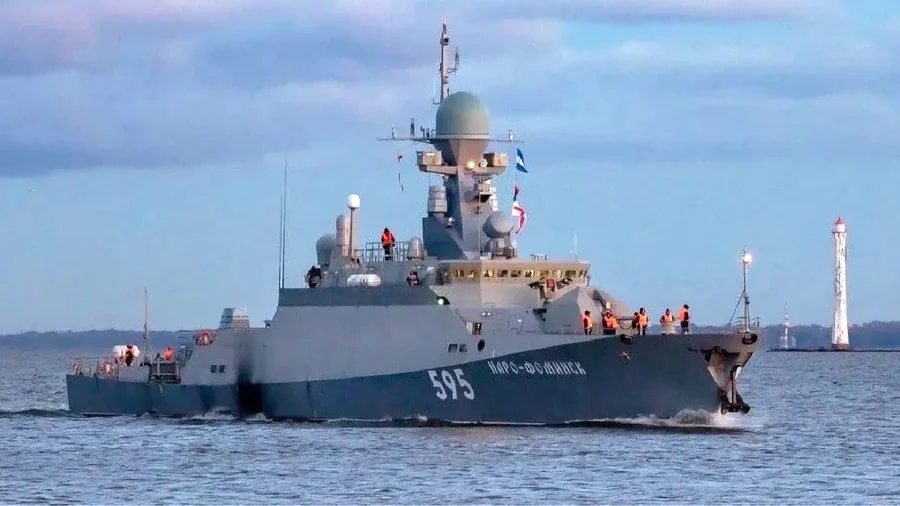
Ukrainian forces struck the Russian Buyan-M-class missile ship Naro-Fominsk and oil infrastructure at the Baltic Sea port of Ust-Luga in Leningrad Oblast overnight on November 10-11, according to the Security Service of Ukraine (SBU). The operation, carried out by SBU drone pilots together with other units of Ukraine’s Defense Forces, marks a significant deep strike into Russian territory, targeting both military and energy assets.
The SBU said the Naro-Fominsk, which belongs to Russia’s Baltic Fleet and was commissioned in 2022, is a carrier of Kalibr and Oniks cruise missiles. The vessel has a displacement of 850 tonnes and is armed with an eight-cell Kalibr-NK vertical launch system, Oniks missile launchers, a 100mm gun mount, anti-aircraft artillery, and machine guns. The strike was planned in advance and executed during the broader overnight attack on Russia, the SBU stated.
Port Infrastructure Damaged, Casualties Reported
The attack on Ust-Luga, Russia’s largest Baltic Sea port, also damaged oil terminals. Ukraine’s General Staff confirmed that five oil tanks with a total volume of 150,000 cubic meters were hit, along with a hydrocracking unit, an air cooling unit, and a pumping station. The SBU reported that drones from its Alpha Special Operations Center struck tanks at the Novatek-Ust-Luga terminal, each with a capacity of 30,000 tons, causing a petroleum spill. Fires broke out at the Ust-Luga Oil terminal and were also reported at the Factor terminal and Luzhskaya railway station.
Leningrad Oblast Governor Aleksandr Drozdenko confirmed the drone attack, claiming that 150 Ukrainian drones were shot down overnight and that several others struck the area, sparking a fire and injuring three workers. He added that none of the port employees sustained serious injuries. The extent of damage to the Naro-Fominsk remains unclear, though the SBU and Kyiv Post reported the ship as destroyed. Ukrainian authorities are also verifying information about the potential destruction of Russian combat helicopters during the same operation.
Context
Strategic Target: Russia’s Shadow Fleet and Missile Carriers
The Naro-Fominsk is part of Russia’s Buyan-M class, a modernized small missile ship designed for littoral operations and capable of launching long-range cruise missiles against land targets. Its deployment in the Baltic Fleet underscores Russia’s ability to threaten NATO’s eastern flank and Ukraine from the Baltic Sea. The ship’s Kalibr and Oniks missiles have been used extensively in strikes against Ukrainian cities and infrastructure, making it a high-value target for Ukrainian forces.
This is not the first time Ukraine has targeted a Buyan-M vessel. In August 2025, a similar ship was struck in the Sea of Azov, according to Ukrainska Pravda. The repeated targeting of these platforms suggests a deliberate Ukrainian strategy to degrade Russia’s ability to launch cruise missile attacks from naval assets. The strike on the Naro-Fominsk also coincides with Ukraine’s ongoing campaign against Russian oil infrastructure, which funds Moscow’s war effort. The Ust-Luga port is a critical hub for Russia’s oil exports, and the damage to its terminals could have significant economic repercussions.
Broader Ukrainian Deep-Strike Campaign
The attack on Ust-Luga and the Naro-Fominsk is part of a wider Ukrainian effort to bring the war to Russian territory. On the same night, Ukrainian drones reportedly targeted Russia’s largest oil refinery in Omsk, Siberia, some 2,500 kilometers from Ukraine’s border. The Omsk refinery, owned by Gazprom Neft, has a processing capacity of 22 million metric tons of crude oil annually and supplies fuel to the Russian military. Residents reported explosions and the attack lasted more than two hours, according to The Moscow Times and Ukrainian monitoring channel Exilenova Plus. Omsk Oblast Governor Vitaly Khotsenko confirmed the drone attack, and air raid sirens sounded across the city while authorities restricted communications and internet access.
These operations demonstrate Ukraine’s growing capability to strike deep into Russian territory using long-range drones. The targeting of oil refineries and port infrastructure is aimed at reducing Russia’s oil revenues, which the General Staff said “reduces oil revenues to the budget of the aggressor country.” The strikes also serve to disrupt military logistics, as the Omsk refinery supplies fuel to the Russian army. The combination of military and economic targets reflects a comprehensive approach to undermining Russia’s war machine.
Perspective
Implications for the Baltic Region and Beyond
The strike on a Baltic Fleet vessel in Leningrad Oblast raises the stakes in the Baltic Sea region, where NATO has increased its presence following Russia’s full-scale invasion of Ukraine. The Naro-Fominsk’s destruction, if confirmed, would be a notable loss for Russia’s Baltic Fleet, which has already suffered from Ukrainian attacks on its Black Sea counterpart. It also signals that Ukraine is willing and able to reach Russian naval assets far from its borders, potentially forcing Russia to disperse and better protect its ships.
Moreover, the attack on Ust-Luga, a major oil export terminal, could disrupt Russia’s energy exports and further strain its economy. The port handles a significant portion of Russia’s seaborne oil shipments, and damage to its infrastructure may lead to temporary reductions in export capacity. This comes amid fluctuating global oil prices, with gas prices in the US falling below $4 a gallon for the first time since July, partly due to market reactions to geopolitical events. While the full impact of the Ust-Luga strike on global markets remains to be seen, it underscores the vulnerability of Russia’s energy infrastructure to Ukrainian drone attacks.
Verification and Escalation Risks
As with many wartime claims, independent verification of the extent of damage is difficult. Russian officials have downplayed the impact, while Ukrainian sources claim significant successes. The SBU’s statement that the Naro-Fominsk was “destroyed” awaits visual confirmation. The reported destruction of Russian combat helicopters is also being verified. These uncertainties are typical in modern conflict reporting, where information operations play a role.
Nevertheless, the operation highlights Ukraine’s increasing reliance on drone technology to compensate for its limited naval capabilities. By using drones to strike high-value targets deep inside Russia, Ukraine is able to impose costs on Russia’s military and economy. The attack also serves as a morale booster for Ukrainian forces and a warning to Russia that no target is safe. As the war approaches its fifth year, such deep strikes are likely to continue, shaping the trajectory of the conflict and the broader security landscape in Europe.
In conclusion, the Ukrainian strike on the Naro-Fominsk and Ust-Luga port represents a significant escalation in Ukraine’s campaign to target Russian military and economic assets. While the full extent of the damage is still being assessed, the operation demonstrates Ukraine’s growing reach and determination to bring the war to Russian soil. The coming days may reveal further details, but the strategic implications are already clear: Russia’s Baltic Fleet and energy infrastructure are now within Ukraine’s crosshairs.
Comments