
Zelensky Warns of Imminent Russian Hypersonic Missile Strike on Kyiv
Ukrainian President Volodymyr Zelensky warned on May 23, 2026, that Russia is preparing a large-scale combined strike on Ukrainian territory, potentially using the hypersonic Oreshnik intermediate-range ballistic missile. The warning, based on intelligence shared by Ukrainian, American, and European agencies, signals a dangerous escalation in the nearly three-year war.
"We are seeing signs of preparation for a combined strike on Ukrainian territory, including Kyiv, involving various types of weaponry. The specified intermediate-range weapons could be used in such a strike," Zelensky said in a statement on X. He urged Ukrainians to remain vigilant and heed air raid warnings, saying, "Russian madness truly knows no bounds, so please protect your lives – use shelters."
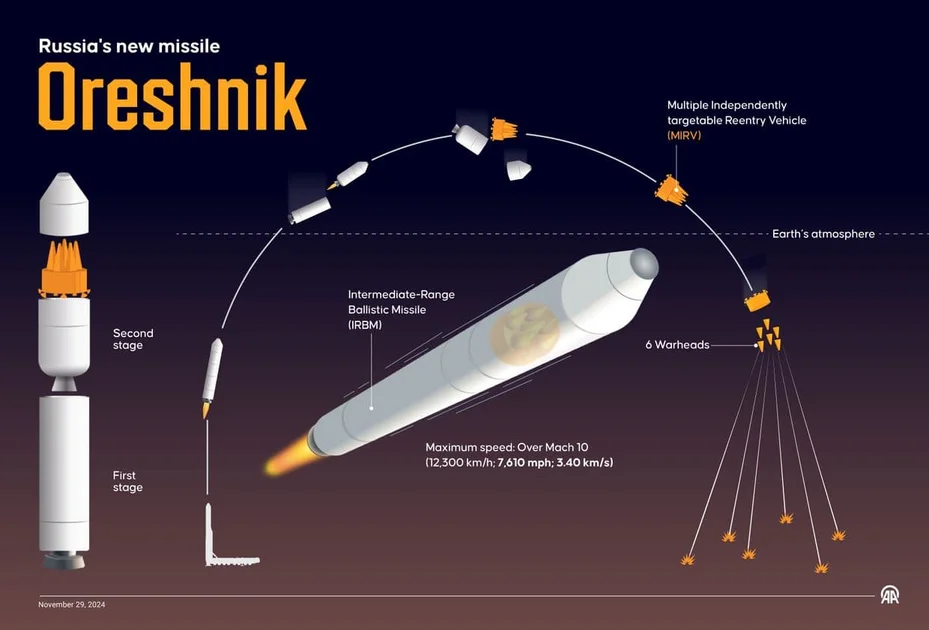
The Oreshnik missile, which Russian President Vladimir Putin has boasted is impossible to intercept due to its reported velocity exceeding Mach 10, has been used twice before against Ukraine — first in November 2024 on Dnipro and then in January 2026 on the Lviv region. The latest intelligence suggests a third, potentially more devastating attack is being prepared.
Why This Alert Matters Now
Zelensky's warning comes just one day after Putin ordered his military to prepare options for retaliation against Ukraine for a drone strike on a student dormitory in the Russian-controlled Luhansk region. Ukraine's military has denied responsibility for that attack. The timing suggests Moscow may use the Luhansk incident as a pretext for a major escalation.
Ukraine's Foreign Intelligence Service has reported that Russian forces are suffering unsustainable losses — more than 83,000 soldiers killed since the start of 2026 alone, with total losses exceeding 141,500. Ukrainian Commander-in-Chief Oleksandr Syrskii stated that Ukraine has seized the tactical initiative, with Ukrainian offensive assaults now outnumbering Russian attacks. Facing a net decrease in battlefield strength, Russia has been forced to increase recruitment bonuses by 30 to 100 percent across 40 regions and has simplified citizenship procedures for Russian speakers in Moldova's Transnistria region to find new soldiers.
While Russia's ground war falters, its air and missile capabilities remain formidable. The potential use of the Oreshnik — a modified version of the Soviet-era Rubezh missile — represents a shift toward strategic strikes aimed at critical infrastructure and population centers. Previous deployments of the missile have been described by Ukrainian sources as carrying dummy warheads, but a live warhead attack on western Ukraine in January demonstrated its capacity for destruction.
The Oreshnik Missile: A Weapon of Escalation
The Oreshnik is an intermediate-range ballistic missile derived from designs that date back to the Soviet Union. First unveiled in combat in November 2024, it has been touted by Russian officials as a game-changer due to its hypersonic speed and purported immunity to existing air defense systems. Western analysts, however, caution that the missile's effectiveness may be overstated and that its use carries significant political and military risks.
Technical Capabilities and Limitations
Hypersonic missiles like the Oreshnik travel at speeds above Mach 5, making them difficult to track and intercept with conventional air defense systems. The Oreshnik's reported velocity of more than 10 times the speed of sound places it in a class of weapons that can strike targets within minutes of launch. However, the missile's accuracy and payload capacity remain subjects of debate among military experts.
During its first known combat use in November 2024, the Oreshnik struck a military factory in Dnipro, but Ukrainian sources said the missile carried dummy warheads and caused limited damage. The second attack in January 2026 on Lviv region appeared more serious, though details of the damage were not fully disclosed. The fact that Russia has now used the weapon twice, and may be preparing a third strike, suggests Moscow is refining its operational doctrine for hypersonic weapons.
Global Precedent and Allied Response
Zelensky has framed the potential use of the Oreshnik as a matter of global concern. "If Russia is allowed to destroy lives on such a scale, then no agreement will restrain other similar hatred-based regimes from aggression and strikes," he said, calling for a preventive rather than reactive response from the international community.
The leaders of Britain, France, and Germany condemned Russia's January 2026 use of the Oreshnik as "escalatory and unacceptable." The United States has continued to bolster Ukraine's air defenses, most recently approving a $108.1 million sale of equipment to support the HAWK air defense missile system. The HAWK system, a U.S.-made platform designed to intercept aircraft, drones, and cruise missiles at ranges of up to 40-50 kilometers, will be critical for defending against cruise missiles and drones that may accompany any Oreshnik strike.
However, no existing Western-provided air defense system has been proven capable of reliably intercepting a hypersonic missile like the Oreshnik. Ukraine has repeatedly called for more advanced systems, including the Patriot PAC-3 and THAAD, but deliveries have been limited. The strategic dilemma for NATO allies is that providing such systems could be seen by Moscow as a direct military escalation.
Broader War Trends: Russian Weakness and Desperation
The Oreshnik threat must be understood within the wider context of Russia's deteriorating military position. According to Ukrainian intelligence, Russia is losing more than 1,000 soldiers per day while recruiting only 800-930 daily — a net decrease in fighting strength. The Russian economy is also fraying, with a $78.4 billion deficit recorded in the first four months of 2026, far exceeding the $50.5 billion budgeted for the entire year. A key driver of this deficit is the 38.3 percent drop in hydrocarbon revenues, largely due to Ukraine's successful long-range campaign against Russian oil refineries and export terminals.
Desperate Measures: Mobilization and Diplomatic Gambits
In response to troop shortages, Putin has increasingly resorted to unconventional mobilization efforts. Alongside financial incentives, Russia has simplified citizenship procedures for Russian speakers in the Transnistrian region of Moldova — a breakaway territory where Russia maintains a military presence. Zelensky said he has received information that Russia is trying to mobilize an additional 100,000 soldiers, but expressed doubt that such covert mobilization is feasible given demographic constraints.
Russia's ground war is stalling, but its air and missile campaigns continue to terrorize Ukrainian cities. The potential use of the Oreshnik could be an attempt to reverse the momentum by inflicting a psychological and physical blow on Kyiv. It may also be intended to signal to the West that Russia retains advanced capabilities even as its conventional forces struggle.
A Global Precedent for Hypersonic Warfare
The Oreshnik is not just a weapon for Ukraine. As Zelensky noted, the use of such missiles by Russia sets a dangerous precedent for other nations. Hypersonic technology is being developed by several countries, including China, the United States, and North Korea. If Russia demonstrates that such weapons can be used with impunity in a major war, it could trigger a new arms race and lower the threshold for the use of advanced missiles in future conflicts.
Zelensky's call for a "preventive" response from the world reflects a growing frustration with the reactive nature of Western sanctions and military aid. "We are drawing the attention of our partners in the United States and in Europe to the fact that the use of such weapons and the prolongation of this war also sets a global precedent for other potential aggressors," he said.
The coming days will test whether Ukraine's air defenses — bolstered by recent U.S. support — can counter a hypersonic threat, or whether the Oreshkin will force a new phase of the war that the West is unprepared to manage. For now, Ukrainians are bracing for what could be one of the most significant attacks since the invasion began.
What This Changes: Strategic Implications for 2026
The potential Oreshnik strike represents a crossroads in the war. If the missile causes significant damage to Kyiv or other major cities, it could shift public opinion in Ukraine and the West, potentially forcing new debates about escalation and negotiation. Alternatively, if the attack is intercepted or fails to achieve its objectives, it could expose the limits of Russia's hypersonic arsenal and boost Ukrainian morale.
Militarily, the use of a hypersonic missile does not change the fundamental dynamics on the ground, where Ukraine holds the initiative. But it does raise the stakes for air defense procurement and highlights the urgent need for Western allies to provide systems capable of countering next-generation threats. The recent approval of HAWK system equipment is a step in that direction, but experts say more advanced interceptors are required.
Psychologically, the threat itself serves Russian objectives by forcing Ukraine to expend resources and attention on defensive preparations. It also undermines the sense of security in cities that have experienced relative calm. Zelensky's decision to publicize the intelligence — rather than keep it secret — is a strategic choice aimed at galvanizing international support and preparing the Ukrainian public for what may come.
For the broader international community, the Oreshnik incident reinforces the reality that the war in Ukraine is a laboratory for new forms of warfare. The lessons learned from Russia's use of hypersonic missiles — both technical and political — will shape defense policies and arms control discussions for years to come. As the conflict enters its third year, the world watches to see whether deterrence will hold or whether a new, more dangerous phase is about to begin.
Comments