
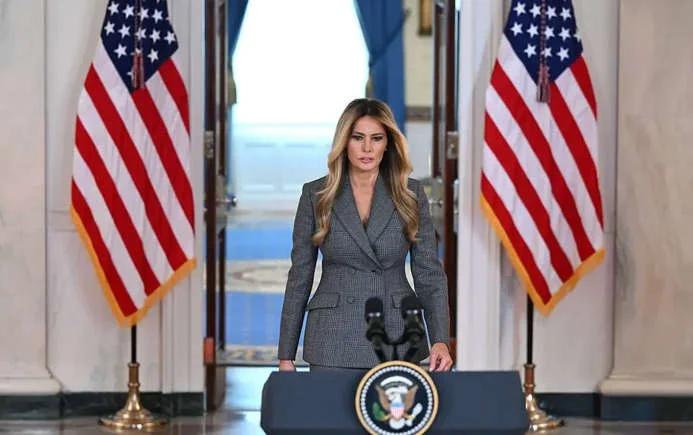
Federal Judge Dismisses Michael Wolff’s Lawsuit Against Melania Trump, Citing ‘Gamesmanship’ Over Epstein Defamation Dispute
A New York federal judge on Friday dismissed a preemptive lawsuit filed by journalist Michael Wolff against first lady Melania Trump, ruling that the biographer’s attempt to ward off a potential billion-dollar defamation suit over comments linking her to Jeffrey Epstein amounted to improper “tactical gamesmanship” and forum shopping.
U.S. District Judge Mary Kay Vyskocil, a Donald Trump appointee, issued a scathing 45-page opinion rejecting Wolff’s anti-SLAPP action, which he filed in October 2025 after receiving a legal demand letter from Melania Trump’s attorneys threatening a $1 billion defamation suit. The judge declared that Wolff was trying to “short-circuit” the normal legal process by asking the court to declare in advance that his statements about the first lady’s ties to the late convicted sex offender were not defamatory.
“Plaintiff asks for a declaration that, if the first lady sues him, he deserves to win. That is not how the federal courts work,” Vyskocil wrote. “The Court will not be conscripted to oversee an abusively presented spat.”
The ruling effectively kills Wolff’s preemptive strike and leaves the door open for Melania Trump to pursue her own defamation claim against him, which she has already initiated in Florida—a jurisdiction historically more favorable to the Trump family.
Key facts of the dismissal
The lawsuit stemmed from Wolff’s public comments on a Daily Beast podcast in which he claimed that Epstein told him Melania Trump and Donald Trump first slept together on Epstein’s private plane. Wolff also asserted that the first lady was “actively managing” the Trump administration’s handling of the Epstein files, a trove of documents and emails linked to the disgraced financier.
Melania Trump’s lawyers sent a cease-and-desist letter demanding an apology and threatening a $1 billion defamation suit unless Wolff retracted his statements. Wolff responded by filing a preemptive anti-SLAPP suit in New York state court, arguing that his comments were protected speech and that Melania Trump was attempting to retaliate against him for reporting on matters of public concern.
The first lady’s legal team moved the case to federal court, where Judge Vyskocil ultimately declined to exercise jurisdiction. She noted in her ruling that Wolff had engaged in “textbook bad-faith forum shopping” by filing in New York, a state with strong anti-SLAPP protections, rather than defending the case in Florida, where Melania Trump had already filed her defamation suit.
“While Plaintiff and the First Lady have a real dispute, they must litigate it according to the same procedures as everyone else,” Vyskocil wrote. She added that Wolff’s “devil-may-care attitude towards the rules of procedure governing litigation in the federal courts” was “inappropriate and does not serve him well.”
The Stakes: What’s at the Heart of the Epstein-Linked Legal Battle
At the center of the controversy is Wolff’s ongoing effort to investigate the Trump family’s historical connections to Jeffrey Epstein, who died by suicide in 2019 while awaiting trial on federal sex trafficking charges. Wolff, author of bestselling books like Fire and Fury and Siege, has written extensively about the Trump White House and has been a persistent critic of the president.
In October 2025, Wolff announced he was considering writing a book about Epstein and his extensive network of powerful associates. His comments on the Daily Beast podcast—which the outlet later retracted, apologizing for the story—sparked the legal confrontation with Melania Trump.
The first lady has consistently denied any association with Epstein. In her memoir and in an April statement from the White House, she called the allegations “unfounded and baseless lies” and vowed to fight back legally against anyone who “insinuated she had Epstein ties.”
A broader pattern of defamation threats
This lawsuit is part of a wider pattern of the Trump family using defamation law to challenge media reports and commentary. Donald Trump himself has repeatedly threatened or filed libel suits against journalists, authors, and news organizations over the years, although he has rarely prevailed in court. Melania Trump’s threats against Wolff carry similar weight, as the first lady’s legal team has demonstrated a willingness to pursue litigation aggressively.
Legal experts note that the dismissal does not resolve the underlying dispute. If Melania Trump’s Florida defamation suit proceeds, Wolff could face discovery demands and potentially a trial that would test the limits of First Amendment protections for journalists making claims about public figures. Florida’s defamation laws are generally less favorable to defendants than New York’s anti-SLAPP protections, which might have provided Wolff with a stronger shield.
The Judge’s Reasoning: Why the Court Refused to Engage
Judge Vyskocil’s opinion was notable both for its detailed legal analysis and for its sharply critical tone. She rejected Wolff’s argument that he was merely trying to protect himself from an imminent legal threat, characterizing his lawsuit instead as an attempt to manipulate the judicial system.
“Whether or not to entertain a declaratory judgment action is a matter of discretion left to the Court,” Vyskocil wrote. “The Court declines to entertain this one. To do otherwise would be to reward Plaintiff for his gamesmanship, perverting the process by which speech-tort claims are ordinarily resolved.”
She pointed out that Wolff had already been sued by Melania Trump in Florida and that he could raise his defenses and counterclaims in that forum. “He may not short-circuit that process by preemptively litigating his defenses and counterclaims here, under New York law,” she added.
The judge also criticized Wolff for filing an anti-SLAPP suit in New York before Melania Trump had even filed her defamation case, calling it a “race to the courthouse” that undermined the orderly resolution of disputes.
Implications for anti-SLAPP protections
The ruling highlights a contentious area of defamation law: whether a potential defamation target can file a preemptive declaratory judgment action to block a threatened suit. Anti-SLAPP laws are designed to protect speech on matters of public concern from meritless lawsuits, but courts have been divided on whether they can be used proactively.
In this case, Vyskocil made clear that New York’s anti-SLAPP statute does not give journalists a blank check to preemptively sue for a declaration of non-liability. The judge’s decision may make it harder for other journalists and public figures to use preemptive lawsuits as a shield against defamation threats from wealthy or powerful opponents.
Broader Implications: What This Ruling Changes for Media, the White House, and Political Journalism
The dismissal of Wolff’s lawsuit has significant ramifications for the ongoing tension between the Trump administration and the press. Wolff’s previous books have relied on anonymous sources and insider accounts, often painting a chaotic picture of the White House. The ruling could discourage other journalists from pursuing similar preemptive legal strategies when facing defamation threats from the first family.
A win for Melania Trump’s legal strategy
Melania Trump’s legal team has successfully shifted the battleground to Florida, where the first lady has more favorable legal terrain. If she proceeds with her defamation case there, Wolff could find himself on the defensive, forced to prove the truth of his statements about her relationship with Epstein—a high bar under Florida defamation law, which places the burden on the defendant in many respects.
The first lady’s willingness to sue also serves a broader strategic purpose: it sends a message to other journalists and commentators that making claims about the Trump family’s ties to Epstein will carry serious legal consequences. At a time when the administration is navigating multiple controversies—including recent developments in foreign policy, such as the EU striking a late-night deal on a US trade pact to avert Trump’s July 4 tariff threat—the White House may see this legal victory as a way to assert control over the narrative.
Pressure on media to verify claims before publishing
The retraction by the Daily Beast of its article supporting Wolff’s claims underscores the risks for news organizations that rely on unverified or controversial assertions. The outlet apologized for the story, noting that Melania Trump’s account—that she met Donald Trump at the Kit Kat Club in New York in 1998—was accurate. This episode may prompt other media outlets to exercise greater caution when reporting on unsubstantiated claims about public figures, especially those connected to the Epstein network.
The broader Epstein files saga
The lawsuit is just one front in the ongoing litigation over the Epstein case, which has ensnared numerous powerful figures. Wolff’s planned book on Epstein and the administration’s handling of related documents remains an open question. The dismissal of his lawsuit does not prevent him from continuing to report, but the legal uncertainty could complicate his ability to secure sources and funding for the project.
Meanwhile, the Trump administration continues to manage the release of Epstein-related files, with critics accusing the White House of slow-walking transparency. The first lady’s public denial of any personal connection to Epstein has become a central part of the administration’s messaging on the issue.
Expert Reactions and Next Steps
Legal analysts widely agree that the ruling was a thorough rebuke of Wolff’s strategy. “This was a textbook case of a plaintiff trying to use the courts as a shield rather than a sword, and the judge called it exactly what it was,” said First Amendment attorney Lata Nott, speaking to the press after the ruling. “The real question now is whether Melania Trump will follow through on her defamation suit in Florida.”
Representatives for Wolff and the first lady did not immediately respond to requests for comment following the dismissal. Wolff’s attorney had previously argued that the journalist was simply doing his job “diligently” by asking “important questions that deserve inquiry.”
If the Florida case proceeds, it could force Wolff to testify about the basis for his statements—including whether Epstein actually told him about a relationship with Melania Trump, or whether Wolff’s reporting relied on secondhand or uncorroborated sources. The discovery process could also expose internal communications about the Epstein files within the Trump administration.
For Melania Trump, a full trial in Florida would be a high-stakes gamble. Defamation trials involving public figures are notoriously difficult for plaintiffs to win, especially when the defendant can demonstrate that the statements were made in the context of public debate. However, the first family’s previous legal victories—including settlements with media outlets—suggest they are prepared to sustain the fight.
Conclusion: A Setback for Wolff, but the Story Isn’t Over
Friday’s dismissal represents a significant legal setback for Michael Wolff, but it does not end the underlying dispute over his comments about Melania Trump and Jeffrey Epstein. The judge’s ruling leaves the first lady in a position of strength, able to choose whether to pursue her defamation claim in a friendly forum or use the threat of litigation to deter future reporting.
For the media, the case serves as a reminder that preemptive lawsuits aimed at blocking defamation threats carry their own legal risks. The judiciary’s willingness to dismiss such actions—especially when they appear to be forum-shopping—may make journalists think twice before rushing to court instead of defending their reporting on its merits.
As the Trump administration continues to face scrutiny over a range of issues, from trade policy to intelligence matters—with recent developments like Tulsi Gabbard resigning as Trump’s intelligence chief after her husband’s rare cancer diagnosis—the legal battles over the Epstein affair are likely to intensify. The dismissal of Wolff’s suit may be just the opening skirmish in a much longer war over the first family’s historical associations and the limits of press freedom.
For now, the ball is in Melania Trump’s court. The first lady has won round one in a convincing fashion, but the final outcome of this legal drama remains unwritten.
Comments