
Bison Chases Child in Yellowstone, Renewing Safety Warnings
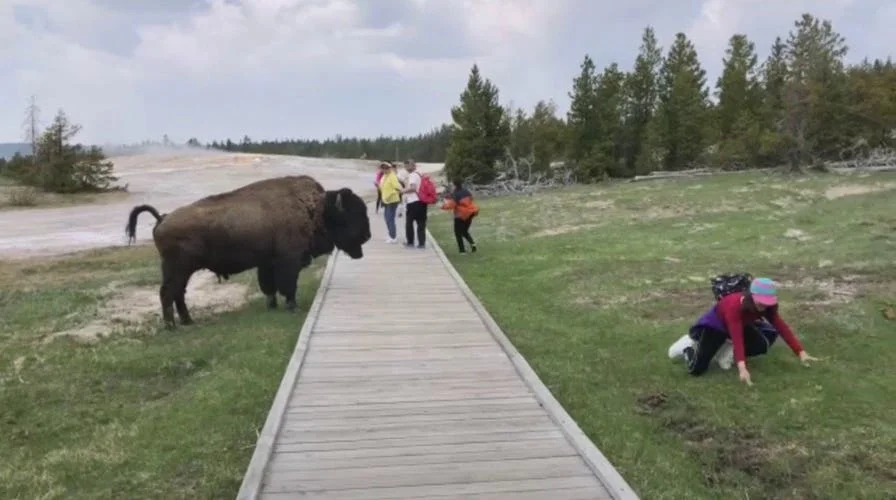
A frightening video captured on July 28 at Yellowstone National Park shows a bison chasing a child after a group of visitors walked dangerously close to the animal. The footage, recorded by bystander Brittany Peteler, depicts a woman safely crossing a boarded path as a bison slowly approaches. Moments later, a family with children heads directly toward the animal, prompting one child to break into a run as the bison briefly gives chase.
The incident comes just weeks after a 65-year-old man was attacked and injured by a bison in the park, requiring surgery. Park officials have repeatedly emphasized that bison are the most dangerous animals in Yellowstone, responsible for more human injuries than any other wildlife species, including bears.
"Bison have injured more people in Yellowstone than any other animal," the National Park Service stated. "They are unpredictable, can run three times faster than humans and will defend their space when threatened."
Visitors are required to stay at least 25 yards away from all large animals, including bison, elk, bighorn sheep, deer, moose, and coyotes. The park service notes that wild animals can become aggressive when people fail to respect their space.
The July 28 Incident: A Near Miss Caught on Camera
The video from July 28 underscores a recurring problem in the park: visitors underestimating the speed and unpredictability of bison. According to Peteler, who filmed the encounter, witnesses expressed disbelief as the family with children continued walking toward the bison despite its proximity.
In the footage, a woman is seen walking past the bison while it slowly moves closer to the boardwalk. After she safely reaches the other side, another group approaches the animal. One child then runs, triggering a brief chase by the bison, which fortunately ended without injury.
Park officials have not commented on whether the family faced fines or other penalties, but the incident has reignited discussions about visitor behavior and wildlife safety in national parks.
Why Bison Are Dangerous: Speed, Mass, and Unpredictability
Bison can run at speeds up to 35 miles per hour—faster than Usain Bolt's world-record sprint. A bull can weigh up to a ton and pivot quickly, making them formidable opponents for any human. The National Park Service warns that bison need only a reason to charge, and standing too close can be reason enough.
A review of injuries in Yellowstone found that all five reported cases in a recent year involved visitors who failed to maintain the required 25-yard distance. Three of those injured were taking photographs just a few feet from the animal.
"Our sense of danger is tuned for teeth," noted a wildlife safety expert quoted in recent reports. "We give a wide berth to animals that look like predators but relax around big herbivores that read as livestock."
The nickname many visitors use—"fluffy cows"—captures the root of the problem. Bison's calm appearance masks their wild nature and their capacity to inflict serious harm.
Recent Attacks Highlight the Risks
The July 28 chase follows a string of incidents in Yellowstone this summer. In mid-July, a 65-year-old man was thrown into the air by an angry bison, sustaining injuries that required surgery. The attack occurred when the man reportedly got too close to the animal while hiking.
Just days later, a fisherman at the Lamar River had a close call when a bull bison silently approached him from behind. The angler was unaware of the danger until his wife honked their car horn. Video captured by Kristi Wilt and her family shows the fisherman calmly acknowledging the bison and slowly moving away.
"They're like sleeping giants, and we didn't want to awaken that one," Wilt said, explaining her family's hesitation to intervene.
These incidents highlight a broader trend: as Yellowstone visitation remains high, wildlife encounters are becoming more frequent, and many visitors are unprepared for how quickly a peaceful moment can turn dangerous.
The Psychology of the "Fluffy Cow" Misjudgment
Why do so many visitors underestimate bison? Wildlife experts point to a human tendency to judge risk based on appearance rather than behavior. Animals with forward-facing eyes and obvious teeth—like bears—trigger a fear response. In contrast, large herbivores like bison evoke images of domestic cattle, leading visitors to let their guard down.
A Yellowstone bison can hit 35 miles per hour—faster than Usain Bolt at his world-record best and about twice as quick as the average person can run. That speed, combined with the animal's mass and agility, makes any close encounter potentially deadly.
The National Park Service has invested heavily in public education campaigns, including signage, social media posts, and ranger-led talks. Yet incidents persist, suggesting that even clear warnings are not enough to overcome visitors' perception of bison as harmless.
What This Means for Yellowstone's Future
The recent spike in bison encounters highlights a critical challenge for park management: how to balance public access with wildlife preservation. Yellowstone draws millions of visitors each year, and bison are a major attraction. Yet each close call raises questions about whether current safety measures are adequate.
Park officials have emphasized that visitors are responsible for their own safety. Rules are clear: staying at least 25 yards away from all large animals is mandatory, and approaching wildlife for photographs or selfies can result in fines or even jail time.
However, as the July 28 video demonstrates, even widely publicized warnings may not prevent reckless behavior. Witnesses in the video can be heard expressing shock as the family with children walked toward the bison, with one onlooker saying, "I can't believe they're doing that."
A Call for Stricter Enforcement
Some wildlife advocates are calling for stricter enforcement of wildlife distance rules, including higher fines and mandatory safety briefings for first-time visitors. Others suggest limiting access to certain areas during peak bison activity or providing more ranger presence in high-traffic zones.
The park has not announced new measures, but officials stress that education remains the most effective tool. "Wild animals can be aggressive when people do not respect their space," the park stated. "Visitors are responsible for staying safe by following the rules."
The Broader Implications: Lessons Beyond Yellowstone
The bison encounters in Yellowstone offer a cautionary tale for national parks and wildlife areas worldwide. As outdoor recreation surges in popularity, more people are encountering wild animals in their natural habitats. Without proper awareness, these encounters can end tragically.
Experts suggest that visitors should treat all wildlife as potentially dangerous, regardless of appearance. This includes maintaining distance, avoiding sudden movements, and never approaching animals for photographs.
The phenomenon is not unique to Yellowstone. Across the United States, parks report increasing numbers of wildlife-related incidents, often caused by visitors seeking the perfect social media photo. In Banff National Park in Canada, hikers recently faced a $25,000 fine after their off-leash dog barked at a grizzly bear, demonstrating the global scope of the problem.
Shifting the Culture of Wildlife Tourism
Changing visitor behavior requires more than rules; it requires shifting the culture of wildlife tourism. Instead of viewing animals as attractions, visitors must understand that they are guests in the animals' home. Respecting their space is not just a rule—it is a matter of life and death.
For families planning trips to Yellowstone, the message from park officials is simple: keep your distance, stay alert, and never assume a bison is as gentle as it looks. The "fluffy cow" is, in fact, one of the most dangerous animals in North America.
As one park ranger put it, "The bison is not the villain in these stories. It is a wild animal minding its own business. The danger only appears when someone decides to ignore the boundaries."
Conclusion: Safety Is a Visitor's Responsibility
The July 28 bison chase is a stark reminder that Yellowstone's wildlife is wild, regardless of how calm it may appear. With summer visitation still at peak levels, park officials expect more encounters in the coming weeks. Visitors are urged to follow the rules, maintain the 25-yard distance, and report any unsafe behavior they witness.
The park's message remains consistent: bison are unpredictable, can run three times faster than any human, and will defend their space when threatened. The best way to ensure a safe and enjoyable visit is to keep a respectful distance and appreciate these magnificent animals from afar.
For those planning future trips, consider reading about Andy Farrell's Son Owen Swaps Rugby for Cricket in Charity Clash for a break from wildlife news, or stay informed about other pressing matters like Tornado Warnings Rattle Midwest: Storms Disrupt Events and Damage Homes.
Stay safe out there, and remember: in Yellowstone, the animals always have the right of way.
Comments