Tight Ohio Senate Race Enters Final Stretch
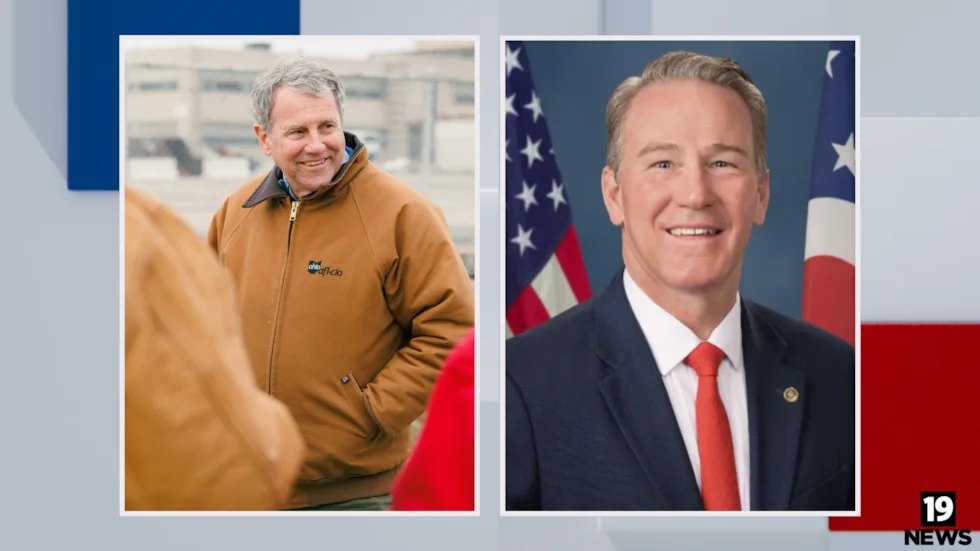
The battle for Ohio's U.S. Senate seat between Republican incumbent Jon Husted and Democratic former Senator Sherrod Brown is shaping up as one of the closest contests of the 2026 midterms, with a small pool of third-party voters potentially determining the outcome. Election Day is Tuesday, November 3.
Polls continue to show a tight race within the margin of error, despite Ohio's recent Republican lean. President Donald Trump won the state by 11 percentage points in 2024, but his declining approval rating has given Democrats a more favorable opportunity to flip the seat. Democrats need a net gain of four seats to win Senate control and a net gain of three to flip the House.
Ohio's Senate ballot includes two non-major-party candidates: Libertarian William B. Redpath and independent Gregory Levy, who is affiliated with the Party for Socialism and Liberation. A new super PAC, Buckeye Freedom PAC, has endorsed Redpath and is running ads critical of Husted, urging voters to back "the real conservative." The group formed this month as recent polls showed tight results between Husted and Brown.
Third-Party Candidates Could Sway Outcome
University of Akron political science professor David Cohen told Newsweek that Husted and Brown could both be hurt by the third-party candidates. Libertarians tend to hurt Republicans in general elections, while third-party candidates associated with socialism tend to hurt Democrats. With the race so close, even a small share of votes for Redpath or Levy could influence the outcome.
Affordability and Entitlements Dominate Campaign
The candidates have offered dueling plans on Medicare and Social Security, two issues that could be especially salient in Ohio, home to millions of seniors. As of December 2025, more than 2.6 million Ohioans received Social Security benefits, and a similar number were eligible for Medicare, according to government data. Census data show more than 2 million Ohioans are 65 or older, making Ohio one of the states with the largest senior populations.
Brown criticized Husted's position on these issues in a statement to Newsweek. "Jon Husted wants to cut Medicare and Social Security benefits that countless Ohio families rely on," he said. "While he sells out Ohio seniors, Husted has taken over $1 million from the nursing home industry that has put seniors in homeless shelters and over $700,000 from the insurance companies jacking up premiums." Newsweek reached out to the Husted campaign for comment.
Both candidates also addressed affordability, a top issue for voters, in comments this week. "Farmers are paying almost double the price for fertilizer, paying a couple dollars more for diesel," Brown said. "The government is clearly run by special interest groups. I mean, just the fact we're in a war that nobody wanted that causes Ohioans to pay $40 million a day in tax dollars for this war, let alone gas and diesel and fertilizer and groceries." Husted countered: "The way we're going to make things more affordable is we're going to create good jobs that pay well, that we're going to let people keep more of what they earn to spend and save on their priorities. We're going to fight to lower prices on gasoline, electricity, and all of that, all of the things that people need in their daily lives."
Background: A Familiar Face vs. an Appointed Incumbent
Husted previously served in the Ohio House, holding office as House speaker, then serving two terms as secretary of state and six as lieutenant governor. Once J.D. Vance was elected as vice president, Ohio Gov. Mike DeWine appointed Husted to fill the now-vacant Senate seat, where he has been since 2025. Brown served in the Ohio House and then as secretary of state before beginning his U.S. Senate career. He held the office from 2007 to 2024 before losing the seat to Bernie Moreno.
Whoever wins the race will fill the Senate seat until 2029.
What the Race Means for National Politics
The Ohio Senate race is among a handful of toss-up contests that could determine the balance of power in the chamber after the midterms. Republicans hold a 53-47 majority that is seen as increasingly at risk in November. Democrats must flip four seats to win a majority, as Vice President JD Vance would serve as the tiebreaker in an evenly divided Senate.
Democrats are targeting GOP-held states in Maine, which Trump lost by 7 points in 2024, and North Carolina, which he won by 3 points, as their top pickup opportunities. But there are no other Republican-held seats up for grabs in states he won by single digits or outright lost in 2024, meaning Democrats need to contest more conservative territory to flip control of the Senate on November 3. Ohio, which backed Trump by about 11 points, is seen as one of the next best opportunities to win a more Republican-leaning state due to the candidacy of Brown, a former senator with strong name recognition.
The outcome could also reverberate beyond Washington. With control of Congress at stake, the Ohio result may shape the legislative agenda on issues ranging from affordability to entitlement reform. For now, all eyes are on the Buckeye State — and on the third-party voters who could tip the balance.
Comments