
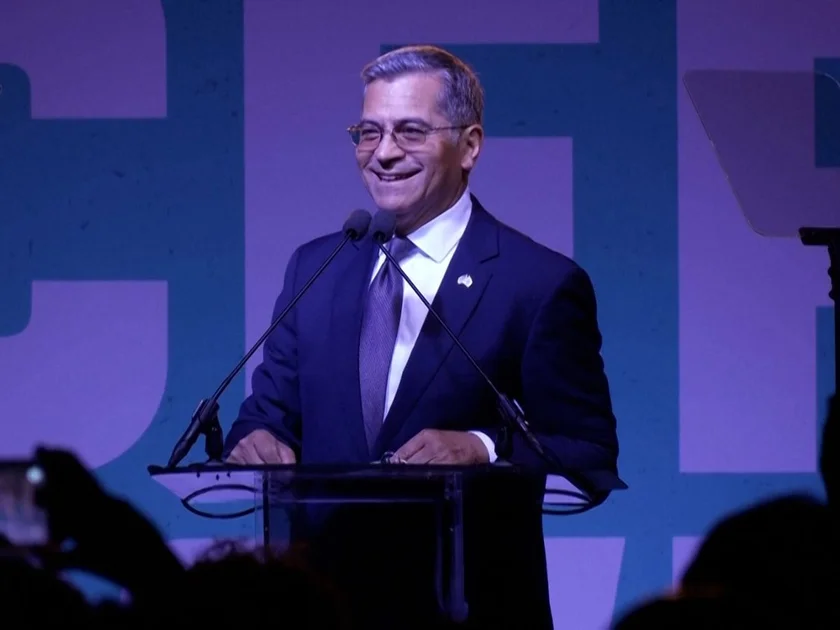
Democrat Xavier Becerra Secures Spot in California Governor General Election
Former U.S. Health and Human Services Secretary Xavier Becerra has officially advanced to the general election in the California governor's race, as projected by NBC News and the Associated Press. With two-thirds of the expected vote tallied, Becerra holds approximately 27% of the vote, narrowly leading Republican Steve Hilton at 26% and billionaire activist Tom Steyer at 21%. The outcome of the top-two primary means Becerra will face either Hilton or Steyer in the November runoff, depending on the final count of mail-in ballots still being processed across the state.
Becerra, a former California attorney general and 12-term congressman, campaigned as a mainstream moderate Democrat with extensive government experience. He rose rapidly in the polls after former Rep. Eric Swalwell exited the race in April amid sexual assault and misconduct allegations, which Swalwell has denied. The primary election, held on Tuesday, June 2, 2026, saw more than 60 candidates vying to replace term-limited Governor Gavin Newsom.
The race for second place remains too close to call, with Hilton and Steyer separated by less than five percentage points as of June 6. Hilton, a former Fox News host and Trump-endorsed Republican, has focused on tax cuts, deregulation, and homeownership. Steyer, a climate activist who has poured over $216 million of his personal fortune into his campaign, has positioned himself as the progressive champion, advocating for single-payer health care and a billionaire tax.
Key Facts from the Primary Results
- Becerra's lead: 27% of the vote, projected to advance.
- Hilton's share: 26% — neck-and-neck with Becerra in early returns.
- Steyer's share: 21% — still in contention for second place.
- Other notable candidates: Riverside County Sheriff Chad Bianco (R) at 11%, Katie Porter (D) and others falling below 10%.
- Voter turnout: Approximately 23 million registered voters; mail-in ballots can be counted if postmarked by Election Day and received within seven days.
Why This Matters: Stakes for California and the Nation
California's gubernatorial election carries enormous weight. The governor oversees a multibillion-dollar budget, thousands of state employees, and hundreds of state agencies. The winner will lead the nation's most populous state — home to nearly 40 million people — through a period of economic uncertainty, housing crises, and climate challenges.
Becerra's candidacy is historic: if elected, he would become California's first Latino governor since 1875, in a state where Latinos make up about 41% of the population. He has promised to fight Trump administration policies, freeze insurance and utility rates, and expand healthcare access.
The Candidates and Their Positions
Xavier Becerra (D): Becerra has framed his campaign around his lifetime of political work, from Congress to the California Attorney General's office to the Biden administration. He is seen as a steady hand who can navigate both Washington and Sacramento. His platform includes defending reproductive rights, expanding affordable housing, and combating climate change through clean energy investments. He has also vowed to protect immigrant communities from federal enforcement actions.
Steve Hilton (R): Born in the United Kingdom and a former director of strategy for British Prime Minister David Cameron, Hilton became a U.S. citizen in 2021. He gained fame as a Fox News commentator before launching his gubernatorial bid. His policy agenda centers on cutting taxes, slashing red tape for businesses, and increasing homeownership through deregulation and zoning reform. He received an endorsement from former President Donald Trump in April, which helped consolidate Republican support and mitigate fears that two Democrats could advance from the all-party primary.
Tom Steyer (D): The billionaire climate activist has spent heavily on his campaign — over $216 million of his own money. He advocates for single-payer healthcare ("Medicare for All"), taxing oil company profits, and implementing a wealth tax on billionaires, a measure likely to appear on the November ballot. Steyer has also emphasized environmental justice and renewable energy transitions, building on his work as a national climate advocate.
The Primary System and Vote Counting Process
California uses a top-two primary system, where all candidates — regardless of party — appear on a single ballot. The two candidates who receive the most votes advance to the general election. This system often produces runoff matchups between two Democrats or two Republicans, depending on voter turnout and candidate positioning.
The state also relies heavily on mail-in voting. Every registered voter receives a ballot by mail, and ballots are counted as long as they are postmarked by Election Day and arrive within seven days. This year, the final results may not be known for weeks, as counties continue to process millions of ballots. The prolonged counting has caused frustration among candidates and voters, but it is a standard feature of California elections.
Recent Background: Swalwell's Exit and the Rise of Becerra
Becerra's campaign started slowly; he was mired in low single digits in polls for much of the early race. However, the field was dramatically reshaped in April when Rep. Eric Swalwell withdrew after allegations of sexual assault and misconduct emerged. Swalwell denied the claims, but the damage was done. Becerra quickly consolidated support from moderate Democrats and party establishment figures, leapfrogging into first place.
At the same time, other prominent Democrats — including former Los Angeles Mayor Antonio Villaraigosa, San Jose Mayor Matt Mahan, and Rep. Katie Porter — dropped out or conceded as the results came in. Porter, a progressive favorite, conceded on election night after trailing significantly in early returns.
Broader Implications: A Race That Defines the Democratic and Republican Future
This election offers a window into the shifting dynamics of California politics. Becerra's success as a moderate Democrat suggests that the party's base in California may be leaning toward pragmatism after years of progressive experiments under Newsom. At the same time, Steyer's significant investment in a progressive platform — despite a third-place finish — indicates that the left wing of the party remains influential, even if it did not secure a spot in the general election.
On the Republican side, Hilton's strong showing — buoyed by Trump's endorsement — demonstrates that the GOP can still compete in a deep-blue state when it rallies behind a single candidate. However, the presence of another Republican, Riverside County Sheriff Chad Bianco, split the conservative vote and prevented Hilton from finishing first. The close contest between Hilton and Steyer for second place underscores the volatility of the electorate.
What This Changes
For California, the general election will now be a showdown between Becerra and either Hilton or Steyer. If Hilton advances, Californians will face a stark choice between a seasoned Democrat and a Trump-backed Republican who pledges to undo the state's progressive policies. If Steyer advances, the race becomes a battle within the Democratic Party itself, pitting a moderate against a progressive who has invested heavily in building a national profile.
Either scenario has national implications. A Becerra-Steyer matchup would test whether money can overcome institutional support in a statewide race. A Becerra-Hilton contest would showcase the enduring electoral power of Trumpism in a state that voted for Joe Biden by 29 points in 2020.
The outcome could also shape national conversations around healthcare, climate policy, and housing — issues central to the 2026 midterms. As the nation's largest state, California often sets policy trends that other states follow. The governor's race is not just a local contest; it is a bellwether for the political landscape ahead of the 2028 presidential election.
Conclusion: The Fight for California's Future
As vote counting continues, all eyes are on the second-place slot. For now, Becerra is the only candidate certain to appear on the November ballot. His campaign has already pivoted to a general-election message: "Experience matters." In a state grappling with high housing costs, wildfire risks, and a strained healthcare system, voters will decide whether that experience — or a more radical change — is what California needs.
The final results may not be known for weeks, but the race has already sent clear signals about the state of the nation. This election is a microcosm of larger trends: the pull of populism, the power of incumbency, and the rising influence of money in politics. Whether voters choose a moderate or a disruptor, California's next governor will inherit a state that demands bold leadership.
For more on how voters are prioritizing economic issues over party loyalty, read our analysis of the Makerfield by-election. Meanwhile, if you need a break from politics, check out the latest buzz around Monster Hunter Wilds Ascendance Expansion.
Comments