
Jeremy Clarkson Faces Fire Risk, Farm Feud, and a Post-Clarkson 'Grand Tour'
Jeremy Clarkson, at 66, is navigating a landscape that is both literally and figuratively volatile. His Cotswolds farm, Diddly Squat, faces the immediate, tangible threat of fire from bone-dry grain, while his public feud with naturalist Chris Packham over the portrayal of farming escalates into a war of words on social media. Adding to the sense of transition, the Prime Video juggernaut he built, The Grand Tour, is set to return on September 4 with an entirely new hosting lineup, marking the official end of the Clarkson era in automotive entertainment.
The Spark That Could Consume a Year
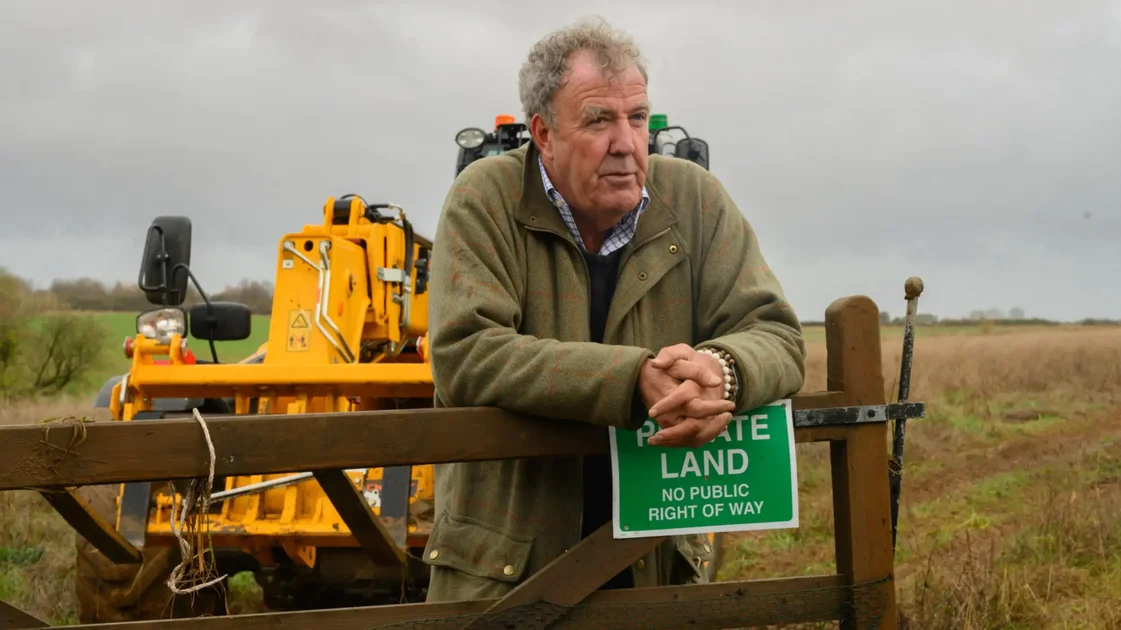
In a column for The Sun published this week, Clarkson admitted he is, in his own words, “genuinely scared.” The concern is not the usual British farming anxiety of too much rain, but the opposite: the grain at Diddly Squat Farm is now dangerously dry. “This year, though, I have a new problem. The grain is too dry… All it would take is a discarded cigarette end, or the spark from a piece of faulty equipment and in a matter of moments, my whole crop would be turned into ash. A year’s work, literally, up in smoke,” he wrote.
This stark admission comes just weeks after the former Top Gear host revealed a serious health battle. During the latest series of Clarkson’s Farm, he announced he had been diagnosed with an aggressive form of prostate cancer. The condition was caught early, and he has since been declared in remission after a recent PSA test showed no sign of the disease. He also suffered a medical emergency when he resumed blood-thinning medication without medical advice following his cancer operation. The health scare, he told The Sunday Times, hit him deeper than expected, reflecting on the bravery of others like Olympic cyclist Chris Hoy who face terminal diagnoses.
The threat to his harvest is immediate. The current heatwave conditions have turned fields into tinderboxes. A single spark from farm machinery or a discarded cigarette could ignite the standing crop, destroying not only this year's income but also the months of labour invested. For a man who has turned his farming struggles into a hit Prime Video series, the stakes are both personal and professional.
The Feud with Chris Packham Reignites
Meanwhile, a different kind of fire rages. The simmering dispute between Clarkson and naturalist Chris Packham has erupted once more. The row began when Packham, appearing on Celebrity Gogglebox, criticized the idyllic animated opening credits of Clarkson’s Farm. “Already, right, that’s not what a farm looks like,” Packham declared, adding that most farms are “horrible monocultures” sprayed with “deadly chemicals” where animals are kept indoors “in crates, being crushed and kept in the dark.”
Clarkson, never one to let a slight pass, fired back with characteristic venom in his Sun column. He dismissed Packham’s comments as “b******s,” pointing out that Packham had personally visited Diddly Squat Farm in 2012 for bird watching and foraging. “If animals had been ‘crushed’ in crates, I’m pretty sure he’d have noticed and said something,” Clarkson wrote. His co-star, Harriet Cowan, also weighed in on TikTok, challenging Packham to “research your facts.”
The dispute escalated on July 17 when Packham took to Instagram, addressing Clarkson directly: “Tell me Jeremy Clarkson, is it really all happy smiley down on the farm?” He accompanied the post with statistics on intensive farming practices. The public response was mixed. While some fans supported Packham’s message, many slammed the post as “divisive” and “unhelpful.” One comment read, “Chris, while I completely agree that farming needs to change, I think given the platform you have, you could do better… To me, this comes across as divisive and an ‘us vs them’ post.” Another user appealed for common ground, noting that “it’s a shame you are both clashing heads when it’s the government, water companies and councils, etc., that need the attention.”
This clash highlights a deep cultural divide. Clarkson’s Clarkson’s Farm has been credited with giving the British public a romanticised—yet often brutally honest—view of modern farming. Packham, on the other hand, represents the environmentalist perspective that calls for an overhaul of agricultural practices. The feud is not merely personal; it reflects a broader national debate about food production, land use, and the role of celebrity influence.
The Grand Tour Without the Grand Trio
Perhaps the most seismic shift in Clarkson’s universe is the official end of his era in automotive television. Prime Video has confirmed that The Grand Tour will return on September 4 with a new lineup: James Engelsman, Thomas Holland—both of the YouTube channel Throttle House—and Francis Bourgeois, the 26-year-old trainspotter who became an unlikely social media star. The show’s new hosts are asking viewers to accept it as the “same show” with “new knobs,” a cheeky reference to the vehicle controls they will now be in charge of.
The decision to rebuild The Grand Tour without Clarkson, James May, and Richard Hammond is a high-stakes gamble. The trio signed off in the fall of 2024 after years of defining the show. May and Hammond have moved on to other projects; Morgan Rogers joins Chelsea for £117m after World Cup heroics shows the kind of major spending in other entertainment sectors, but in the automotive TV world, the chemistry of the original trio was considered irreplaceable.
Amazon has released little information about the new season. The reboot is reportedly not even on Amazon’s official press calendar yet, leaving fans in a state of cautious curiosity. The challenge is immense. Top Gear famously struggled after the trio left the BBC, eventually being taken off the air for years. The loyalty viewers built with Clarkson, Hammond, and May over decades is not a commodity that easily transfers. Engelsman and Holland bring established chemistry from their own automotive content, while Bourgeois is the wildcard—a genuine enthusiast whose passion for trains is a far cry from the car-centric world of his predecessors. As one report notes, “A straight replacement act would be doomed from the first frame.”
The Transition of an Icon
The simultaneous news streams paint a portrait of a man and his brands in transition. Clarkson himself is physically vulnerable, having faced a cancer diagnosis and now a harvest that could literally go up in flames. His public persona, once purely that of a blundering car enthusiast, has evolved into a figure who commands a farming empire and engages in intellectual combat with environmentalists.
What This Changes
The broader implications are significant. For the streaming industry, the success or failure of the new Grand Tour will be a bellwether for how much value resides in a format versus its original talent. If Engelsman, Holland, and Bourgeois can attract viewers, it could validate a model where intellectual property is bigger than its stars. If it fails, it will reinforce the notion that Clarkeon, May, and Hammond were the true engine of the show.
For farming, the Clarkson-Packham feud has brought national attention to the fragility of British agriculture. Clarkson’s fear of a “spark” destroying his crop is a metaphor for the industry itself, which is caught between the pressures of industrial efficiency and the push for sustainability. The streaming war heats up: Nolan’s ‘Odyssey’, ‘Obsession’ lead July’s must-watch list—and The Grand Tour’s reboot is part of that landscape, trying to stay relevant in a world where attention is the most valuable currency.
Meanwhile, Clarkson’s health ordeal and his honest reflections on mortality have added a layer of depth to a figure once known primarily for his bombastic television persona. He is no longer just the man who said the wrong thing on camera; he is a survivor, a farmer, and a broadcaster watching his empire change shape around him.
Whether he will ever return to the driver’s seat of a motoring show remains uncertain. For now, he is fighting fires on multiple fronts—literally, metaphorically, and publicly.
Comments