
Spain Holds Top Spot as World Cup 2026 Kicks Off in North America
With just days remaining until the opening match of the 2026 FIFA World Cup in Canada, Mexico, and the United States, analysts and fans are finalizing their predictions for the first 48-team tournament in history. According to updated rankings from The Athletic, Spain remains the team to beat, holding the No. 1 position ahead of France and Argentina. The Euro 2024 champions boast a deep squad led by rising star Lamine Yamal, whose fitness is the only lingering concern ahead of the group stage.
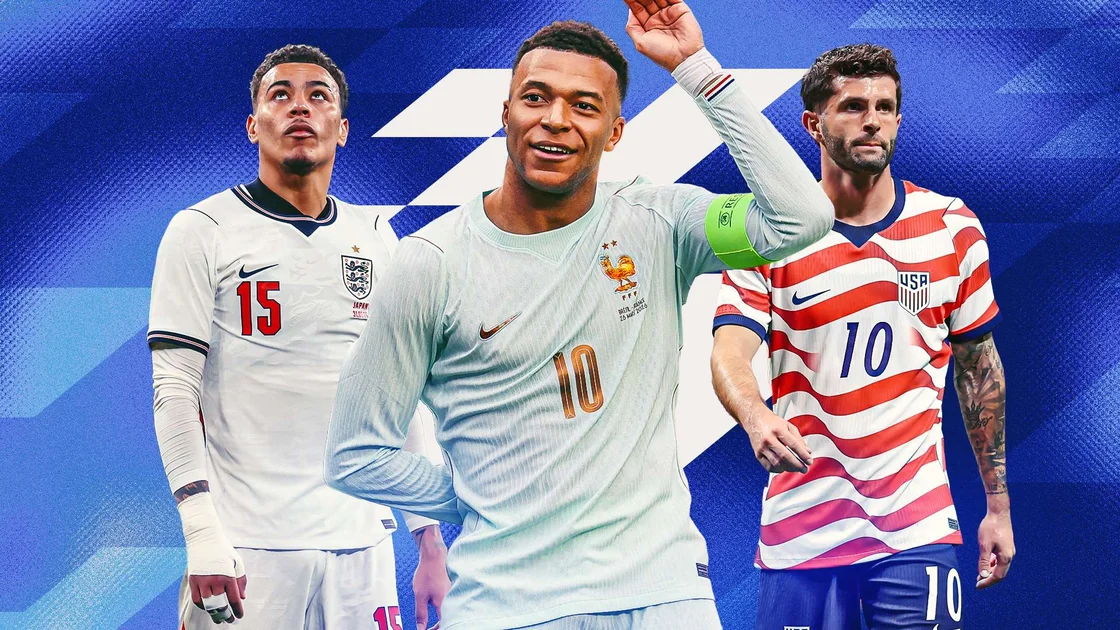
France, ranked third by FIFA but second in The Athletic's assessment, fields arguably the most fearsome attack in the tournament. With options such as Kylian Mbappé, Ousmane Dembélé, and Michael Olise, the depth of Les Bleus' forward line could overwhelm opponents, even if other areas of the team are less dominant. Argentina, the defending World Cup champion and current FIFA No. 2, sits third in the power rankings, with Lionel Messi-led squad still capable of a deep run despite an aging core.
The tournament, which begins June 11, will see 48 teams divided into 12 groups of four. As ESPN notes, eight third-place finishers will advance to the knockout rounds, adding a layer of complexity to the group stage. Teams will be ranked by points, goal difference, goals scored, conduct score, and finally FIFA ranking to determine which third-place teams move on.
Why These Rankings Matter: The Stakes of a Record-Breaking World Cup
The expanded format means more nations than ever have a chance to compete, but it also raises the bar for consistency. As USA TODAY Sports points out, while the top 11 FIFA-ranked teams are all present, notable absences like Italy (No. 12), Denmark (No. 20), and Nigeria (No. 26) leave gaps that lower-ranked teams such as New Zealand (No. 85) and Curaçao (No. 83) will try to exploit.
The Athletic's re-ranking, published June 6, adjusts earlier predictions based on late injuries, managerial changes, and squad developments. Behind the top three, England (FIFA No. 4), Portugal (No. 5), and Brazil (No. 6) round out the elite tier. Brazil, despite a strong squad that includes teenage prodigy Endrick—who reportedly receives daily calls from Jude Bellingham—faces questions about its defensive cohesion after a mixed run of friendlies.
Group D, featuring the United States, Paraguay, Australia, and Turkey, will be closely watched by the host nation. The USMNT, ranked 16th by FIFA, will lean on Christian Pulisic and a growing core of European-based players. However, their path to the knockout rounds is far from guaranteed, especially with a tricky opener against Paraguay and a physical Australia side. For more on the USMNT's preparations, see our coverage of their final tune-up match: USA vs Germany Friendly: USMNT's Last World Cup Tune-Up Ends in Chicago.
Meanwhile, Canada, co-hosts and FIFA No. 30, face a stern test in Group B against Switzerland, Qatar, and Bosnia and Herzegovina. The Canadians will rely on Alphonso Davies and Jonathan David to navigate a group that could see them through to the knockout rounds for the first time since 1986. However, new travel restrictions have raised concerns about fan mobility and team logistics; for more on this, read Fears of Travel Chaos Grow as Canada Faces New Restrictions Amid World Cup.
The Evolution of Soccer Rankings and What This Means for the Tournament
The 2026 World Cup arrives at a moment when global soccer power is more balanced than ever. The gap between traditional giants and emerging nations is narrowing, thanks to increased investment in youth development and the spread of top-level coaching. ESPN's composite rankings, which blend Elo ratings with estimated squad market values from Transfermarkt, highlight this trend: Spain may lead the talent index, but Morocco (FIFA No. 7), Senegal (No. 14), and Japan (No. 18) are within striking distance of the usual suspects.
For FIFA, the expanded format is a double-edged sword. On one hand, it gives more nations exposure on the biggest stage, which can accelerate growth in underrepresented regions. On the other, it risks diluting the quality of the group stage and overwhelming fans with 72 matches before the knockout rounds begin. The inclusion of third-place teams adds further complexity—and potential for controversy—especially since tiebreakers like team conduct and FIFA ranking could decide who advances.
The broader implication is that the definition of "world rankings" is evolving. No longer a simple numerical list, rankings now shape everything from group seeding to knockout eligibility. As CBS Sports notes, the 48-team format means even a third-placed finish in a tough group could lead to a run deep into July. For teams like Scotland, Haiti, or New Zealand, a single upset could be the difference between history and elimination.
As the countdown to kickoff continues, the soccer world is bracing for a month of surprises. Spain may be the favorite on paper, but as Argentina proved in 2022, rankings matter less than form, fitness, and fortune. The next few weeks will reveal which nations truly deserve their place at the top of the table.
Comments