
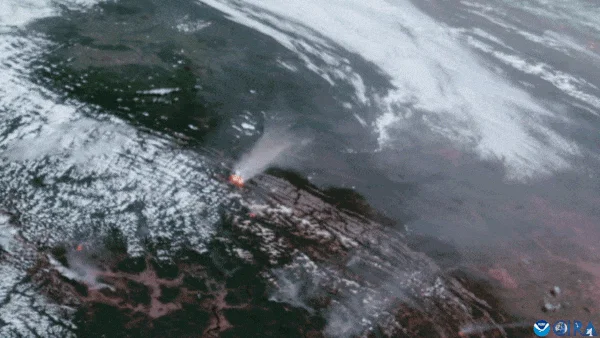
North America on Fire: Emergency Declared in British Columbia as New Wildfires Erupt in Oregon and New Mexico
A fast-moving wildfire in western Canada has prompted a provincial state of emergency, forcing more than 20,000 people from their homes, while separate new blazes in Oregon and New Mexico are stretching firefighting resources to the limit. The Bald Range fire in British Columbia has doubled in size since Friday, now consuming over 39 square miles (103 square kilometers) across the Summerland, Peachland, and surrounding districts. Officials are warning residents to brace for the worst as the fire creates its own weather systems, generating lightning that could spark additional blazes.
“We have to brace ourselves for the worst,” Summerland Mayor Doug Holmes told Reuters on Saturday. The fire, which has already destroyed homes and properties, has been compared to "a bomb going off" by fire officials, according to British Columbia Premier David Eby. “Homes have been lost, and properties have been destroyed. Some people became trapped as conditions changed very quickly, and needed to be rescued,” Eby said during a news conference. The provincial state of emergency grants authorities special powers, including travel restrictions and supply protections to prevent price gouging.
Thousands Evacuated as Bald Range Fire Grows
The Bald Range wildfire, detected on Friday, has triggered the largest evacuation event of the summer in British Columbia. More than 20,000 residents have been ordered to leave their homes, with many farms and ranches in the affected areas. Eyewitnesses described the scene as “going crazy,” with a column of smoke rising over residential streets in Summerland, a town of about 12,000 people. The nearby community of Peachland, home to approximately 6,500 residents, is also under threat.
Fire officials report that the flames have grown so intense they have created pyrocumulonimbus clouds—essentially fire-generated thunderstorms that produce lightning and erratic winds. This phenomenon makes firefighting efforts even more challenging and increases the risk of spot fires starting ahead of the main blaze. Despite the efforts of ground crews and aerial tankers, containment remains elusive, and the fire continues to spread through dry timber and rugged terrain.
New Wildfire Near Bend, Oregon Forces Evacuations
Thousands of miles to the south, firefighters in central Oregon are battling a new blaze that erupted on Friday morning. The Hidden Forest Fire, also known as Incident #685, was first reported at approximately 20 acres near Forest Road 18 and the Swamp Wells Area, about 12.5 miles southeast of Bend in Deschutes County. By Saturday evening, the fire had grown to nearly 300 acres, with a moderate rate of spread in sagebrush and light trees.
The Deschutes County Sheriff’s Office has issued evacuation notices for areas near the fire, including a Level 3 (GO NOW) order for Forest Service Road 18 in the vicinity of Arnold Ice Cave. Several ranches are in the immediate area, and crews are working to protect private property. More than 150 personnel are on scene, including hot shot crews, engines, dozers, and overhead teams. Aerial resources, including large air tankers (LATS), single-engine air tankers (SEATS), and scoopers, have been dropping retardant and water to slow the fire’s advance.
“Aircraft have successfully put retardant around 80% of the fire,” according to a Central Oregon Fire Information update. Dozer lines have been established on both flanks, and crews are working to connect those lines to achieve containment. The fire is primarily on Deschutes National Forest lands, with private land in proximity. The cause of the fire is under investigation, but dry conditions and gusty winds are contributing to the rapid spread.
Lightning-Sparked Fires in New Mexico Highlight Regional Concerns
In northern New Mexico, fire crews are responding to multiple lightning-caused wildfires that have erupted following recent thunderstorms. The most significant is the Frijoles Fire, burning in the Pecos Wilderness area of the Santa Fe National Forest. First reported on August 4, the fire has doubled in size, growing from 500 acres on Saturday morning to 1,000 acres by the evening. The fire is located in steep terrain about 5 miles west of Sierra Mosca and 3 miles southeast of Cundiyo, New Mexico.
The Frijoles Fire has prompted “ready” status for the communities of Cundiyó and Cerro Piñon, meaning residents should prepare to evacuate if conditions worsen. Santa Fe County officials have advised residents to pack a three-day supply of essentials, including medications, water, food for people and pets, and important documents. N.M. 503, which runs through Cundiyó, has been closed from its northern end west of Cordova to its intersection with N.M. 76.
Drone Incursion Grounds Firefighting Helicopters
A significant challenge emerged on Saturday when an unauthorized drone flew over the Frijoles Fire, forcing the grounding of firefighting helicopters for part of the day. “Drones pose a serious risk to firefighting and can cause air operations to cease,” the Forest Service said in a news release. The agency reiterated its warning: “If you fly, we can’t!” The person responsible for the drone had not been identified as of Saturday evening. Helicopters are critical for dropping water and retardant in steep, inaccessible terrain, and any delay can allow the fire to grow.
The Frijoles Fire is one of several burning in the Santa Fe National Forest. The Lodin Fire, located about 2 miles south of Jarosa and 4.5 miles west of Cerro Pelon, has grown to 6 acres with 0% containment. Heavy timber torching caused several spot fires on August 4, but crews quickly contained them with the help of a Type 1 helicopter. The Spring Fire, another lightning-caused blaze in the Cuba Ranger District, is burning at 1 acre. All fires are in heavily timbered areas with dead and downed fuels, increasing the potential for rapid spread.
A Season of Extremes: Climate, Fuel, and Wind
The simultaneous outbreaks of wildfires across Canada and the western United States are a stark reminder of the growing intensity of fire seasons in North America. Fire officials point to a combination of factors driving this year’s extreme behavior: prolonged drought, above-normal temperatures, and an abundance of dry vegetation. In British Columbia, the Bald Range fire has exhibited what experts call “fire weather”—conditions so hot and dry that the fire itself generates thunderstorm activity.
“This is not your typical fire season,” says a spokesperson for the BC Wildfire Service. “These fires are more aggressive, harder to contain, and more dangerous for our crews.” The use of aircraft, including large air tankers and helicopters, has been instrumental in slowing the advance of fires like the Hidden Forest Fire in Oregon, but the sheer number of simultaneous incidents is stretching resources thin. Mutual aid agreements between states and provinces are being activated to bring additional crews and equipment to the front lines.
The impact on communities is profound. In Summerland and Peachland, residents have been forced to flee with little notice, unsure if their homes will be standing when they return. In New Mexico, rural communities that rely on tourism and ranching are bracing for potential evacuations. The closure of highways, like N.M. 503 in the Pecos area, disrupts daily life and hampers access for residents and first responders.
The Growing Risk of Fire-Generated Weather and Drones
One of the most alarming trends this season is the increasing frequency of pyrocumulonimbus events—fire-generated storm systems that can produce lightning, strong winds, and even fire tornadoes. The Bald Range fire in British Columbia is a prime example, with officials confirming that the fire’s intensity has created its own weather. These systems not only make firefighting more dangerous but can also spread embers miles ahead of the main fire front, igniting new blazes and baffling suppression efforts.
Another emerging challenge is the threat posed by drones. As wildfires grow in size and frequency, the number of recreational drones flying near fire zones has increased, leading to dangerous interruptions in aerial firefighting. The grounding of helicopters over the Frijoles Fire is just one recent example. Fire agencies across North America are pleading with the public to stay clear of fire zones and to respect temporary flight restrictions.
“Every time a drone is spotted, we have to pull our aircraft out of the sky,” explains a Forest Service spokesman. “That puts our firefighters on the ground at greater risk and allows the fire to grow.” Federal authorities are considering stiffer penalties for drone interference, which is a federal offense that can carry fines and jail time.
What This Means for the Rest of the Summer
As climatologists look ahead, the outlook is grim. The National Interagency Fire Center has predicted above-normal fire potential for the western United States through September, and Canadian officials have similarly warned of an extended season. The El Niño-Southern Oscillation cycle, which often brings warmer, drier conditions to parts of North America, is a contributing factor. Combined with decades of fire suppression that have left forests overgrown and dense, the stage is set for another explosive fire season.
For residents in fire-prone areas, the message is clear: prepare early, follow evacuation orders, and stay informed. The availability of insurance, controlled burns, and community fire-safe programs are becoming essential tools for mitigating risk. In Canada, the federal government has pledged additional support for wildfire preparedness and response, while in the U.S., conversations about increasing funding for the Forest Service’s wildfire budget have become routine.
However, local leaders like Summerland’s mayor are focusing on the immediate crisis. “We’re not thinking about next year,” says Doug Holmes. “We’re thinking about getting through tonight.” The Bald Range fire, like the Hidden Forest Fire in Oregon and the Frijoles Fire in New Mexico, is a test of resilience and coordination. Until cooler temperatures and rain arrive, crews will continue to fight these blazes, hoping to protect lives, homes, and communities from one of nature’s most destructive forces.
Comments