
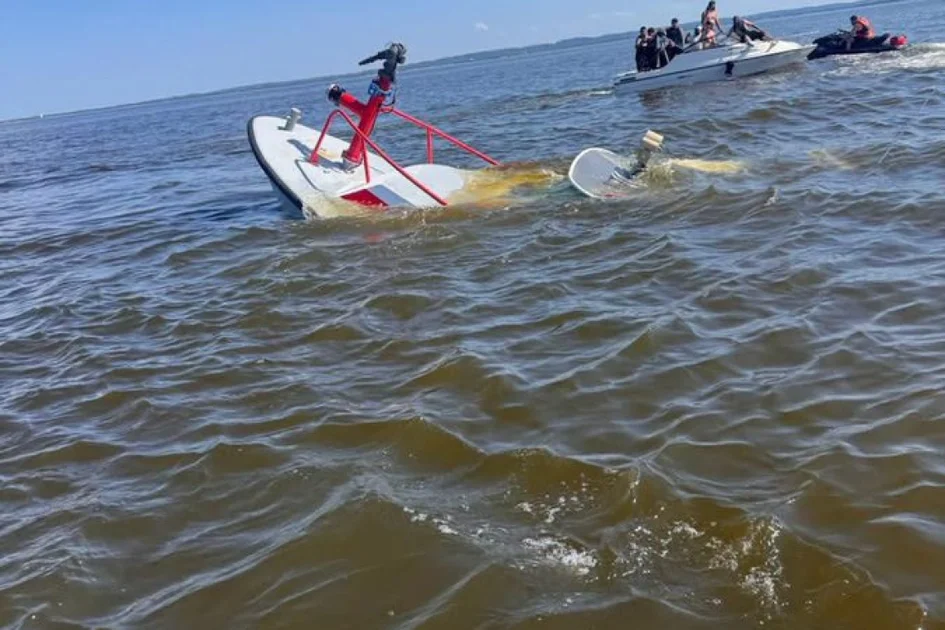
Whale Strikes and Sinks New Jersey Fireboat, Crew Escapes Seconds Before Catastrophe
A routine Fourth of July security patrol turned into a harrowing survival ordeal on Saturday when a breaching whale violently struck a Carteret Fire Department marine vessel, causing catastrophic damage and sinking the boat within seconds. The incident, which occurred at approximately 4:30 p.m. local time south of the Arthur Kill at the mouth of Raritan Bay, left the five-member crew scrambling to abandon ship before the vessel disappeared beneath the waves.
The Carteret Fire Department & EMS Division confirmed that Marine Unit 2 was returning from a regional security detail in the New York and New Jersey Port area when a humpback whale surfaced directly beneath the stern. The impact, described by officials as a "violent strike," punched a hole in the hull and sent the boat listing immediately. According to a department news release issued on July 5, the vessel "immediately began taking on water, leaving the firefighters aboard only seconds to abandon the vessel."
A nearby recreational jet ski operator and another boater witnessed the disaster unfold and rushed to pull the firefighters from the water. Members of the Perth Amboy Fire Department Marine Unit and FMBA Local 58/258, a firefighting union chapter, also arrived on scene to assist with the rescue. Remarkably, all personnel survived and no injuries were reported. The department credited the crew's mandatory use of personal flotation devices for their safety, noting that every firefighter was wearing a properly fitted life jacket at the time of the strike.
"An event of this nature is something no one anticipates," the department said in its statement. "Understandably, it has left those involved shaken, but we are incredibly thankful that everyone returned home safely to their families."
The Incident in Detail
Eyewitness accounts and official reports paint a chaotic picture. The Carteret Fire Department marine unit had just completed assisting with a routine regional security detail when it began heading back to Carteret waters. The crew had no warning before the whale breached. A recreational vessel in the area later told authorities that a pod of whales had been observed breaching before and after the collision, suggesting the pod was actively feeding or socializing in the channel.
Fire department officials emphasized that the crew had only seconds to react. "The boat suffered catastrophic damage," a spokesperson said. "The whale struck beneath the stern, and water rushed in almost immediately. The firefighters had to jump overboard and get clear before the boat went down." Photographs released by the department show only a small portion of the bow still visible above the waterline, illustrating the speed of the sinking.
The circumstances surrounding the incident remain under investigation by the Carteret Fire Department and likely the U.S. Coast Guard. No determination has been made about the species of whale involved, though humpback whales are known to frequent the waters of Raritan Bay and the New York Bight, particularly during summer months when menhaden—a primary food source—are abundant.
Why This Incident Matters: Risks Rise as Whale Populations Rebound
This collision represents more than a dramatic rescue story; it signals a growing challenge in the busy—and often crowded—waters of the New York and New Jersey harbor region. Whale populations along the Eastern Seaboard have rebounded significantly over the past decade due to federal protections and cleaner waterways, but that recovery has come with increased risks of vessel strikes.
Raritan Bay and the Arthur Kill are high-traffic corridors used by commercial shipping, recreational boaters, ferries, and emergency response vessels. The area is also a seasonal feeding ground for humpback whales, which follow schools of menhaden—also known as bunker fish—into shallow, nearshore waters. This overlap creates a dangerous environment for both whales and boaters.
According to data from the National Oceanic and Atmospheric Administration (NOAA), vessel strikes are one of the leading causes of death for large whales along the U.S. Atlantic coast. While strikes on small military or emergency vessels are rare, they have occurred. In 2023, a breaching humpback whale landed on a fishing boat off the coast of New Hampshire, flipping two brothers into the ocean. That incident, captured on video and widely circulated, highlighted the sudden, unpredictable nature of whale breaches.
The Carteret fireboat sinking is among the first documented cases of a whale strike sinking a government emergency response vessel in the region. Fire department marine units are typically designed for stability and rescue operations, but they are not built to withstand the immense force of a surfacing humpback whale, which can weigh upward of 30 tons.
The Fourth of July Timing
The July 4 timing added an extra layer of tension. The harbor was crowded with recreational boaters enjoying the holiday weekend, and the fireboat had just completed security patrols associated with Independence Day celebrations. Temperatures in New Jersey had reached record highs over the holiday weekend, with the state reporting 25 suspected heat-related deaths. The combination of extreme heat, heavy boat traffic, and whale activity created a perfect storm of hazards.
The department's quick response and the heroic actions of nearby boaters prevented what could have been a tragedy. "Every single firefighter was wearing a life jacket," the department reiterated. "If they hadn't been, this story could have ended very differently."
Broader Perspectives: Lessons for Boaters, Mariners, and Wildlife Managers
The sinking of the Carteret Fire Department Marine Unit 2 is a stark reminder that whale strikes are not limited to large commercial vessels. As humpback whale populations continue to thrive—the western North Atlantic population is estimated at over 10,000 individuals—encounters with smaller vessels are likely to become more frequent.
Increased Awareness and Training
Fire departments and marine units that operate in whale-prone waters may need to adjust their training protocols. The Carteret Fire Department noted that its marine unit regularly trains for water rescues, marine emergencies, fires, and vehicle incidents, but a whale strike was never part of the curriculum. "An event of this nature is something no one anticipates," the department said—a sentiment that may now prompt other agencies to consider adding whale avoidance and post-strike response to their training.
Boaters in general can take several precautions, including reducing speed in areas where whales have been sighted, keeping a sharp lookout for surface activity such as splashes or blows, and maintaining a safe distance—at least 100 yards from whales under federal law. The National Oceanic and Atmospheric Administration also recommends that boaters avoid traveling directly toward a whale and never pursue or chase them.
The Role of Technology
Some experts have called for wider adoption of whale detection technology, such as thermal imaging cameras and acoustic monitors that can alert boaters to the presence of whales below the surface. While these tools are becoming more common on large ships, they remain rare on smaller recreational and emergency vessels due to cost and complexity. The Carteret incident may accelerate discussions about making such technology more accessible.
For those interested in the broader intersection of marine wildlife and human activity, the story also echoes concerns about the impact of climate change on whale migration patterns. Warmer waters are shifting prey distributions, pushing whales into regions where they have not historically been seen—and into more frequent contact with boats.
A Cautionary Tale for Holiday Boaters
The Fourth of July weekend is traditionally one of the busiest boating periods of the year. This year, millions of Americans took to the water to celebrate. The Carteret fireboat crew's experience serves as a cautionary tale: even experienced, professional mariners can be caught off guard. As the department put it, "What do we learn from this?" The answer may be that vigilance, proper safety equipment, and rapid mutual aid remain the most effective tools for surviving an unexpected encounter.
Meanwhile, the recreational boater who spotted the pod of whales before and after the collision may hold important clues. Authorities are likely to interview that witness as part of the investigation, hoping to better understand the behavior of the whales and whether any warning signs were present.
What Comes Next: Investigation, Recovery, and Resilience
The Carteret Fire Department is now focused on supporting the crew, recovering the sunken vessel, and cooperating with ongoing investigations. The department has thanked numerous agencies for their assistance, including the Jersey City Fire Department, the New Jersey Regional Fireboat Task Force, and Mayor Dan Reiman and the Carteret Borough Council.
As for the whale, no reports of injury or stranding have been filed. It is possible that the animal swam away after the collision, but authorities are monitoring the area. Whale strikes can be fatal to the animals as well, and any injured marine mammal would be protected under the Marine Mammal Protection Act.
For readers interested in other unexpected events that have shaped recent headlines, you may want to read about the Charlie Kirk Murder Hearing Opens with Sniper Pad Testimony, Family in Court, which also involves dramatic testimony from first responders.
In the coming weeks, the fire department plans to conduct a full after-action review. The goal will be not only to understand what happened, but also to ensure that future patrols—no matter how routine—are prepared for the unexpected. As one department official said, "We train for the worst, but sometimes the worst is something you never imagined."
The whale that sank Marine Unit 2 remains at large. The five firefighters who almost died are safe at home. And the waters of Raritan Bay, calm again on a sweltering July evening, hold the memory of a collision that could have been far worse.
Comments