
Warren and Durbin Reintroduce Bill Targeting College Accountability on Student Debt
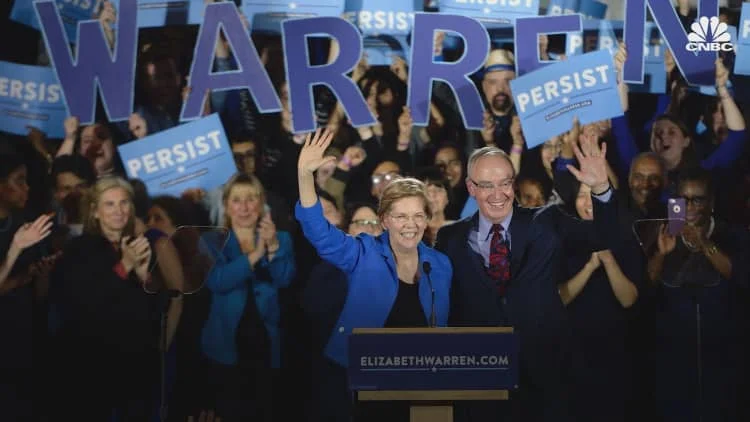
Senator Elizabeth Warren (D-MA) and Senator Dick Durbin (D-IL) are spearheading a renewed legislative push to overhaul the nation's college accreditation system, aiming to force schools to answer for the mounting student-loan debt crisis. On July 21, 2026, the lawmakers announced they are reintroducing the Accreditation Reform and Enhanced Accountability Act, a bill designed to tighten the rules governing which colleges and universities can receive federal financial aid.
The proposed legislation would require the Department of Education to establish clear, enforceable guidelines for evaluating colleges. Key metrics would include student-loan repayment outcomes and the ratio of debt students take on after graduation compared to their actual earnings. According to a fact sheet on the bill first viewed by Business Insider, the measure is a direct response to findings that between 2021 and 2024, approximately 1.7 million student-loan borrowers were defrauded by accredited schools. "We need to overhaul our accreditation system to make sure students get an education that will improve their lives, not leave them jobless and buried in debt," Warren said in a statement.
The bill also mandates that accrediting agencies respond promptly to state and federal investigations regarding fraud or misconduct at institutions and increase transparency around accreditation decisions. This effort comes as the Education Department itself advances separate proposals to change the accreditation system, including requiring accreditors to ensure schools uphold free speech protections—a move that has drawn criticism from some negotiators who argue First Amendment issues fall outside an accreditor’s purview.
The Context: A Default Crisis Unfolds
Nine Million Borrowers in Default
The reintroduction of Warren’s bill arrives amid a staggering student-loan default crisis. Recent data indicates that 9 million federal student-loan borrowers are currently in default, the largest total in recorded history. The New York Federal Reserve reported that 3.6 million borrowers have defaulted since October 2025 alone, with credit scores dropping an average of 91 points. This wave of defaults has raised alarm among lawmakers and consumer advocates, who argue that the current system allows colleges to collect federal tuition dollars without bearing responsibility for the financial outcomes of their graduates.
The problem is especially acute for older borrowers. At least 450,000 seniors with defaulted student loans are at risk of seeing their Social Security benefits reduced through the Treasury Offset Program, a mechanism that allows the government to withhold a portion of Social Security payments to recover defaulted debt. According to Warren, seniors with student loans are roughly twice as likely to be in default as younger borrowers. Borrowers subjected to Social Security offsets have seen their benefits reduced by an average of more than $2,000 per year, and the government has used this tool to withhold over $1 billion from Americans' Social Security benefits over the years.
The Shift of Collections to Treasury
A major complicating factor is the administrative shift of the defaulted student-loan portfolio. In March 2026, the Trump administration announced it would move defaulted loan collections from the Department of Education to the Treasury Department. This transfer effectively placed the fate of millions of borrowers—including seniors—into the hands of a new agency. At a recent Senate Finance Committee hearing, Warren pressed Deputy Treasury Secretary nominee Francis Brooke on whether the Treasury would resume garnishing Social Security benefits for defaulted borrowers.
Brooke could not say how many borrowers are in default and declined to commit to maintaining the current pause on Social Security offsets. In a pointed exchange, Warren told Brooke: "Nine million people who are in default right now and whose financial lives will be in your hands, and you don't even know who they are." Last year, Education Secretary Linda McMahon had personally ordered a pause on Social Security offsets for defaulted borrowers, but that commitment's status became uncertain after the portfolio's transfer to Treasury. Brooke's refusal to affirm the policy leaves it in limbo.
How the Bill Would Change the Rules for Colleges
Tying Federal Aid to Student Outcomes
The Accreditation Reform and Enhanced Accountability Act aims to address what Warren and Durbin see as a fundamental flaw in the current system: colleges that produce graduates with unpayable debt face few consequences. Under the bill, the Department of Education would establish benchmarks for evaluating institutions based on repayment rates and debt-to-earnings ratios. Schools that consistently produce graduates with high debt burdens and low repayment rates could risk losing access to federal student aid—a financial lifeline for most institutions.
This approach echoes a key provision of the 2016 version of the bill, which Warren originally introduced with then-President Barack Obama's Education Department in mind. The revived legislation is designed to close loopholes that allow colleges to continue enrolling students in programs that saddle them with debt but offer limited job prospects. "We need to make sure that the accreditation system actually protects students and taxpayers, not just the bottom line of colleges," Warren said.
Fraud and Misconduct Accountability
A critical component of the bill is its emphasis on accountability for fraud. The 1.7 million borrowers found to have been defrauded by accredited schools between 2021 and 2024 underscores the urgency of reform, according to lawmakers. The legislation would require accreditors to respond quickly to state and federal investigations regarding fraud or misconduct at schools. Accrediting agencies would also be compelled to increase transparency around their decisions, making it harder for problematic schools to hide behind opaque review processes.
This push for transparency comes amid broader concerns about oversight. Following significant staffing cuts at the Department of Education, a recent report from the Office of the Inspector General revealed that some of the departments most affected were those responsible for collecting financial aid data from schools participating in federal student aid programs. The cuts have raised questions about whether the government can effectively monitor the more than 6,000 institutions that receive federal funding.
The Broader Implications: A Turning Point for Higher Education?
A Shift in Federal-University Dynamics
Warren’s bill represents a significant escalation in the federal government’s attempt to hold colleges directly accountable for the financial well-being of their students. If passed, it could fundamentally alter the relationship between Washington and higher education institutions. Colleges would no longer be able to simply enroll students, collect tuition, and leave them with crushing debt; they would be compelled to demonstrate that their programs lead to economic mobility or risk losing access to federal funding.
This legislation also signals a growing bipartisan frustration with the student-loan system. While Warren and Durbin are Democrats, the default crisis has affected borrowers across the political spectrum. The 3.6 million defaults since October 2025 alone have hit borrowers in every state, and the average 91-point drop in credit scores has long-term consequences for millions of Americans’ ability to buy homes, start businesses, or even rent apartments. The fact that Sen. Warren, a longtime critic of the student-loan industry, is leading this charge underscores the urgency of the moment.
What This Changes for Borrowers and the Economy
For borrowers, the potential impact is profound. If the bill becomes law, it could reduce the number of predatory or low-value programs that trap students in debt. However, critics argue that tying accreditation to outcomes could penalize schools that serve disadvantaged student populations, who may have lower repayment rates due to economic factors beyond the college’s control. The bill’s supporters counter that the metrics would be designed to account for such variables, focusing on whether a school’s programs genuinely prepare students for the workforce.
The broader economic implications are equally significant. With 9 million borrowers in default and $1.7 trillion in student-loan debt outstanding, the crisis is not just a personal finance issue—it is a drag on the entire economy. Borrowers struggling with debt are less likely to contribute to consumer spending, invest in homes, or save for retirement. By forcing colleges to produce better outcomes, Warren’s bill could help alleviate some of that burden and restore confidence in the value of higher education.
Conclusion: A Legislative Fight Ahead
The Accreditation Reform and Enhanced Accountability Act faces an uncertain path in a divided Congress. However, the growing default crisis and the administrative chaos surrounding the transfer of collections to Treasury may create momentum for reform. Warren has already demonstrated her willingness to pressure the administration on this issue, having led a 62-lawmaker coalition demanding action in June. The recently proposed Education Department rules on accreditation—though controversial over the free-speech provision—indicate that the Biden administration shares the goal of strengthening oversight.
For seniors facing the threat of Social Security offsets, and for the millions of borrowers trapped in default, the outcome of this legislative battle could not be more consequential. As Undersecretary of Education Nicholas Kent put it, the measures building on the department’s goals are about "lowering costs, simplifying repayment, connecting education to workforce needs, strengthening accountability, and restoring confidence in our accreditation system." Whether Warren’s bill can deliver on that ambitious vision remains to be seen, but for now, it has put colleges on notice: the era of accountability may be about to begin.
For related coverage on policy and oversight, read about the ACLU Sues Elizabeth Jones Over First Amendment Rights Amid ICE Crackdown.
Comments