
Vatican Closes the Book on Father Ciszek's Sainthood Cause After Decades of Advocacy
The Vatican has formally terminated the canonization cause of Father Walter Ciszek, a Pennsylvania-born Jesuit priest celebrated for his extraordinary spiritual endurance through more than two decades of Soviet imprisonment. The announcement, confirmed publicly on April 17, 2026, ends a process that had been formally underway since 2012 and informally pursued for well over a decade before that.
Monsignor Ronald C. Bocian, board president of the former Father Walter Ciszek Prayer League and pastor of Divine Mercy Parish in Shenandoah, Pennsylvania — Father Ciszek's hometown — delivered the news to league members in a letter dated April 9. The Diocese of Allentown, Pennsylvania, which had assumed stewardship of the cause, confirmed that the documentation assembled over many years "does not support advancing his cause for beatification or sainthood."
What the Vatican's Decision Means — and What It Does Not
The Vatican's Dicastery for the Causes of Saints, which evaluates all sainthood causes submitted by dioceses worldwide, made the determination after what Msgr. Bocian described as "years of careful study and discernment at the level of the Holy See." The decision reflects the dicastery's conclusion that the evidentiary record — however extensive — does not meet the rigorous canonical threshold required to advance a cause toward beatification.
Crucially, church officials and advocates were quick to note that the termination of a canonization cause carries no moral condemnation of the candidate. "This does not diminish the enduring spiritual value of his life, witness, and legacy," Msgr. Bocian wrote. "Even as the formal canonization process has been stopped, the grace flowing from his witness remains alive in the hearts of the faithful."
The Diocese of Allentown echoed that framing, and advocates for Father Ciszek stressed that the decision should be understood as a procedural and canonical determination, not a judgment on the holiness or character of the man himself.
A Second Cause Closed This Month
The closure of Father Ciszek's cause is the second such decision announced by the Vatican in April 2026. Earlier this month, the Vatican also ended the cause of Argentine bishop and Servant of God Jorge Novak. The Diocese of Quilmes, Argentina, stated in that case that the decision expressed "no moral judgment regarding the life, virtues, and pastoral ministry" of Bishop Novak, attributing the closure to his failure to carry out "a possible canonical procedure" as a priest. The near-simultaneous closure of two causes within weeks suggests an active period of review and consolidation within the Dicastery for the Causes of Saints.
Who Was Father Walter Ciszek?
Father Ciszek's story is one of the most dramatic in twentieth-century American Catholic history. Born in 1904 in Shenandoah, Pennsylvania, to Polish immigrant parents, he was ordained a Jesuit priest in 1937, becoming the first American in the order to be ordained in the Byzantine Catholic rite — one of the 23 Eastern Catholic churches in communion with Rome.
As a seminarian, Ciszek had studied in Rome under an initiative launched by Pope Pius XI designed to equip priests for clandestine ministry in the Soviet Union. Originally assigned to Poland, he entered Russia on false documentation after World War II erupted in 1939, working as an unskilled laborer while secretly ministering to Catholics.
His cover did not hold. In 1941, the Soviet secret police — the NKVD — arrested him as a suspected Vatican spy. After enduring brutal interrogations, including torture, he was sentenced to 15 years of hard labor in Siberia. He served that sentence in various prison camps, where he continued celebrating Mass and hearing confessions under extraordinary risk. When his sentence concluded in 1955, he was still not permitted to leave the Soviet Union, and spent additional years working in a chemical factory in forced residence.
His eventual return to the United States in 1963 came as part of a prisoner exchange negotiated during the Kennedy administration, after years in which his family had received no communication from him and feared he was dead.
The Books That Made Him Famous
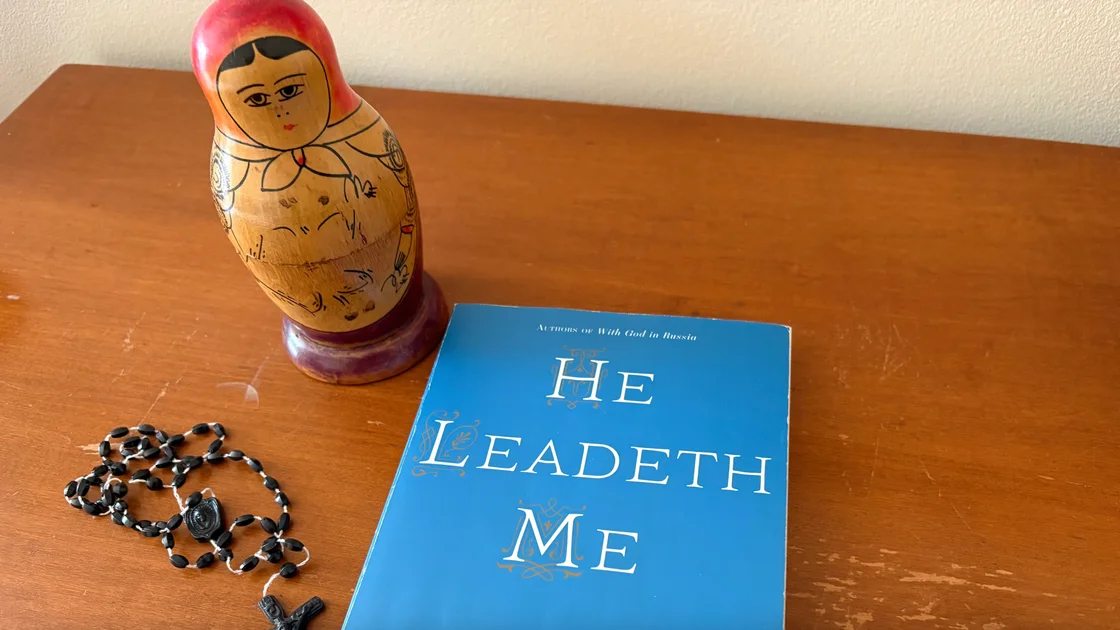
Following his return, Father Ciszek wrote two books that became widely read classics of Catholic spiritual literature. With God in Russia, published in 1964, chronicled his imprisonment and survival. He Leadeth Me, published in 1973, offered a deeper theological and spiritual reflection on how his faith sustained him through suffering and deprivation. Both books remain in print and are frequently cited by readers as transformative spiritual texts. His writings have attracted a broad readership well beyond practicing Catholics, resonating with anyone drawn to narratives of faith under extreme duress.
Father Ciszek died in New York City in 1984.
Decades of Advocacy: A Cause Built on Thousands of Documents
The path toward Father Ciszek's canonization was long and methodical. Preliminary diocesan-level investigation — initiated under the Byzantine Catholic Eparchy of Passaic, New Jersey, before responsibility transferred to the Diocese of Allentown — involved gathering testimony from 45 witnesses and assembling more than 4,000 archival documents drawn from Jesuit archives, Russian state archives, and other sources. Father Ciszek's published and unpublished writings were also submitted for review.
In 2012, the Vatican gave formal approval for the advancement of the cause, a significant milestone that designated Father Ciszek a "Servant of God" — the first official stage in the Catholic canonization process. That recognition generated considerable enthusiasm among his devotees, who had organized through the Walter Ciszek Prayer League to promote awareness of his cause and gather intercessory prayers.
For more than a decade after that formal Vatican approval, the cause appeared to be progressing, albeit slowly — as is standard for canonization proceedings, which can span generations. The April 2026 termination therefore came as a surprise to many advocates, who had invested years of prayer and organizational effort in hopes of seeing Father Ciszek eventually beatified and perhaps canonized.
What Happens to the Prayer League
In his letter to members, Msgr. Bocian announced that the Walter Ciszek Prayer League will not dissolve but will instead reconstitute itself as the Father Walter J. Ciszek Society. The new organization will "remain committed to honoring his memory, sharing his message, and encouraging devotion to the profound spiritual insights he left to the Church," according to Bocian. The transition suggests that advocates intend to preserve Father Ciszek's spiritual legacy and keep his writings in circulation, even without the formal apparatus of a canonization cause behind them.
Why the Cause Was Terminated: What We Know — and Don't Know
The Vatican and the Diocese of Allentown have not publicly specified the precise canonical or theological grounds on which the Dicastery for the Causes of Saints determined that the documentation did not support advancing Father Ciszek's cause. In Catholic canon law and practice, causes can be suspended or terminated for a range of reasons: insufficient evidence of heroic virtue, questions raised during the investigation of the candidate's writings or conduct, procedural deficiencies, or the absence of verified miracles at the required stage.
The phrasing used in the diocese's statement — that the documentation "does not support advancing his cause" — is deliberately general, in keeping with standard Vatican communications on such matters. This measured language avoids stigmatizing the candidate while providing a clear bottom line to those who have followed the cause.
It is worth noting that the termination of a cause does not permanently bar future reconsideration in all cases. However, given the scope of documentation already gathered and the Vatican's conclusory language, advocates have offered no indication that they expect or plan to seek a reopening of the formal process.
Broader Implications: What This Tells Us About the Canonization Process
The closure of Father Ciszek's cause arrives at a moment of heightened public interest in how the Catholic Church manages its canonization pipeline. The Vatican currently maintains thousands of active causes at various stages, and the Dicastery for the Causes of Saints periodically reviews and closes causes that do not meet canonical standards — a process that is by design rigorous and often opaque to the public.
For many Catholics, the termination of a well-known and widely admired cause raises questions about the transparency and criteria of that process. Father Ciszek's profile — a documented martyr-like figure who survived Soviet persecution while maintaining his priestly ministry — might seem, to lay observers, like a strong candidate for sainthood. The fact that such a cause can be closed after decades of advocacy and thousands of documents underscores how demanding the Church's evidentiary standards are, and how different popular admiration is from canonical sufficiency.
At the same time, the Church's willingness to close causes — even popular ones — reflects a commitment to the integrity of the canonization process itself. The title of "saint" carries theological weight as a declaration of certain heavenly intercession, and the Church has historically taken the position that rigorous scrutiny, even when it disappoints the faithful, is preferable to premature canonization.
For the people of Shenandoah, Pennsylvania, and for the broader community of readers who found spiritual sustenance in He Leadeth Me and With God in Russia, the Vatican's decision will undoubtedly sting. Father Ciszek's story of faith forged in the Soviet gulag has lost none of its power. His books remain in print, his memory remains honored, and the society bearing his name will continue its work. What has ended is the formal ecclesiastical process that might one day have placed him on the altar of saints — a door that, for now, has been firmly closed.
Comments