
US Army Officer Accused of Spying for Russia Handed to US Military
Lt. Col. Brandon Carroll Tyner, a 41-year-old US Army officer arrested in the United Kingdom on suspicion of espionage linked to Russia, has been taken into US military custody, British counter-terrorism police announced Tuesday. The transfer marks a significant development in a case that has underscored the close intelligence cooperation between Washington and London.
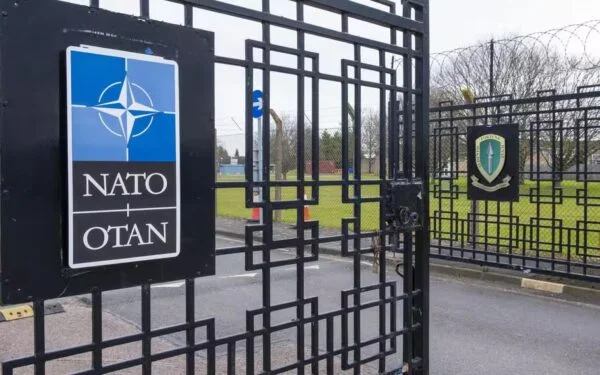
Tyner was detained by British counter-terrorism police on November 10 in Gloucestershire, near the Imjin Barracks in Innsworth, which serves as the headquarters of NATO’s Allied Rapid Reaction Corps. He was held at a London police station under Sections 1 and 3 of the UK’s National Security Act 2023, which cover obtaining or disclosing protected information and assisting a foreign intelligence service. The arrest was part of a joint investigation involving UK Counter Terrorism Policing, the FBI, MI5, UK Defence Counter Intelligence, and the US Army Counterintelligence Command.
FBI Director Vows Zero Tolerance
FBI Director Kash Patel said in a statement that the bureau has "zero tolerance for anyone who betrays their oath to the United States or puts our national security at risk." He noted that the FBI has made 167 counterintelligence and espionage arrests over the last 21 months, a 53% increase. "An army officer is in custody as the result of an espionage investigation and the close cooperation between the FBI’s Philadelphia field office and Legat London and our partners at UK Counter Terrorism Policing, MI5, UK Defence Counter Intelligence, and the US Army Counterintelligence Command," Patel said. "Together we worked to identify a potential threat to national security and take swift action."
Assistant Commissioner Laurence Taylor, head of Counter Terrorism Policing, explained that after an extensive investigation, the case was presented to the Crown Prosecution Service, which engaged with the attorney general’s office and American partners. "Subsequently, a decision was made to pass the investigation to them to progress," Taylor said. "These are extremely serious allegations, and our collective response should send a strong message that we will act swiftly and robustly where we suspect this kind of espionage activity taking place."
Background: A Senior Officer with Sensitive Access
Tyner joined the US Army in 2008 as a senior human resources officer and has been deployed to Iraq, Qatar, and Afghanistan. At the time of his arrest, he was based at Imjin Barracks, a key NATO facility. The UK’s National Security Act 2023, under which he was arrested, is a relatively new piece of legislation designed to modernize espionage laws and provide authorities with stronger tools to tackle state threats.
The Kremlin has denied any involvement. Russian spokesman Dmitry Peskov told reporters last week that Moscow had "nothing to do with it, and it has nothing to do with us." The arrest is not related to any other ongoing Counter Terrorism Policing investigations, according to UK police, including a recent suspected plot at RAF Fairford, a British Royal Air Force base where US troops and aircraft are stationed. That separate case involved the arrest of five British men and one UK-Iranian national in late September, and the US Justice Department recently charged three people accused of being Iran-backed operatives with plotting a terrorist attack at the site.
The Tyner case has drawn attention to the heightened threat of espionage amid ongoing geopolitical tensions, particularly following Russia’s invasion of Ukraine and the subsequent surge in cyber and intelligence operations. The transfer to US custody suggests that American authorities will lead the prosecution, and Tyner is expected to be charged soon. The FBI’s Philadelphia field office and its legal attaché in London played key roles in the investigation, highlighting the cross-border nature of modern counterintelligence work.
Broader Implications: A Message to Potential Betrayers
The swift transfer of a senior US military officer to American custody reflects the seriousness with which both nations treat espionage allegations. It also signals a deepening of US-UK intelligence coordination at a time when Western allies are grappling with an array of state-sponsored threats. The case may serve as a deterrent to others who might consider similar actions, as the FBI’s Patel made clear that the bureau is aggressively pursuing counterintelligence cases.
For the US military, the incident raises questions about vetting and oversight, particularly for personnel stationed abroad in sensitive NATO roles. Tyner’s senior rank and access to protected information will likely prompt a review of security protocols. Meanwhile, the UK’s use of the National Security Act 2023 in this case demonstrates its utility in addressing modern espionage, even when the suspect is a foreign national.
As the investigation proceeds under US jurisdiction, observers will watch for formal charges and any details about the nature of the alleged espionage. The case also comes amid a broader crackdown on Russian intelligence activities across Europe, with several countries expelling diplomats and increasing counterintelligence resources. The transfer of Tyner to US custody closes one chapter of the UK investigation but opens another in the American legal system, where the stakes for national security remain high.
In related news, tensions between Russia and the West continue to escalate, with recent Ukrainian strikes on Russian military sites underscoring the volatile security environment. The Tyner case is a reminder that espionage threats often emerge from the very institutions entrusted with national defense.
Comments