
UK Seasons Shifting: Fewer Frosts, More Hot Days, Met Office Says
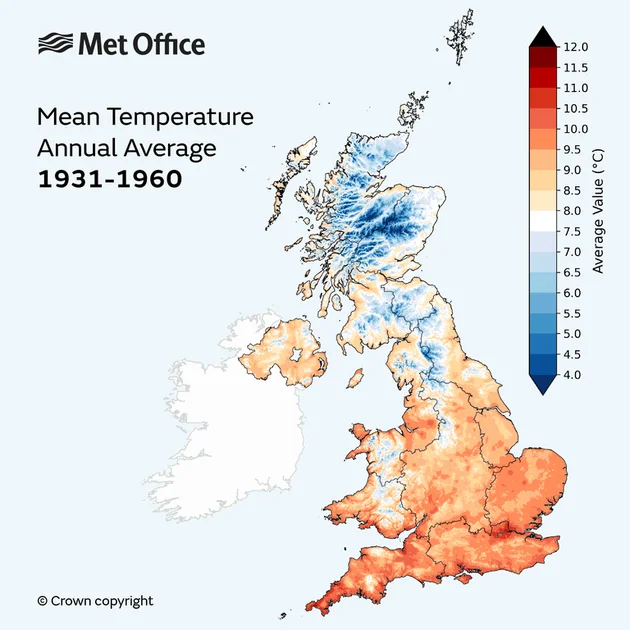
The UK’s seasons are undergoing a measurable transformation, with winters losing frost days and summers becoming significantly hotter, according to new analysis from the Met Office. The decade to 2025 saw the number of winter days with an air frost – when temperatures fall to 0C or below – drop by around a quarter compared with the 1961–1990 baseline. In southern England, the decline was even sharper, at roughly a third.
Simultaneously, the average number of UK summer days reaching 25C has more than doubled. The shift is particularly pronounced in southern England, where such days rose from just over eight to more than 16 per summer. The Met Office defines a hot day as 30C or above; across the UK, the average number of these days has increased fourfold, from 0.3 to 1.2 per summer. In Greater London, days hitting 30C have risen from an average of 1.3 to 6.1.
“Our summer is getting wider and our winter is getting smaller,” said Dr James Pope, climate scientist at the Met Office. “The driver of this is that the whole global climate is warming. And that impacts on the UK.”
Regional Variations
Some of the biggest reductions in winter air frosts have occurred in England, Wales and Northern Ireland, where the average number of days has fallen by around 11 compared with 1961–1990. Cornwall’s average winter air frost days nearly halved, from around 18 to 10, while the Isle of Wight saw a similar drop from 21 to 11. Scotland remains the frostiest UK nation but has also seen a reduction, from around 45 to 38 days.
Summer heat increases are most striking in the south and east. Essex and Suffolk each recorded nearly 13 additional days reaching 25C. In Norfolk, Suffolk and Cambridgeshire, the increases have been particularly large, with Lingwood in Norfolk setting a new June record at 37.7C this year. The East of England also endured weeks of temperatures near or above 30C, leading to wildfires and melting roads.
Context: A Record-Breaking Summer and a Changing Climate
The findings come on the heels of Summer 2026, which was the hottest on record according to provisional Met Office data. The season featured five widespread heatwaves and 40 days of temperatures [exceeding thresholds]. The latest climate conditions from 2016–2025 were compared against the standard 1961–1990 baseline, revealing a clear long-term trend.
The changing conditions have already affected wildlife and led some farmers to grow different crops. The Met Office warns that the shift from wet winters to severe droughts via record-breaking summers is becoming more common. “Some areas went from their wettest ever winter to a severe drought via a record-breaking summer for the whole country,” Pope noted.
Cold Snap Underscores Variability
Despite the long-term warming trend, winter weather can still bite. This week, snow, frost and heavy rain are forecast in parts of the country as winter makes an “early arrival”. Temperatures dropped to -8C in parts of Scotland on Monday morning. The Met Office said Atlantic systems from the west and higher pressure from the east could bring heavy rain to western areas, with snow expected on higher ground in Northern England and parts of Scotland on Tuesday. Meteorologist Tom Morgan said: “We’ve got one more week of meteorological autumn to go but winter will be making somewhat of an early arrival for some of us through the week ahead.”
Perspective: Adaptation and Awareness
The Met Office’s analysis underscores a broader climate trend: the UK’s seasons are becoming more extreme, with milder winters and hotter, longer summers. This shift poses challenges for infrastructure, agriculture and public health, from increased wildfire risk to heat stress in urban areas.
As the BBC launches a new partnership with the Met Office to enhance weather coverage, the public will have greater access to forecasts and climate information. The collaboration includes a new 10-day hourly forecast on the BBC News website and app, Met Office severe weather warning notifications, and more local and digital weather reports. BBC Director General Matt Brittin said the partnership would mean “serving our audiences with the most accurate, reliable and helpful weather service we can”.
The Met Office’s findings are a stark reminder that climate change is not a distant prospect but a present reality, reshaping the UK’s weather patterns and landscapes. With summer 2026 setting a new record, the need for adaptation and mitigation has never been more urgent.
Comments