
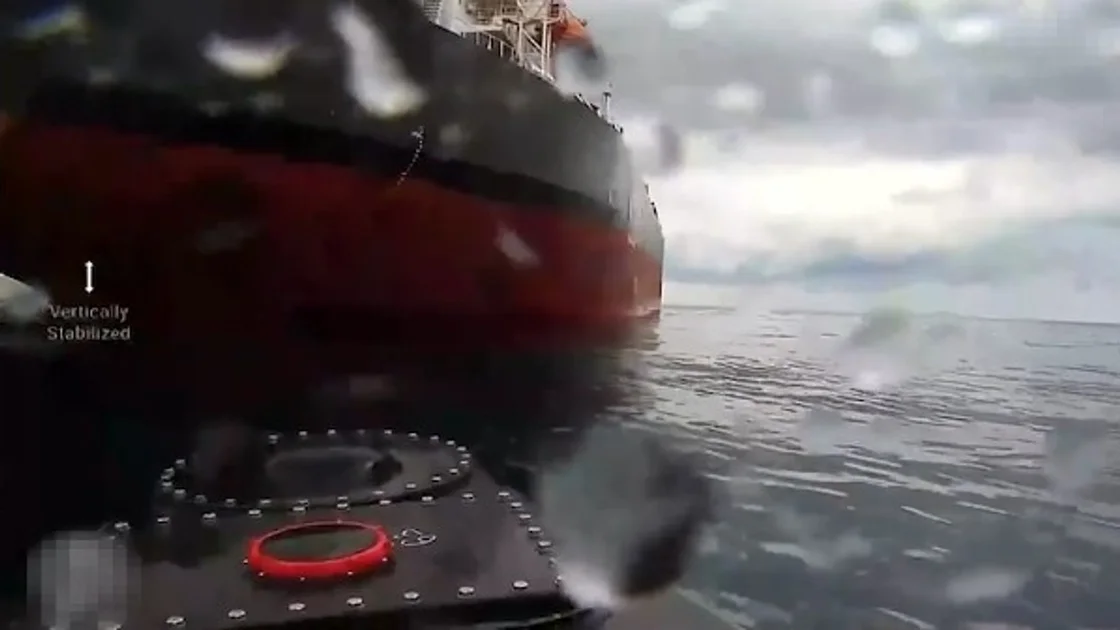
Ukraine Sinks Russian Container Ship Yanina in Black Sea Strike
Ukrainian forces sank the Russian-flagged container ship Yanina in the Black Sea early Saturday, August 1, in what President Volodymyr Zelensky described as a precision strike against infrastructure supporting Russia's war effort. The vessel, operated by Rosatom's shipping subsidiary FESCO, was hit by at least two Ukrainian naval drones approximately 130 nautical miles from the Russian port of Novorossiysk.
Russia's state-owned nuclear power operator Rosatom confirmed the sinking, stating that all 17 crew members abandoned the ship in an organized manner and were rescued. "The ship's crew abandoned the ship in an organized and coordinated manner after it began to sink. All 17 crew members have been rescued and are in good condition," Rosatom said on Telegram.
Zelensky confirmed the operation on X, noting that the Yanina was a sanctioned vessel with a carrying capacity of more than 100,000 metric tons. He emphasized that the targets were "specific, carefully identified sites that support the war effort," thanking Ukrainian soldiers for "bringing the war back to Russia."
The attack on the Yanina was part of a larger coordinated operation that also saw long-range drones strike three major oil refineries in Ufa, Bashkortostan, located nearly 1,600 kilometers from Ukraine's border, as well as radar stations in the Krasnodar region and air defense positions in occupied Crimea.
Crew Rescued, Rosatom Calls Attack 'Piracy'
Rosatom CEO Alexei Likhachev described the attack as "piracy and robbery at sea," claiming the vessel was carrying civilian goods including frozen food and construction materials. The company stressed there was no indication the ship was involved in nuclear-related activities or carrying nuclear material.
The Yanina is one of the largest vessels to be sunk in the conflict, with a capacity exceeding 100,000 tons. Ukraine has not officially commented beyond Zelensky's statement, but Kyiv has consistently accused Russia of using Black Sea shipping routes to transport sanctioned goods, including oil.
The sinking represents a significant escalation in Ukraine's maritime drone campaign, which has increasingly targeted Russian naval assets and commercial shipping in the Black Sea. The strike occurred in international waters, raising questions about the legal frameworks governing naval conflict and commercial shipping during wartime.
The Strategic Importance of the Black Sea Maritime Corridor
The Black Sea has become a critical front in the war, with both sides using naval drones and missiles to disrupt shipping and challenge maritime dominance. For Russia, the port of Novorossiysk serves as a vital hub for exports, including grain, oil, and other commodities that generate revenue for the Kremlin's war machine.
Ukraine's targeting of Russian-flagged vessels is part of a broader strategy to degrade Russia's economic capacity to sustain its invasion. The Ukrainian delegation to the OSCE recently reported that Russia has struck 232 civilian ships during the full-scale war, including over 30 in the summer of 2026 alone, as part of efforts to disrupt Ukraine's maritime corridor.
Kyiv has accused Russia of using the Black Sea to transport stolen Ukrainian grain and sanctioned goods, while Moscow has repeatedly attacked Ukrainian port infrastructure, grain storage facilities, and ships approaching Ukrainian ports. These attacks have been condemned by the international community, with Kyiv labeling them war crimes.
The sinking of the Yanina signals that Ukraine is now actively targeting Russian commercial shipping in response. By striking a vessel affiliated with Rosatom, Ukraine is also sending a message about the reach of its military capabilities, even against targets tied to Russia's nuclear energy sector.
FESCO and Rosatom: The Corporate Web of Russian Shipping
FESCO, the operator of the Yanina, is one of Russia's largest shipping and logistics companies, with a fleet that includes container ships, bulk carriers, and ice-class vessels. The company was placed under US sanctions in 2023, and its parent company, Rosatom, is a state-owned nuclear energy giant that also oversees Russia's nuclear icebreaker fleet.
Rosatom's involvement in the shipping sector is part of a larger pattern of Russian state corporations extending their influence into critical infrastructure. The company has been instrumental in developing the Northern Sea Route, which relies on its fleet of nuclear-powered icebreakers to keep Arctic shipping lanes open year-round.
The attack on the Yanina may force Russia to reconsider the security of its commercial shipping operations in the Black Sea. If Ukrainian drones can strike targets near Novorossiysk with impunity, Russian companies may need to reroute vessels or increase naval escorts, disrupting supply chains and raising costs.
A Coordinated Multi-Theater Operation
The sinking of the Yanina occurred simultaneously with strikes on three Bashneft oil refineries in Ufa, Bashkortostan, which have a combined capacity of over 23 million tons of oil annually. These refineries are located deep inside Russian territory, approximately 1,600 kilometers from the Ukrainian border, demonstrating the reach of Ukraine's domestically produced long-range drones.
The operation, which involved Ukraine's Security Service (SBU) and Naval Forces, also targeted three Podlet-K1 and one Kasta-2E2 radar stations in the Krasnodar region, as well as electronic warfare and air defense positions in occupied Crimea. The combination of naval and aerial strikes suggests a high level of coordination and planning.
Zelensky praised the operation, stating that Ukrainian forces were using domestically produced "middle-strike" weapons to "respond to Russia's attacks against life." The strikes on Ufa refineries, which process millions of tons of oil each year, are part of Ukraine's ongoing campaign to reduce Russia's energy revenues and disrupt fuel supplies to the Russian military.
The success of this operation highlights the growing sophistication of Ukraine's drone program, which has evolved from improvised explosive devices adapted for aerial use to purpose-built naval and long-range strike systems. Ukraine has repeatedly demonstrated its ability to hit targets deep inside Russia, including oil refineries, military bases, and infrastructure.
Russia's Responses and Escalation Risks
Following the attack, Rosatom CEO Likhachev vowed that Russia would respond, though he did not provide specifics. Russian officials have previously threatened retaliation for strikes on civilian infrastructure, and attacks on Black Sea shipping could trigger a new wave of strikes on Ukrainian ports and vessels.
Russia has already intensified its attacks on Ukrainian port infrastructure in recent months, with the Ukrainian delegation to the OSCE reporting over 30 civilian ships struck in the summer of 2026 alone. These attacks have disrupted the Black Sea Grain Initiative's successor, which Ukraine negotiated to maintain grain exports despite the war.
There is also a risk of direct confrontation between Russian naval forces and Ukrainian drone operators. In the past, Russia has deployed naval vessels and aircraft to escort merchant ships and deter Ukrainian attacks. The sinking of the Yanina may prompt Russia to escalate its naval presence in the Black Sea, increasing the risk of accidents or direct military clashes.
International maritime law, particularly the United Nations Convention on the Law of the Sea (UNCLOS), governs the rights of vessels in international waters. Russia has condemned the attack as "piracy," but Ukraine maintains that its strikes are legitimate acts of self-defense against a nation that has attacked its civilian infrastructure and shipping.
Broader Implications for the War Effort
The sinking of the Yanina marks a pivotal moment in Ukraine's naval campaign, demonstrating that commercial shipping is now a legitimate target in Kyiv's view. This shift could have significant implications for global shipping insurance rates, the cost of maritime trade in the Black Sea, and the willingness of foreign companies to do business with Russian entities.
According to maritime experts, the Black Sea remains one of the most dangerous shipping lanes in the world, with both Ukraine and Russia actively targeting merchant vessels. The International Maritime Organization (IMO) has called for safe passage for commercial ships, but enforcement remains limited due to the complexity of the conflict.
The strike on a Rosatom-affiliated vessel also raises concerns about the potential for nuclear accidents or incidents. While there was no nuclear material on board the Yanina, the attack highlights the risks of targeting ships linked to Russia's nuclear energy infrastructure. Any escalation could have unintended consequences for regional security.
For Ukraine, the operation represents a strategic victory, demonstrating its ability to project power across the Black Sea and beyond. By sinking a sanctioned vessel and disabling oil refineries deep inside Russia, Kyiv is sending a clear message that it can inflict significant costs on Moscow's war machine.
Economic Pressures and Sanctions Enforcement
The Yanina was under international sanctions, making the attack a direct strike against Russia's ability to circumvent economic penalties. Ukrainian officials have long argued that targeting sanctioned vessels is a legitimate means of enforcing global financial measures.
The attack could encourage Western allies to expand sanctions enforcement in the maritime sector. If Ukrainian drones can effectively interdict Russian shipping, the United States and European Union may be more willing to support these efforts, providing intelligence and targeting support to ensure compliance with sanctions.
At the same time, Russia's reliance on Shadow Fleet vessels—often older, uninsured ships operating under non-Russian flags—has complicated sanctions enforcement. The sinking of the Yanina may be a precedent for directly confronting this shadow fleet, though it also risks escalating the conflict into a broader maritime confrontation.
What This Changes for the Conflict
The successful sinking of the Yanina changes the strategic calculus for both Ukraine and Russia. For Ukraine, it opens a new front in the war, one that targets Russia's economic lifelines at sea. For Russia, it exposes the vulnerability of its commercial fleet and the limits of its naval defenses around key ports.
In the short term, Russian shipping companies may be forced to suspend operations in the Black Sea or seek naval escorts, disrupting trade and increasing costs. This could have ripple effects on global commodity markets, particularly for grain and oil, as Russia remains a major exporter of both.
In the long term, the attack may be a harbinger of more aggressive Ukrainian operations against Russian infrastructure. Zelensky has repeatedly stated that Ukraine's aim is to "bring the war back to Russia," and the Yanina sinking, combined with the Ufa refinery strikes, demonstrates that this is not just rhetoric but an operational reality.
As the war enters its fifth year, both sides are seeking ways to gain a decisive advantage. Ukraine's use of naval drones to sink a major container ship represents a technological and tactical innovation that could reshape maritime warfare in the Black Sea. Whether Russia can adapt its defenses in time remains an open question, but the waters of the Black Sea are now more volatile than ever.
Comments