
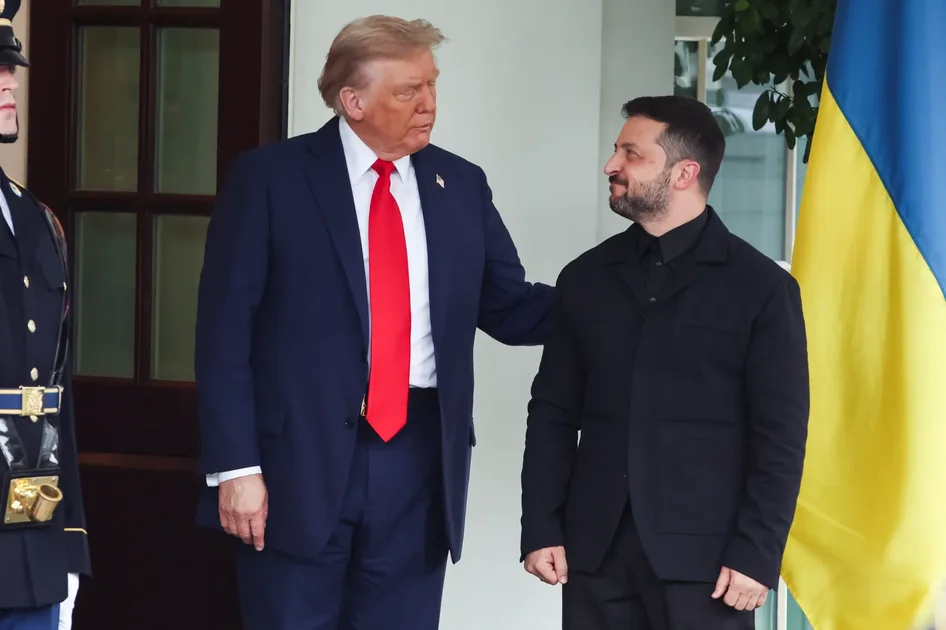
Trump Announces Deal to Import Russian Diesel Amid Soaring US Fuel Prices
In a surprising move, President Donald Trump announced on Friday a deal with Russian President Vladimir Putin to temporarily lift sanctions on US imports of Russian diesel. The agreement, posted on Truth Social, promises to supply millions of tonnes of diesel to the US and global markets, a step Trump claims is essential to reduce fuel prices that have soared after his decision to go to war against Iran.
The package includes 300,000 tonnes of diesel released immediately, followed by 500,000 tonnes in November and a further 1 million tonnes after that. Trump hailed the deal as a way to bring down prices “IN RECORD NUMBERS, AND FAST,” prioritizing American farmers, ranchers, and truckers. However, the announcement has sparked criticism from Ukrainian President Volodymyr Zelenskyy, who called it “a gift to Putin,” and raised concerns among energy analysts and former NATO officials.
Experts Doubt Immediate Impact on Diesel Prices
Energy analysts caution that the deal will have little meaningful effect on US diesel prices due to the small quantity and the time required for shipping. According to the US Energy Information Administration, the initial 300,000 tonnes equate to about three-quarters of what the US consumes in a single day. Ashley Kelty, an energy analyst at Panmure Liberum, noted that chartering vessels, loading, and transporting the cargo will take about three weeks, meaning the fuel may arrive just a week before the midterm elections. “It is not going to have any impact on prices. The first amount is so small,” Kelty said.
Diesel prices have surged by almost 70% since the start of the Iran war, reaching about $6.30 per gallon in the US, according to AAA. In the UK, the average price climbed to a record £2 per litre earlier in October. The deal’s timing, just weeks before the midterms, suggests political motivations to address voter discontent over high fuel costs. However, experts warn that the quantities involved are “too little, too late” to affect current prices significantly.
Zelenskyy Criticizes Deal as a 'Gift to Putin'
Ukrainian President Volodymyr Zelenskyy expressed anger over the deal, stating that it was “news to me” and criticizing it as a “gift to Putin.” The agreement comes amid ongoing tensions between Russia and Ukraine, with the US having recently signed legislation to impose fresh sanctions on nations importing Russian oil and gas. The about-face has raised questions about US foreign policy consistency and its impact on the war in Ukraine.
Retired NATO commander General Philip Breedlove warned that the deal could fund Putin’s war efforts. “This is not just about diesel; it’s about providing economic lifeline to a regime that continues to destabilize Europe,” he said. The deal also undermines Western unity in supporting Ukraine, as it signals a potential easing of sanctions on Russia without concessions on the battlefield.
Political Pressure Mounts Ahead of Midterm Elections
The deal underscores the mounting pressure on the Trump administration to curb fuel prices before next month’s midterm elections. The Iran war has driven up energy costs, leading to across-the-board inflation and souring public opinion. Agricultural states like Iowa, Kansas, Texas, and Ohio—key battlegrounds—have been hit hard, as diesel is critical for farming machinery and transportation.
Trump has been searching for ways to ease his party’s political pain. He recently pressured European allies to tap their oil reserves, deferred federal taxes on fuel, and authorized farm-use diesel for interstate trucking. The Russian diesel deal is another attempt to show action on prices. However, the political calculus may backfire if voters see it as a concession to Putin or if prices remain high. As one analyst noted, the deal highlights “mounting pressure to curb fuel prices” rather than a coherent energy strategy.
Broader Implications: Shifting Alliances and Energy Security
The deal has broader implications for US energy security and its stance on Russia. By importing Russian diesel, the US is indirectly supporting Russia’s economy, which is already under sanctions for its invasion of Ukraine. This could weaken the sanctions regime and embolden Putin. It also raises questions about the reliability of Russian supply, given damage to Russian refineries from Ukrainian strikes. Experts suggest that the full deal is unlikely to be met due to these infrastructure challenges.
Moreover, the deal may strain relations with European allies who have been steadfast in supporting Ukraine. It could also complicate US efforts to rally international support for Ukraine. On the other hand, it reflects a pragmatic approach to addressing domestic economic concerns, prioritizing American consumers over geopolitical considerations.
What This Means Going Forward
The Trump-Putin diesel deal is a short-term attempt to address high fuel prices, but its effectiveness is doubtful. Experts predict minimal impact on prices, and the political fallout could be significant. Zelenskyy’s criticism and NATO warnings highlight the geopolitical risks. As the midterms approach, the administration may face tough questions about its energy and foreign policies. The deal also sets a precedent for easing sanctions on Russia, which could have long-term consequences for the war in Ukraine and global energy markets.
In the coming weeks, all eyes will be on whether the diesel actually arrives and whether prices drop. If not, the deal may become a liability. For now, it remains a controversial move that underscores the complexities of balancing domestic economic pressures with international alliances.
Note: This article includes internal links to relevant past stories for context.
Trump's Red Dye Diesel Order: Tax-Free Fuel or Hidden Tax Bill?
After Cordial Xi-Trump Summit, China's Dollar Pivot Raises Stakes for Washington
Comments