
Opening
A Cordial Summit, but a Silent Concern
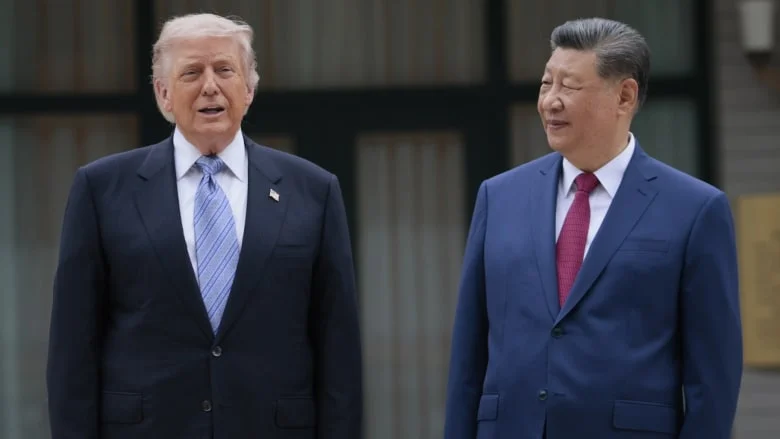
When Chinese President Xi Jinping and US President Donald Trump met in Washington late last month, the official agenda covered tariffs, agricultural quotas, and critical minerals. Yet according to analysts and economists, an "elephant in the room" loomed over the discussions: China's gradual diversification away from US dollar assets. While the summit's communique made no mention of it, Beijing's quiet financial strategy—reducing exposure to US Treasuries while building a financial safety net around the yuan—has drawn increasing scrutiny from policymakers on both sides of the Pacific.
"Unlike tariffs, which can be set out as part of a policy framework, sovereign debt management involves actual capital allocation and is highly sensitive, making it unlikely to be formally addressed in official statements," said Charles Chang, a finance professor at Fudan University, in an interview with the South China Morning Post. He added that the topic was likely raised during the talks but would not result in a formal agreement similar to those covering trade.
The summit, held September 23–25, was marked by pageantry—a tarmac greeting, flyovers, and a state dinner—signaling a potential reset in US-China relations. But beneath the ceremonial surface, unresolved economic tensions remain, particularly around China's evolving monetary strategy.
Context
China's Dollar Diversification: A Slow but Deliberate Shift
For years, Beijing has been gradually cutting its holdings of US Treasuries while pushing to expand the yuan's global use and developing alternative financial architecture. The strategy is twofold: reduce vulnerability to US financial sanctions and create a more multipolar currency system. According to data from the US Treasury, China's holdings of US government debt have fallen from a peak of over $1.3 trillion in 2013 to roughly $800 billion as of mid-2026. While still substantial, the downward trend is unmistakable.
At the same time, China has been expanding currency swap agreements with central banks worldwide, promoting the yuan in trade settlements, and developing its Cross-Border Interbank Payment System (CIPS) as an alternative to the SWIFT network. These moves are part of a broader effort to build what Chinese officials call a "financial safety net" around the yuan.
The Summit's Limited Scope on Financial Issues
The Washington summit produced agreements on "reciprocity" in trade, with concessions matched on both sides. However, the sensitive nature of sovereign debt management meant that financial issues were largely left off the formal agenda. This omission has not gone unnoticed by economists and investors, who see China's dollar pivot as a potential source of future friction.
"The summit was about stabilizing the trade relationship, but the financial dimension is where the real tectonic shifts are happening," said a former US Treasury official who spoke on condition of anonymity. "If China continues to reduce its Treasury holdings, it could eventually impact US borrowing costs and the dollar's global role."
Meanwhile, the summit's emphasis on equality—evident in the state visit's pageantry—has raised questions about whether Beijing is being treated as a peer rather than a developing nation. This shift unsettles countries like India and raises doubts about China's status within the Global South. For Washington, the challenge is balancing transactional deals with long-term strategic concerns.
Perspective
Implications for Global Financial Stability
China's dollar pivot, if accelerated, could have far-reaching consequences. A sustained reduction in US Treasury holdings could lead to higher yields, complicating the US government's fiscal position. It could also weaken the dollar's dominance in global trade and finance, a cornerstone of American economic power since World War II.
Yet the shift is not without risks for China. The yuan is not yet a full-fledged reserve currency, and capital controls limit its international use. A sudden move away from dollar assets could destabilize China's own financial system, which remains deeply intertwined with global markets. As a result, Beijing is likely to continue its gradual approach, avoiding abrupt shocks.
A New Phase in US-China Relations
The summit may have been cordial, but the underlying economic competition is intensifying. The US is seeking deals that deliver immediate, transactional wins—particularly ahead of the midterm elections—while China is playing a longer game, building alternative financial infrastructure and reducing dependence on the dollar.
This divergence in approach means that even as both sides signal cooperation, the risk of future clashes remains. The next flashpoint could be over currency manipulation, capital flows, or the role of the dollar in global trade. For now, the "elephant in the room" at the summit remains just that—unacknowledged but impossible to ignore.
What to Watch
In the coming months, investors and policymakers will be watching several indicators: the pace of China's Treasury sales, the expansion of yuan-denominated trade, and any signs that the US might retaliate with financial measures. The summit's cordial tone may have bought time, but the structural tensions are far from resolved. As one analyst put it, "The pageantry is over. Now the real work begins."
Comments