
Historic First: Ukrainian USV Sinks Russian Drone Boat in the Black Sea
In a milestone that military analysts are calling the first naval battle between unmanned vessels, a Ukrainian Sargan 300 drone boat fired upon and sank a Russian unmanned surface vessel (USV) in the Black Sea on September 14, 2026. The Ukrainian Navy confirmed the engagement, which marks a significant escalation in the role of autonomous platforms in modern warfare.
The incident is part of a broader surge in USV activity worldwide. Just weeks earlier, in July, three American one-way attack USVs struck an Iranian submarine and naval facility—the first-ever U.S. combat use of such systems. Around the same time, a USV rescued two U.S. Army pilots after their helicopter was downed by an Iranian drone. And in August, an American USV detected, tracked, and helped intercept a narcotics shipment worth $81 million in the Caribbean Sea.
These events signal that unmanned warfare has expanded decisively from the skies to the high seas, raising urgent questions about whether the United States and its allies are prepared for a new era of naval conflict.
The Technology Behind the Headlines
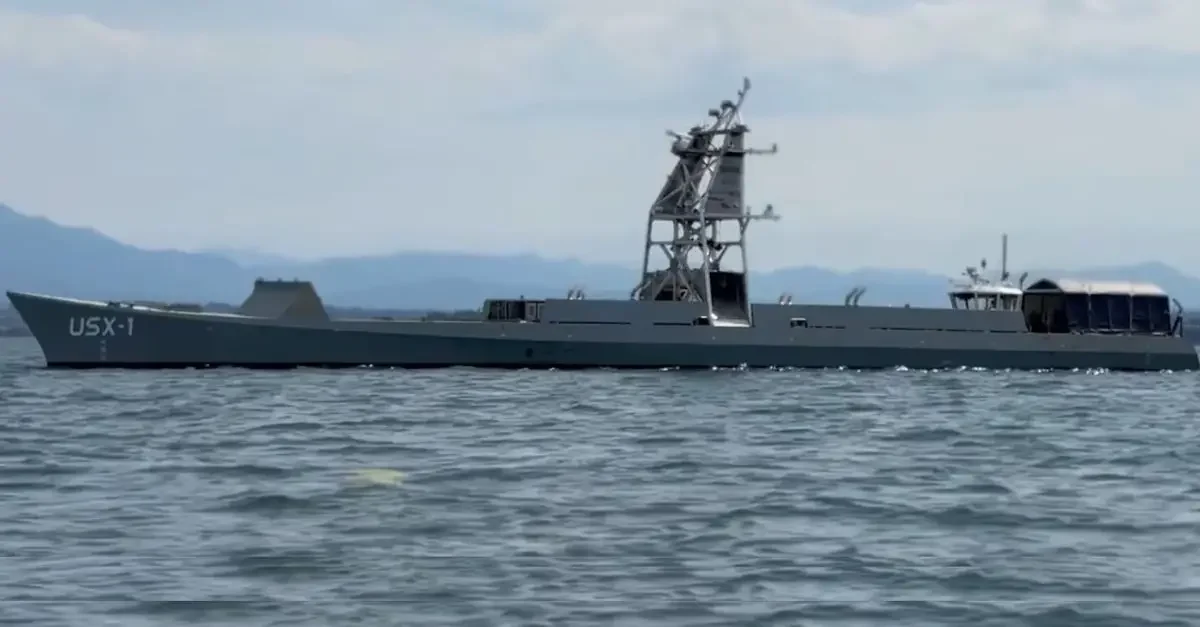
At the heart of this shift are unmanned surface vehicles—autonomous or remotely operated boats that can perform intelligence, surveillance, reconnaissance (ISR), strike, and even rescue missions. The platforms vary widely, from expendable one-way attack craft to sophisticated long-endurance motherships.
This month at the Paris Motor Show, German defense contractor Quantum Systems unveiled two such platforms: the Seavex, a long-endurance USV capable of two-month deployments, and the Subvex, an accompanying submarine drone. The Seavex acts as an autonomous maritime mission hub, able to launch, recover, resupply, and recharge the Subvex while coordinating multiple drones via a shared software platform. With a top speed of 15 knots and a payload capacity of up to 400 kg, it is designed for persistent surveillance, infrastructure protection, and anti-drone operations.
Meanwhile, the Portuguese Navy is advancing operational integration of its Shiver USV. During NATO Exercise REPMUS 26, held from August 31 to September 25, the Navy’s X31 unmanned systems unit actively operated the Shiver. Commander Marco Guimarães, director of the Unmanned Vehicles Operational Experimentation Cell, expressed confidence in the vehicle’s progression toward operational deployment. The Shiver is set to receive towed-array sonar and will undergo launch and recovery trials from the Portuguese Navy’s forthcoming multi-purpose ship, D. João II, expected to enter service in 2027.
Market Growth and Strategic Stakes
These developments come amid a structural transformation of the global USV market. According to an IndexBox report released on October 8, 2026, the market is shifting from project-based demonstrations to programmatic, operational capability across defense, commercial, and scientific domains. Demand is driven by naval modernization and offshore energy operators seeking cost-efficient inspection solutions.
The market is bifurcating: high-performance, multi-mission platforms for defense and complex commercial applications on one side, and lower-cost, single-purpose vehicles for repetitive survey tasks on the other. Procurement models are evolving from capital expenditure to hybrid mission-as-a-service and data subscription contracts. However, bottlenecks remain, including integration of mission-critical payloads, autonomy software certification, regulatory approval for autonomous operations, and long lead times for marine-certified components.
Geographic maturity varies. Early-adopter regions like the North Sea and the United States lead, while others remain in pilot stages. The competitive landscape is consolidating around vertically integrated system suppliers and specialized service operators, with long-term value migrating toward autonomy stacks.
U.S. Readiness and Lessons from Recent Conflicts
Despite recent tactical successes, analysts warn that the United States must accelerate its efforts. The Pentagon needs to think bigger—and smaller—about unmanned military platforms. Thinking smaller means complementing high-end platforms with inexpensive, expendable ones. Thinking bigger means integrating them into a single network with manned assets and human warfighters. Today, the U.S. military does neither at scale.
The Russia-Ukraine war has shown that expendable platforms can achieve outsized battlefield effects. Ukraine, Iran, and Russia have all demonstrated this at sea. However, one-way attack USVs, like those used by American forces against Iran, remain in short supply due to bureaucratic hurdles rather than technological limitations. The Pentagon applies the same rigid standards to unmanned, expendable platforms as to high-end, manned surface combatants, inhibiting production at the pace the battlefield demands.
As the USV rescue of U.S. aviators in the Arabian Gulf demonstrated, unmanned platforms offer more than strike or surveillance functions. Lower-tech functions may have greater upside with less rigorous testing and faster deployment timetables.
Broader Implications: A New Era of Naval Warfare
The recent USV-on-USV engagement and the rapid proliferation of unmanned systems signal a fundamental shift in naval strategy. Navies worldwide are racing to integrate autonomous platforms, driven by the recognition that unmanned systems can provide persistent presence, reduce risk to human personnel, and offer cost-effective alternatives to traditional vessels.
The integration of USVs with submarines, as seen with Quantum Systems’ Seavex and Subvex, points to a future of networked, multi-domain operations. The ability to deploy and coordinate swarms of drones from a mothership could redefine maritime mission planning.
Moreover, the commercial sector’s growing adoption of USVs for offshore energy inspection and survey tasks is driving innovation and reducing costs, which in turn benefits military applications. The convergence of defense and commercial demand is accelerating technological maturation.
However, challenges remain. Regulatory frameworks for autonomous operations in international waters are still evolving. The risk of escalation through unintended engagements between unmanned systems is real, as the Black Sea incident illustrates. And the ethical and legal implications of autonomous lethal force are far from resolved.
For the United States, the message is clear: strategic imagination and bureaucratic reform are needed to build on recent successes. As allies like Israel, Ukraine, and Taiwan advance their unmanned capabilities, the Pentagon must adapt its acquisition and deployment strategies to keep pace.
The Road Ahead
As the global USV market expands toward 2035, driven by defense modernization and offshore energy demand, the navies that master unmanned systems will likely hold a decisive advantage. The historic USV-on-USV kill in the Black Sea may be remembered as the moment naval warfare changed forever. Whether the United States and its allies can translate technological promise into operational reality will depend on their willingness to embrace expendability, streamline procurement, and integrate unmanned systems into the broader fleet.
The next few years will be critical. Exercises like NATO’s REPMUS 26 and the operational deployment of platforms like the Shiver and Seavex will test concepts and refine tactics. The lessons learned will shape the future of maritime conflict—and the balance of power at sea.
Comments