
Excavation on Trump's Triumphal Arch to Start Amid Lawsuits and Sightline Disputes
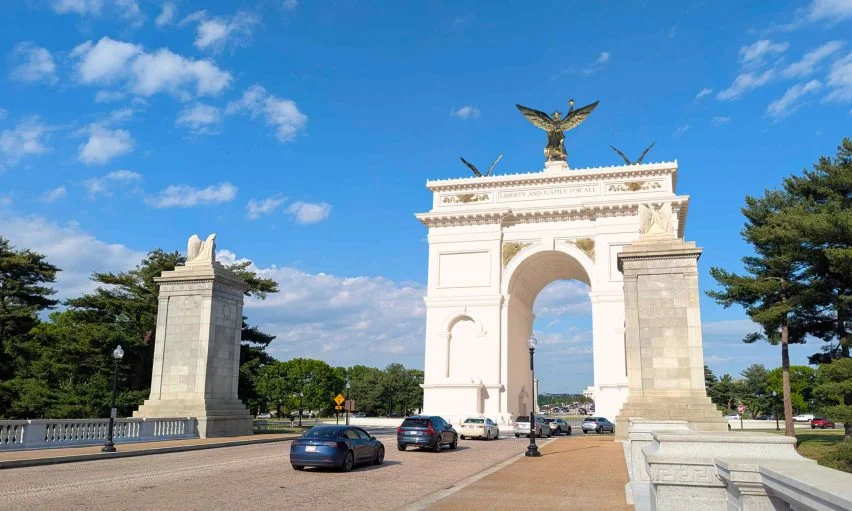
The Trump administration announced Thursday that excavation work will begin within the next two weeks on a towering, gilded memorial arch in Washington, D.C., a centerpiece of President Donald Trump's efforts to reshape the nation's capital. Interior Secretary Doug Burgum shared artistic renderings of the planned 250-foot-tall structure, which will stand in Memorial Circle between the Lincoln Memorial and Arlington National Cemetery. The arch, proposed to commemorate the 250th anniversary of the Declaration of Independence, will be clad in granite and topped with three golden statues, including a Lady Liberty-like figure, and an observation deck.
"This will be one of the Great Pieces of American Architecture, honoring the history and significance of Arlington Cemetery and befitting the most powerful Capital in the World," Burgum wrote on X, alongside the mockups. The National Park Service has scheduled an intense construction timeline—20 hours a day, year-round—with the project expected to take two to three years, potentially finishing near the end of Trump's second term.
However, the project faces a lawsuit from three veterans and an architectural historian, represented by Public Citizen Litigation Group, who argue that congressional authorization is required and lacking. "We believe that construction cannot and should not proceed apace, and we are prepared to inform the court that it needs to step in," said attorney Nicolas Sansone. The plaintiffs are seeking an injunction to halt work while the legal challenge proceeds.
A Broader Makeover of the Capital
The arch is only one element of a sweeping campaign by President Trump to leave his architectural imprint on Washington. The administration is also renovating the White House, including a new ballroom, refurbishing the Lincoln Memorial Reflecting Pool, renaming and renovating the Kennedy Center, and rebuilding a golf course in East Potomac Park—changes that critics argue reduce public access to running and biking paths. Trump has taken a personal interest in these projects, often showcasing 3D renderings at White House events and personally selecting materials, such as marble for the ballroom from Arc Stone & Tile in Florida.
According to a New Yorker report, Trump frequently prioritizes these construction efforts over typical presidential duties. He has been seen walking on the White House roof to inspect job sites, and during meetings, he toys with models of structures he wants to build. "He really cares about the renovations much more than anything in Presidential day-to-day life," a person close to the administration told the magazine.
The White House Ballroom: Marble, Gold, and National Security
At the center of Trump's domestic building agenda is a new ballroom at the White House, which he has linked to both pride and national security. In January, just hours before ordering a raid on Venezuelan President Nicolás Maduro's compound, Trump visited a stone supplier in Florida to select marble for the ballroom. The president has shared photos of the Lincoln Bathroom renovation, complete with black and white Statuary marble, and has praised gold drapes he chose for the East Room during a Medal of Honor ceremony. "These are the 'fun' projects I do while thinking about the World Economy, the United States, China, Russia," Trump said in a social media post.
The Supreme Court recently allowed construction on the ballroom to proceed, a legal victory for the administration, as reported by this article.
Arch Project: Symbolism vs. Sightlines
The triumphal arch has become a flashpoint for debates over Washington's historic character. A National Park Service report, released Friday, acknowledged that the arch would have "adverse effects" on sightlines between iconic landmarks, disrupting the historical significance of dozens of nearby sites. The capital's monuments are deliberately arranged to evoke symbolism through sightlines, connecting landmarks like the Lincoln Memorial and the Washington Monument. Critics argue that a 250-foot arch—more than double the height of the Lincoln Memorial—will intrude on these carefully planned vistas.
"This project is not even close to being ready for prime time," said Democratic Rep. Don Beyer of Virginia, whose district abuts the arch site. "Burgum and the Trump Administration are disregarding the risks and rushing this towering monument to Trump's vanity because they believe Republicans will get crushed in November." Beyer added that a future Democratic majority, which he hopes will emerge, might halt the project.
Veterans groups have also voiced opposition, arguing that the arch would diminish the sacred atmosphere of Arlington National Cemetery. The lawsuit, filed earlier this year, contends that the administration lacks the necessary congressional approval. The Justice Department has asked the court to dismiss the case, but plaintiffs remain confident. "We are prepared to inform the court that it needs to step in," Sansone said.
The Political Stakes
The timing of the excavation announcement, just weeks before the November midterm elections, has fueled accusations of political motive. Beyer suggested the administration is rushing to begin construction while Republicans still hold power, fearing a Democratic Congress could defund or halt the project. The administration, for its part, has framed the arch as a tribute to the nation's 250th birthday, with Burgum calling it "befitting the most powerful Capital in the World."
The project's location near Ronald Reagan Washington International Airport has raised additional safety and logistical concerns, although the National Park Service report did not flag these as insurmountable. The arch's golden statues and observation deck could become a new icon—or an eyesore—depending on one's perspective.
Broader Implications for Washington's Future
The arch dispute is emblematic of a larger trend: the politicization of public space. Trump's building projects are not merely functional; they are layered with symbolism, from bronze plaques celebrating his achievements to gold accents that evoke his brand. The New Yorker noted that Trump applies the same philosophy to the country as he does to his buildings: adding gold, installing plaques that denigrate his rivals, and constructing monuments that assert his legacy.
This approach has sparked a broader debate about who gets to shape Washington's narrative. Preservationists argue that the city's design reflects centuries of democratic deliberation, not the whims of a single leader. Others see Trump's projects as a legitimate expression of presidential vision, akin to Thomas Jefferson's influence on the capital's architecture.
The Courts and the Clock
The legal challenge to the arch is proceeding in parallel with construction. If the court rules in favor of the plaintiffs, work could halt mid-excavation, leaving an embarrassing pit at a prominent location. The Justice Department's motion to dismiss is pending, and Public Citizen Litigation Group has promised to file for an injunction. The timeline is tight: the administration wants to complete the arch by the end of Trump's term, but legal delays could push that into 2027 or beyond.
Meanwhile, other Trump-backed projects continue to advance. The Kennedy Center renovation has faced criticism, but a recent incident—where part of a ceiling collapsed—has led to renewed calls for a shutdown. The golf course in East Potomac Park remains contentious, with local residents worried about lost green space. These battles reflect a deeper question: Is Trump's capital makeover a visionary improvement or a partisan overreach?
What This Changes
The excavation of the arch, if it proceeds, will transform one of the most photographed sightlines in America. Visitors to the Lincoln Memorial will see a massive golden monument rising across the Potomac, altering the contemplative vista toward Arlington. For supporters, it will be a testament to American greatness; for critics, a symbol of executive overreach.
More broadly, Trump's building spree has set a precedent for how presidents might use public works to cement their legacies. His successor may inherit a capital dotted with Trump-branded structures, from the arch to the ballroom, and future administrations will have to decide whether to maintain, alter, or remove them. The Supreme Court's decision on the ballroom could influence similar challenges, but the arch's unique height and location make it a legal and aesthetic test case.
As the excavation begins, all eyes are on the courts and the November elections. If Democrats take control of Congress, they could attempt to block funding for the arch, as Beyer hinted. But with construction already underway, halting it would require significant political will. The coming months will determine whether Trump's golden vision becomes a permanent part of Washington's skyline—or a cautionary tale about presidential vanity.
For now, the flags planted in Memorial Circle mark the spot where crews will soon break ground. The next two weeks will bring the first shovels, and with them, the next chapter in Washington's ever-evolving story. The outcome will resonate beyond the city, shaping debates about heritage, public space, and the limits of presidential power in America's 250th year.
Comments