
Supreme Court Allows Trump to Continue White House Ballroom Construction
The U.S. Supreme Court on Monday handed President Donald Trump a significant legal victory, ruling 5-4 to allow construction of a $400 million ballroom at the White House to continue. The unsigned order grants the Trump administration's emergency request, blocking lower court rulings that would have halted the above-ground portion of the project. The decision comes after a temporary stay issued by Chief Justice John Roberts on August 21, and it effectively ends, for now, the legal challenge brought by the National Trust for Historic Preservation.
The court's majority, composed of the five conservative justices, reasoned that the preservation group likely lacks legal standing to sue, as its members' aesthetic or cultural objections do not constitute a concrete and particularized injury under established precedent. "Today, we do not pass upon the legality of the government’s East Wing project. We conclude only that, based on the submissions before us, the government is likely to prevail in showing that the Trust lacks ... standing to challenge the project in federal court," the order stated. This decision allows the Trump administration to proceed with the ambitious renovation project, which includes a 90,000-square-foot ballroom and a new helipad on the South Lawn, without further interruption from the courts.
A Split Court and a Sharp Dissent
The ruling divided the justices, with Chief Justice John Roberts—a conservative—joining the three liberal justices in dissent. Roberts wrote that "construction is likely unlawful" because Congress has not approved the project, and he took issue with the majority's standing analysis. He argued that Alison Hoagland, a preservationist and board member of the National Trust who regularly walks by the White House, had established standing because she "can be aesthetically injured in a concrete, particularized way by the transformation of a historic building that she frequently enjoys." The dissent signals that the underlying legal questions—whether the president has unilateral authority to alter the White House without congressional approval—remain unresolved and could be revisited in future litigation.
Why the Ruling Matters
The decision is a practical and symbolic win for the president, who has made the White House renovation a centerpiece of his second term. The project, which began last autumn with the demolition of the historic East Wing, was already 65% complete as of August 24, according to administration court filings. The administration has said the ballroom will be "substantially" finished by November, just in time for the midterm elections and the holiday season. The ruling removes the immediate threat of a work stoppage, allowing the project to stay on schedule and avoiding the potential waste of millions in taxpayer dollars on a half-built structure.
For the National Trust for Historic Preservation and its allies, the ruling is a setback but not necessarily a final defeat. The court did not rule on the merits of whether the president's actions violate the Constitution's separation of powers or federal historic preservation laws. Instead, the majority sidestepped the core issue by focusing on legal standing, a procedural hurdle that can be overcome in future cases if a plaintiff with more direct and tangible injuries steps forward. Legal experts suggest that another challenge, perhaps brought by a neighboring property owner or a group with a more concrete economic stake, could force the courts to address the legality of the construction head-on.
The Broader Stakes
At the heart of the dispute is a fundamental question: Does a president have the inherent authority to undertake major structural changes to the White House—often called the "people's house"—without express approval from Congress? The White House has defended the project as an executive branch matter, citing the president's role as steward of the executive residence and the need for modern facilities. However, critics, including Chief Justice Roberts in his dissent, argue that such a large-scale transformation, funded by $400 million in taxpayer money, should require legislative authorization.
The White House has also drawn scrutiny for its handling of the project, including the demolition of the historic East Wing, which dated to the early 20th century and had been renovated during the Truman administration. Preservationists have called the demolition an act of "cultural vandalism," while administration officials have countered that the new ballroom will be a "state-of-the-art" space for official functions and national celebrations. The president has personally led tours of the construction site, emphasizing the project's importance to his legacy and to the country's image.
Construction Resumes Amid Legal Uncertainty
With the Supreme Court's order, construction crews are expected to resume full operations immediately. The project includes not only the ballroom but also a new helipad, which was already visible in aerial photographs. The helipad has been a point of contention, as it is located just steps from the Oval Office and could pose security risks. The administration has insisted that all safety measures have been taken, and the Federal Aviation Administration has approved the flight paths.
The ruling also carries political implications. President Trump has used the construction site as a backdrop for media events, and the ballroom is expected to host major Republican fundraisers and administration celebrations later this year. With the midterm elections approaching, the president is likely to tout the project as evidence of his ability to "get things done" despite opposition from what he calls the "Washington swamp." The Supreme Court's decision, while narrow, will be framed by the White House as a validation of the administration's approach.
The Dissent's Warning and Future Challenges
Chief Justice Roberts's dissent is notable not only for its conclusion but also for its tone. He wrote that the construction "is likely unlawful," a sharp rebuke from a justice who typically serves as the institutionalist on the court. His willingness to side with the liberal justices in a case involving a Republican president underscores the legal frailty of the administration's position on the merits. Roberts also took issue with the majority's "novel" standing analysis, suggesting that the court majority is stretching precedent to accommodate the administration's urgent request.
The National Trust for Historic Preservation has vowed to continue its legal fight, though it faces an uphill battle after Monday's ruling. The organization may explore other avenues, including seeking an act of Congress to prohibit the construction or to fund a restoration if the ballroom is later deemed unlawful. In the meantime, the organization has called on the administration to release all relevant records and to slow down construction to allow for a full review of the project's legality.
A New Precedent for Presidential Power?
The ruling could have broader implications beyond the White House gates. Legal scholars note that the court's willingness to allow a major executive project to proceed while sidestepping the separation-of-powers question may embolden future presidents to take unilateral action on other federal properties or initiatives. At a time when executive power is already a contentious issue, the ballroom case could become a reference point for what a president can do without congressional approval.
However, the majority was careful to limit the scope of its decision, noting that it was not passing on the legality of the project or on the president's overall authority. The case has not been fully litigated, and a future challenge with a plaintiff who can demonstrate concrete harm—such as a neighbor who can show actual property devaluation or direct disruption—could put the merits back before the courts. Until then, the construction is set to continue, and the White House will soon have a new ballroom, a testament to the president's determination to leave his mark on the executive mansion.
The decision also intersects with other ongoing controversies in Washington. As the administration faces criticism over its handling of foreign policy and trade disputes, the ballroom project serves as a tangible, domestic achievement that the president can point to. It also echoes similar battles over cultural icons, such as the fight over the Kennedy Center's leadership, where the president has sought to reshape another national institution. In that context, the Supreme Court's ruling may be seen as part of a broader pattern of presidential efforts to exert control over the nation's symbolic spaces.
What Comes Next
In the immediate term, crews will accelerate work to meet the November deadline for "substantial" completion. The White House has said the ballroom will be fully completed by August 2028, which would be the final year of a potential second term if the president were re-elected. With construction now legally unchallenged—at least for now—the focus shifts to logistics and aesthetics.
The National Trust for Historic Preservation has not ruled out filing an amended complaint or pursuing state-level challenges, though the Supreme Court's standing ruling sets a difficult precedent. For now, the ballroom construction is a go, and the president is likely to celebrate the decision as a win for his agenda. The legal battle, however, may not be over, and the question of whether the president needed congressional approval remains a looming constitutional question that could return to the Supreme Court in another form.
A Landmark in the Making
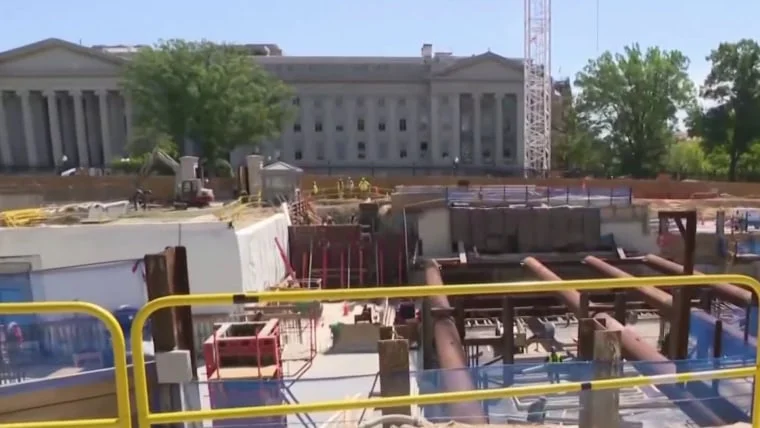
As September 2026 begins, the new White House ballroom is rapidly taking shape. Construction cranes and scaffolding are visible from Pennsylvania Avenue, a daily reminder of the president's sweeping vision for the executive residence. Once completed, the ballroom will host everything from state dinners to inaugural parties, and it will stand as a modern addition to a building steeped in history.
The Supreme Court's ruling, while procedurally narrow, has effectively given the president the green light to continue building. Whether the ballroom will be seen in the future as a grand achievement or an unconstitutional overreach remains to be seen. But for now, the sound of hammers and saws will continue to echo across the White House grounds, as the construction of a legacy proceeds at full speed.
Comments