
Tesco and Waitrose Recall Products Over Undeclared Allergens
Shoppers are being urged to check their kitchens after the Food Standards Agency (FSA) issued new recall notices for products sold at Tesco and Waitrose. The recalls, announced this week, affect a Tesco Finest coleslaw that may contain an undeclared allergen and a Waitrose dessert that has a labelling error. Both products pose a potential health risk to consumers with specific allergies, and the supermarkets have issued full refund instructions.
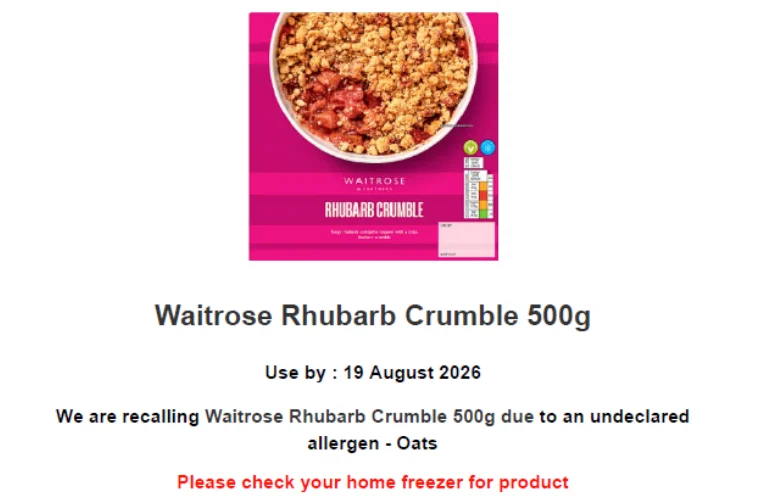
Tesco has recalled its Tesco Finest Caesar & Smoked Bacon Coleslaw (270g, use-by 4 September 2026) because some packs may incorrectly contain Tesco Finest Four Cheese Potato Salad. The mispacked product contains mustard, which is not declared on the label, making it a possible health risk for anyone with a mustard allergy. Waitrose, meanwhile, has recalled its Waitrose Rhubarb Crumble (500g, use-by 19 August 2026) because the dessert contains oats (gluten) that are not listed in the ingredients. This poses a risk to individuals with coeliac disease or an allergy or intolerance to oats or gluten.
The FSA has urged customers who have bought these items and have the relevant allergies not to consume them. Both retailers are offering full refunds, and no receipt is required. The recalls come alongside a wider wave of supermarket warnings, including a Sainsbury's product pulled due to possible listeria contamination.
Why These Recalls Matter
Allergen-related recalls are among the most common reasons the FSA issues alerts. For people with food allergies, even trace amounts of an undeclared ingredient can trigger severe reactions, including anaphylaxis, which can be life-threatening. The mislabeling of mustard in Tesco's coleslaw is particularly concerning because mustard is a mandatory allergen under UK food law, and its presence must be clearly indicated on packaging.
Similarly, the presence of oats in Waitrose's Rhubarb Crumble is a serious issue for those with gluten intolerance or coeliac disease. While some people with coeliac disease can tolerate oats, many cannot, and the risk of cross-contamination or hidden gluten makes such recalls essential. The FSA's rapid alert system is designed to minimise the window of exposure, but consumers are advised to check their fridges and freezers immediately.
This week's recalls are part of a broader pattern of food safety incidents across UK supermarkets. Just days earlier, Sainsbury's issued a recall for its Inspired to Cook Pitted Black Olives (120g) after Listeria monocytogenes was detected. Listeria infection can cause flu-like symptoms, high fever, and muscle aches, and is particularly dangerous for pregnant women, the elderly, and those with weakened immune systems.
What to Do If You Have Affected Products
If you purchased the Tesco Finest Caesar & Smoked Bacon Coleslaw with the affected use-by date, and you have a mustard allergy, do not eat it. Tesco advises customers to return the product to any store for a full refund. No receipt is needed. For further assistance, customers can visit Tesco's website contact page.
For the Waitrose Rhubarb Crumble, customers with an allergy or intolerance to oats or gluten, or those with coeliac disease, should not consume the product. Waitrose is offering a full refund upon return to any branch. Customers can also contact Waitrose Customer Care on 0800 188 884 (option 4) for more details.
It is important to note that these recalls are voluntary but coordinated with the FSA. The affected products have been removed from shelves, but some may already be in consumers' homes. The FSA recommends checking use-by dates and batch codes if available. For other products, the Office for Product Safety and Standards (OPSS) has also issued warnings, including a recall of Simple micellar cleansing water due to possible bacterial contamination.
Wider Context of Food Safety Alerts
The recent spate of recalls highlights the increasing complexity of supply chains and the challenges of ensuring accurate labelling. A simple packaging error, such as in the Tesco case, can lead to a product containing an allergen not listed on the label. This can happen during production when different products are packed on the same line.
The FSA's role is to act as a safety net, but the agency relies on consumers to stay vigilant. Regular reports of recalls appear in local and national news, and the FSA's website provides up-to-date information. For journalists, these stories serve as a reminder of the importance of food safety in the public consciousness.
According to the FSA, approximately 2 million people in the UK live with a food allergy, and hospital admissions for allergic reactions have been rising over the past decade. This makes accurate labelling not just a legal requirement but a critical public health issue.
Broader Implications for Supermarket Practices
These recalls also underscore the need for retailers to invest in robust quality control and staff training. While no system is foolproof, the frequency of allergen-related recalls suggests that more can be done at the manufacturing and packaging stages. Some supermarkets have introduced dedicated allergen-free production lines, but cross-contamination risks remain.
Consumers are becoming more label-aware, and incidents like these can shake public trust. Retailers must respond quickly and transparently, as both Tesco and Waitrose have done by issuing clear refund instructions. However, the long-term impact on brand loyalty depends on how effectively they communicate and prevent recurrence.
In addition, the simultaneous recall of non-food items, such as the Simple skincare product, indicates that regulatory scrutiny extends beyond food. The OPSS recall of micellar water due to potential bacterial contamination is a reminder that health risks are not confined to edibles. The skincare recall affected major retailers including Tesco, Asda, and Superdrug, with specific batch codes listed.
What This Means for Consumers
For the average shopper, this week's news is a call to action. The FSA advises that anyone who has bought recalled products should not consume or use them, even if they have not yet experienced symptoms. Allergic reactions can be unpredictable, and listeria has a long incubation period.
Consumers are encouraged to sign up for FSA alerts or check the agency's website regularly. Local trading standards departments, such as Norfolk Trading Standards, also disseminate recall information. Staying informed is the best defense against potential health risks.
The recalls also highlight the importance of reporting suspected issues to the authorities. If a product appears mislabelled or causes an unexpected reaction, the FSA urges consumers to report it.
Looking Ahead: Food Safety in 2026
As we move into the autumn season, food safety will remain a priority. The FSA has pledged to strengthen its surveillance of allergens and contaminants. New technology, such as blockchain-based traceability, is being piloted by some retailers to improve supply chain transparency.
For now, the immediate message is clear: if you have purchased the affected Tesco coleslaw or Waitrose crumble, and you have the relevant allergies, return them for a refund. Even if you are not affected, it may be wise to check your kitchen for any of the recalled items to ensure no one in your household is at risk.
In a broader sense, this week's recalls serve as a reminder of the complexity of the modern food system. While most products are safe, the occasional failure underscores the need for vigilance at all levels—from producers to retailers to consumers. The FSA's rapid alert system ensures that when something goes wrong, the public is informed as quickly as possible.
For more insights into product safety trends and consumer protection, you may also want to check out our coverage on the latest incidents in the US, such as the Hurricane Lowell Nears Hawaii: Kauai Braces for Life-Threatening Surf and Rain — a reminder that natural disasters can also disrupt supply chains and food availability. But for now, keep your receipts handy and stay tuned to official FSA announcements.
This is a developing story. We will update this article as more information becomes available.
Comments