
Taiwan Local Elections 2026: KMT's Chiang Wins Taipei, DPP Makes Inroads
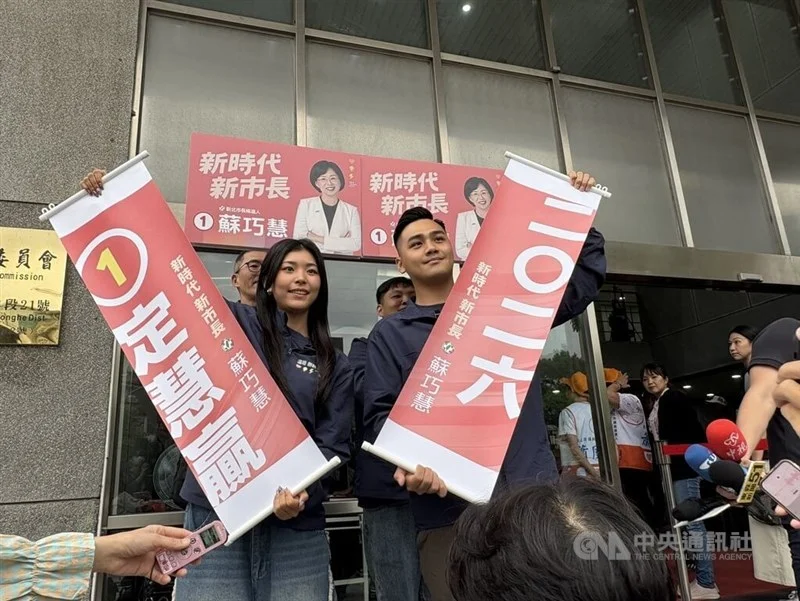
Taiwan's local elections concluded on Saturday with the Kuomintang (KMT) retaining key strongholds, including Taipei, while the ruling Democratic Progressive Party (DPP) celebrated gains in several counties. According to live results from Focus Taiwan and the Central Election Commission (CEC), KMT incumbent Chiang Wan-an secured a double-digit victory in the capital, defeating DPP challenger Puma Shen by more than 8 percentage points. In Tainan, DPP lawmaker Chen Ting-fei claimed victory, becoming the city's first female mayor. The DPP also flipped Changhua County, with Chen Su-yueh winning after eight years of KMT control, while the KMT regained Penghu County. In New Taipei, the KMT's Lee Shu-chan held a narrow lead over the DPP's Su Chiao-hui, with vote counting ongoing.
Key Races and Turnout
Polls closed at 4 p.m. local time across Taiwan's 22 cities and counties, with roughly 11,000 positions up for grabs in the "nine-in-one" elections. Turnout was expected to be around 60-65% in Taipei, reflecting intense public interest. The Taipei mayoral race drew particular attention, with DPP candidate Puma Shen, an academic and information warfare expert wanted by Chinese police on separatism charges, drawing large crowds despite his underdog status. However, incumbent Mayor Chiang Wan-an, seen as a potential future presidential contender, ultimately prevailed. In Taichung, the DPP's Ho Hsin-chun held a slim lead over the KMT's Johnny Chiang with over 1 million votes counted, making it the DPP's best chance to flip a major KMT city. Other declared victories included KMT wins in Kinmen, Lienchiang, Miaoli, Keelung, Nantou, Taitung, and Penghu, while the DPP took Pingtung, Changhua, and Tainan.
Context: Local Issues and Cross-Strait Dynamics
The elections were closely watched both domestically and internationally, serving as a midterm referendum on President Lai Ching-te's administration and a bellwether for the 2028 presidential race. While local contests traditionally focus on transport, childcare, and the environment, China's persistent pressure on Taiwan loomed large. Beijing has repeatedly claimed the island as its territory and denounced DPP candidates like Shen, whose candidacy underscored the ongoing disinformation battle. Taiwan's government warned voters about fake news campaigns originating from China. Despite these undercurrents, analysts cautioned against overinterpreting the results. As experts writing for the East Asia Forum noted, the Taipei mayoral race was fought primarily over local issues, and the mayor has no say over national policy. "Neither Beijing nor Washington should read too much into the result," they argued, pointing out that the public largely favors the status quo.
DPP's Mixed Performance
The DPP's performance was a mixed bag. While the party celebrated flipping Changhua and retaining Pingtung, it failed to unseat KMT mayors in Taipei and New Taipei, and lost Penghu. President Lai's campaign efforts in New Taipei did not appear to tip the scales, with the KMT's Lee Shu-chan maintaining a lead. The results suggest that while the DPP remains competitive, the KMT's traditional strength in local governance persists. Notably, the KMT's Hsu Shu-hua declared victory in Nantou, and independent incumbent Kao Hung-an won a second term in Hsinchu, highlighting the role of local dynamics over party affiliation.
Perspective: Status Quo Prevails, But Signals for 2028
The election outcome reinforces the stability of Taiwan's domestic politics, with voters prioritizing local governance over broader geopolitical alignments. The KMT's retention of Taipei and New Taipei, coupled with its win in Penghu, demonstrates its enduring appeal in urban and northern regions. The DPP's gains in Changhua and Tainan, however, show it can compete in traditional KMT areas, setting the stage for a competitive 2028 presidential race. China's reaction to the results will be closely monitored, especially given its targeting of candidates like Shen. Yet, as the East Asia Forum analysis emphasized, the elections are unlikely to shift Taiwan's course on cross-Strait policy, which remains anchored in a consensus favoring the status quo. For now, the focus shifts to governance, with newly elected officials set to serve four-year terms starting in December.
International Reactions and Next Steps
International observers, including the US and China, are likely to analyze the results for signs of shifting public sentiment. The US, Taiwan's key ally, will watch for any changes in defense or trade posture, while Beijing may recalibrate its influence campaigns. Domestically, the results will shape local policies on housing, transportation, and social welfare. As vote counting concludes in tight races like New Taipei, the full picture will emerge, but the overarching message is clear: Taiwan's voters have opted for continuity and local accountability over dramatic shifts.
Comments