
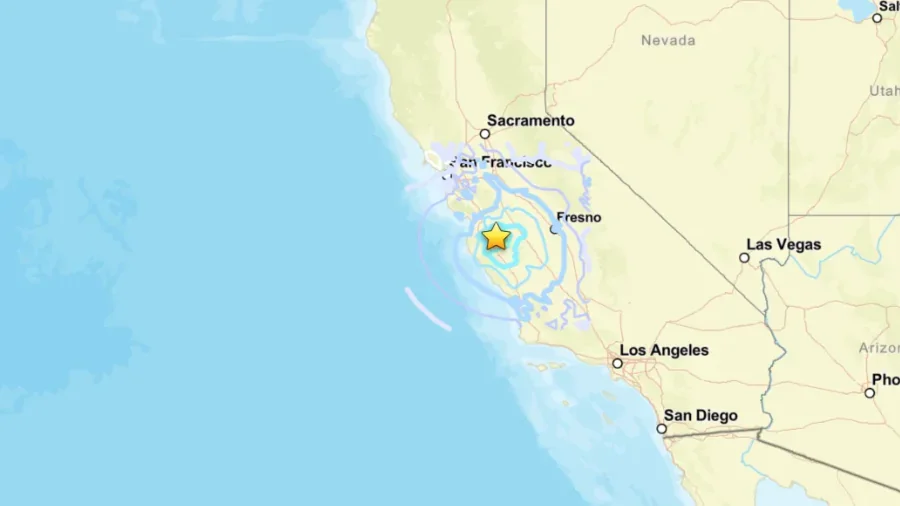
Magnitude 5.0 Quake Strikes Off Manhattan Beach
A preliminary magnitude 5.0 earthquake struck off the coast of Los Angeles County on Saturday morning, according to the U.S. Geological Survey, jolting residents across a wide swath of Southern California and prompting the Los Angeles Fire Department to activate its "earthquake mode" as a precaution.
The quake hit at approximately 9:30 a.m. local time, about 4 miles west-southwest of Manhattan Beach, at a depth of roughly 7.6 miles. The USGS initially reported the magnitude as 4.7 before revising it upward to 5.0. According to Caltech's Seismological Laboratory, it was the largest earthquake to strike the Los Angeles area since 2014.
Two aftershocks followed within minutes. A 3.0-magnitude tremor struck about 4 miles west-southwest of Hermosa Beach at a depth of 13 miles, and a 2.5-magnitude quake hit about 6 miles west-southwest of Manhattan Beach at a depth of 8.5 miles, both around 9:34 a.m., the USGS reported.
Residents from Torrance and Chatsworth to Irvine, Rancho Palos Verdes, and Oxnard reported feeling the shaking to the USGS. There were no immediate reports of injuries or structural damage.
LAFD Conducts Strategic Survey
The Los Angeles Fire Department said it activated "earthquake mode" following the temblor, with personnel from all 106 neighborhood fire stations conducting a strategic survey by land, air, and sea across the city's 470 square miles. The inspections check critical infrastructure and other areas of local concern and typically take less than an hour, officials said. The department reported no initial reports of injuries or structural damage in the city.
The USGS initially assigned the earthquake a maximum estimated intensity of V on the Modified Mercalli Intensity Scale, indicating moderate shaking with the potential for very light damage. Weaker shaking extended across portions of Southern California, according to the agency's ShakeMap.
The epicenter was also located about 4 miles west of Hermosa Beach and Redondo Beach, 5 miles south-southwest of El Segundo, and 6 miles northwest of Palos Verdes Estates, according to the Southern California Seismic Network.
A Series of Tremors Across the State
Saturday's quake comes amid a stretch of increased seismic activity in California. Overnight into Saturday morning, two smaller earthquakes struck central California within hours of each other, according to the USGS. A magnitude 3.0 quake hit 16 kilometers northwest of Hetch Hetchy Reservoir at around 5 a.m., and a magnitude 3.2 tremor rumbled near San Lucas at around 7 p.m. Friday. Only the San Lucas quake received several "Did You Feel It?" reports.
Those shocks were stronger than several magnitude-2 quakes that have struck the state in recent weeks. Earlier in the week, a magnitude 3.2 earthquake rattled parts of Orange County early Monday morning, and a magnitude 3.3 tremor struck off the coast of Manhattan Beach hours before that past Sunday. A massive magnitude 5.7 earthquake also hit off the coast of Baja California Sur recently.
The back-to-back tremors in Southern California's beach cities and the new activity in central California have drawn attention to the state's ever-present seismic risk. While Saturday's 5.0 quake was widely felt, its moderate intensity and offshore epicenter likely limited damage. The LAFD's survey and the absence of immediate damage reports suggest the region escaped serious consequences this time.
What the Quake Means for California
California sits on a network of active faults, and moderate earthquakes like Saturday's serve as a reminder of the state's vulnerability to larger seismic events. The 5.0 quake was the largest in the Los Angeles area in more than a decade, a period that has seen relatively few significant temblors in the region. Seismologists often note that increased small-scale activity does not necessarily predict a larger quake, but it underscores the importance of preparedness.
As the state heads into a holiday weekend marked by stormy weather and other disruptions, the earthquake adds another layer of concern for residents. The LAFD's rapid survey and the lack of damage reports are reassuring, but the event highlights the need for ongoing vigilance and emergency planning.
For now, Angelenos are left to assess the shaking, report their experiences to the USGS, and keep an eye on the fault lines that shape life in Southern California. The USGS encourages residents who felt the quake to submit reports through its "Did You Feel It?" tool, which helps scientists map the intensity and impact of seismic events.
As the region recovers from the morning's jolt, the question remains whether this uptick in activity is a precursor to something larger or simply a reminder of the ever-present forces beneath the surface. Only time and further monitoring will tell.
Comments