
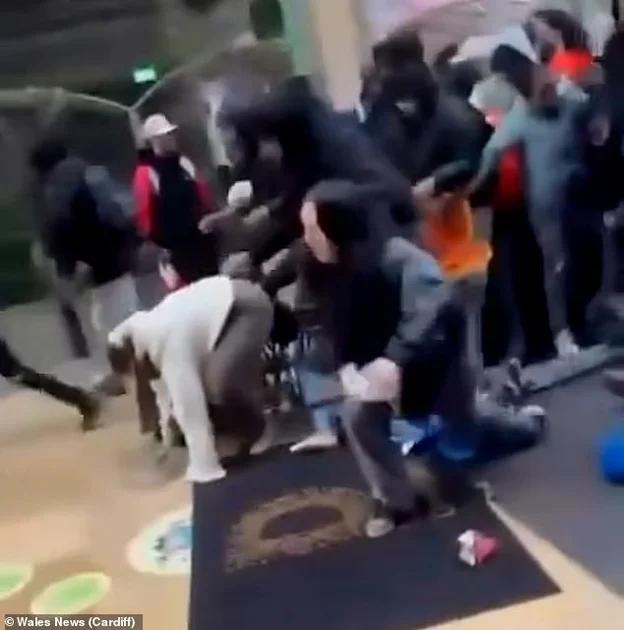
Swatch Stores Shut Doors as Frenzied Crowds Storm Malls for $400 Watch
Swatch stores at two major U.S. malls were forced to close over the weekend after hundreds of shoppers, eager to buy the new Royal Pop Collection pocket watch — a collaboration with luxury brand Audemars Piguet — overwhelmed security and prompted police responses. At the King of Prussia Mall in Pennsylvania, the crowd grew so large and defiant that approximately 100 officers were called in, the mall delayed its opening, and one person was arrested. At Oak Brook Center Mall in Illinois, police said Swatch made the decision not to open at all on Saturday, May 16, 2026.
The Royal Pop Collection pocket watch retails for around $400 but is already being resold online for more than $1,000. The frenzy underscores how a limited-edition collaboration between a mass-market Swiss watchmaker and a top-tier luxury brand can trigger mayhem in the age of resale culture. Swatch issued a statement asking fans not to rush stores in large numbers, warning that queues of more than 50 people could lead to sales being paused. The company said the collection will remain available for several months.
Burberry Quietly Exits 21 Stores as Part of Financial Turnaround
At the opposite end of the spectrum, British luxury house Burberry confirmed it closed 21 stores in the past fiscal year, part of a broader financial overhaul. The closures were disclosed in the company's earnings report on May 14, 2026. Burberry opened nine new locations during the same period, bringing its global total to 410 stores. CEO Joshua Schulman said the company is "exiting stores which are either in locations that are no longer appropriate or have profitability challenges."
The closures are part of Burberry Forward, a strategic plan focused on cutting costs, simplifying operations, and reducing overproduction. The strategy appears to be working: Burberry reported an adjusted operating profit margin of 6.6% for fiscal year 2026, a sharp recovery from a £75 million loss in 2025. Comparable store sales rose 2%, driven by growth in Greater China and the Americas, even as overall revenue dipped 2.2%.
Burberry did not disclose which specific stores closed, but the move is part of a wider trend among high-end retailers reassessing their physical footprints. Schulman emphasized that the company seeks "more profitable alternatives" when leaving a location, rather than simply abandoning mall real estate.
Why Two Extremes Coexist: The Fragmented Reality of Mall Retail
The simultaneous news of Swatch chaos and Burberry quiet exits reveals a fragmented reality for physical retail in 2026. On one hand, malls still command intense consumer desire for exclusive, highly hyped products — a dynamic that can turn dangerous when supply is limited. On the other hand, legacy luxury brands like Burberry are rethinking whether anchoring a mall is worth the rent if the location no longer drives profit or brand prestige.
The Swatch scenes recall earlier frenzies around sneaker drops and fast-fashion collaborations, but with a twist: the watch is not cheap ($400), yet the demand was strong enough to overwhelm mall security. This hunger for luxury-at-an-accessible-price suggests that malls remain viable launchpads for experiential product releases, even if the logistics of crowd control are daunting.
For Burberry, the calculus is different. The 170-year-old retailer is not chasing viral moments. It is quietly pruning underperforming locations to focus on stores that deliver higher margins, better foot traffic, or stronger brand alignment. Schulman's language — "exiting stores" from "locations that are no longer appropriate" — signals a more deliberate, data-driven approach to real estate.
What the Swatch Chaos Reveals About Consumer Demand and Mall Security
### The Resale Premium Fuels the Frenzy
The $400 pocket watch is being resold for over $1,000 online, according to reports. This kind of premium creates a powerful incentive for scalpers and resellers to chase limited drops. The collaboration between Swatch and Audemars Piguet, a brand whose watches often cost tens of thousands of dollars, allows buyers to own a piece of luxury cachet at a fraction of the price. Resellers then exploit that appetite, often using bots and bulk purchasing, which further inflates demand.
### Mall Security Under Pressure
The events at King of Prussia and Oak Brook show how quickly a product launch can escalate into a public safety concern. At King of Prussia, police said the crowd became "more defiant" and some people broke down doors to enter the mall. Swatch's decision to close stores preemptively was intended to protect both customers and staff. The incidents raise questions about whether malls will need to impose stricter crowd-control protocols for future hype-driven releases, or whether brands themselves should adopt staggered online drops to prevent in-store chaos.
### The Broader Retail Landscape
Even as Swatch deals with over-demand, other luxury retailers are closing locations. Last month, another heritage brand announced it would shutter underperforming stores across the United States. The stark contrast illustrates that mall retail is not a monolith: some spaces still generate extraordinary foot traffic, while others are being abandoned by brands seeking higher returns.
Burberry's Strategy: A Blueprint for Other Legacy Brands?
### Financial Discipline Over Footprint
Burberry's approach is notable for its discipline. The company did not announce closures with fanfare; it buried them in an earnings report. Yet the results speak for themselves. The 6.6% operating profit margin, achieved while revenue fell slightly, suggests that selective pruning can improve profitability even in a tough retail environment. Burberry's comparable store sales increase of 2%, driven by Asia and the Americas, also shows that the remaining locations are performing better.
### The Challenge of Balancing Online and Offline
Like many luxury players, Burberry is navigating a shift toward e-commerce while maintaining a physical presence for brand experience. The closures likely target locations where online sales have cannibalized in-store traffic, or where demographics have shifted. Schulman's promise to find "more profitable alternatives" hints at a portfolio approach: closing some stores while opening others in higher-traffic areas or more affluent neighborhoods.
### Implications for Malls and Landlords
For mall operators, Burberry's retreat is a warning. If a prestigious anchor like Burberry can exit 21 locations quietly, other brands may follow. The cost of maintaining a mall presence — including rent, staffing, and visual merchandising — must be justified by returns. In less desirable malls, that equation increasingly fails.
Broader Implications: What This Means for the Future of Shopping
### The Luxury Segment Splits in Two
The Swatch and Burberry stories represent two poles of the luxury market in 2026. On one side, there is the "hype economy": limited drops, collaborations, and resale premiums that create massive in-person crowds. On the other, there is the "steady luxury" model, where heritage brands focus on profitability, selective distribution, and digital growth, sometimes at the expense of physical store count.
Neither approach is inherently superior. Swatch may generate headlines and foot traffic, but it also creates security risks and potential reputational damage if crowds turn violent. Burberry may lose some visibility, but it gains financial stability and operational efficiency.
### Resale Culture Reshapes Retail
The Royal Pop frenzy is a symptom of a larger trend: resale culture has turned limited-edition products into investment assets. People queue not just to own a watch, but to flip it for profit. This dynamic pressures brands to manage supply even more carefully, and may push them toward lottery systems or appointment-only sales to prevent chaos.
### The Mall's Role in 2026
Malls are no longer just places to shop; they are stages for cultural moments. The Swatch events show that malls can still attract huge crowds when the product is right, while Burberry's quiet exits show that many malls fail to deliver sustained profitability for luxury brands. The divide will likely widen: the most successful malls will focus on experiential retail, food, entertainment, and limited drops, while struggling malls will continue to lose high-end tenants.
As brands like Burberry become more selective, mall landlords must rethink their tenant mix. If a heritage brand pulls out, the vacancy may need to be filled by a gym, a food hall, or a pop-up event space rather than another clothing retailer.
A Surprising Parallel: Sports and Entertainment Hype
The Swatch frenzy is reminiscent of other recent hype-driven moments in culture, from blockbuster sports events to viral social media feuds. For instance, the intensity of demand for the Royal Pop watch mirrors the excitement around Brock Lesnar's return to WWE Raw, where fans stormed social media and turned out in droves. Similarly, the resale premium on the $400 watch echoes the market for high-stakes boxing matches, like the tension between Conor Benn and Keyshawn Davis, where demand for tickets and pay-per-view often outstrips supply. In both cases, scarcity and brand power drive consumer behavior to extremes.
What Comes Next
The contrasting fates of Swatch and Burberry stores in May 2026 offer a snapshot of a retail landscape in transition. Swatch may need to rethink its drop strategy: online-only releases, appointment-only pickup, or stagger releases across weeks to avoid panic. Burberry, meanwhile, will continue to close underperformers and open new stores in more promising markets, likely in Asia and the Americas.
For shoppers, the message is mixed: you can still find exclusive products at malls, but you may also find empty storefronts where once stood luxury brands. The mall of the future will be more volatile, more event-driven, and less predictable.
As one trend analyst put it, "We are entering the era of the 'pop-up mall': a place where something big happens one day and nothing happens the next. Brands that adapt will thrive; those that don't will fade."
Comments