
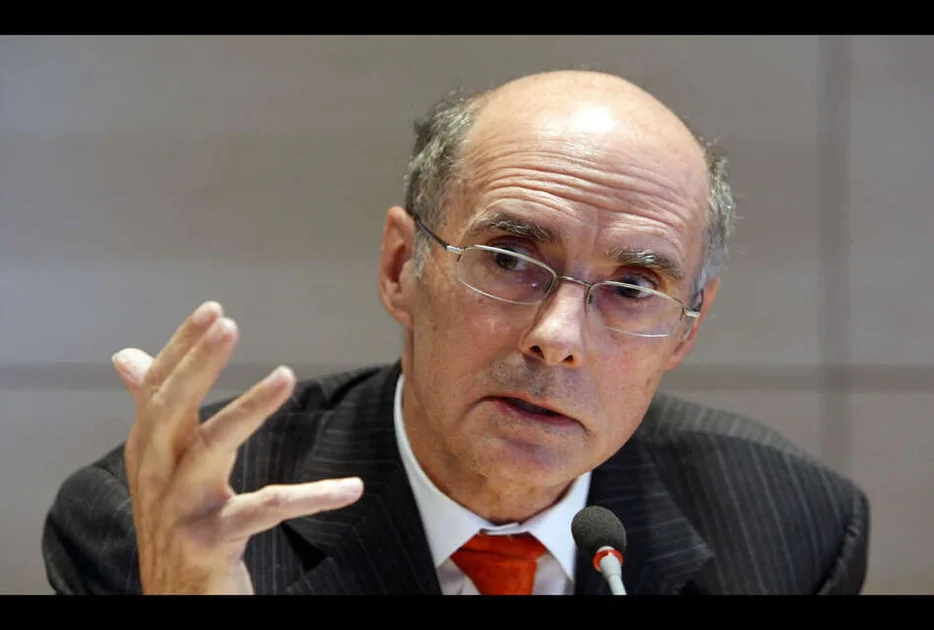
Strobe Talbott, Veteran Diplomat and Journalist, Dies at 80
Strobe Talbott, a former Time magazine correspondent who served as deputy secretary of state under President Bill Clinton and later led the Brookings Institution, died Thursday at his home in East Hampton, New York, after a long illness. He was 80.
His son, Devin Talbott, confirmed the death, saying his father died peacefully. Talbott is survived by two sons, a stepdaughter, three siblings, and eight grandchildren. His first wife, Brooke Shearer, died in 2009; he later married author Barbara Lazear Ascher.
From Journalism to Diplomacy
Born in Dayton, Ohio, in 1946, Talbott was educated at Yale and Oxford, where he roomed with Clinton. After interning for Time in Moscow, he was asked to help translate Nikita Khrushchev’s leaked memoirs—a project that launched his 21-year career at the magazine. He covered Soviet-American relations, served as Washington bureau chief, and wrote a foreign-affairs column.
In 1994, Talbott joined the Clinton administration as deputy secretary of state. He became the architect of US policy toward Russia and other former Soviet republics. He also conducted negotiations with India after its 1998 nuclear tests, a diplomatic effort that would become one of his most consequential achievements.
The India Chapter: Turning Crisis into Partnership
A Diplomatic Marathon
In May 1998, India conducted five nuclear tests at Pokhran, prompting Washington to impose sanctions and demand that New Delhi abandon its nuclear ambitions, sign the Comprehensive Nuclear-Test-Ban Treaty (CTBT), and accept the existing non-proliferation architecture. India, under Prime Minister Atal Bihari Vajpayee, resisted.
Talbott and Jaswant Singh, India’s principal interlocutor and later external affairs minister, met 14 times in seven countries over two years. The talks were tense: Talbott pressed India to sign the CTBT, halt fissile material production, exercise missile restraint, tighten export controls, and resume talks with Pakistan. Singh resisted those demands while keeping the dialogue alive.
In his book Engaging India: Diplomacy, Democracy and the Bomb, Talbott wrote that India used the talks to demonstrate resolve under US pressure, and concluded that Singh had come closer to achieving his objectives than he had to achieving his own. The discussions laid the groundwork for Clinton’s landmark visit to India in 2000—the first by a US president in 22 years—and for the civil nuclear agreement that followed.
A Legacy Beyond Treaties
Talbott’s most enduring diplomatic achievement was not a signed deal, but helping two countries that had spent decades talking past each other begin a respectful dialogue. As one analyst noted, he belonged to a vanishing breed of American diplomats for whom foreign policy was as much about understanding other countries as advancing one’s own.
Brookings and Later Years
After leaving government, Talbott served as president of the Brookings Institution from 2002 to 2017, one of the most prominent think tanks in the US. He also chaired the State Department’s foreign affairs policy board. He authored over a dozen books, the last of which, Our Founders’ Warning: The Age of Reason Meets the Age of Trump, was published in 2020.
A Diplomatic Legacy in a Changing Era
Talbott’s death comes as the foreign policy establishment he represented faces increasing scrutiny. His cerebral, dialogue-driven approach stands in contrast to the more transactional tone of current US diplomacy. Yet his work on India helped set the stage for a strategic partnership that has only grown in importance.
The 14 rounds of talks with Singh did not produce the CTBT, but they rebuilt trust and opened channels that later administrations used to deepen defense and economic ties. In that sense, Talbott’s quiet, persistent diplomacy left a mark that outlasted his tenure.
As the US navigates renewed great-power competition, Talbott’s career serves as a reminder of the value of patient engagement—even when immediate goals prove elusive.
Comments