
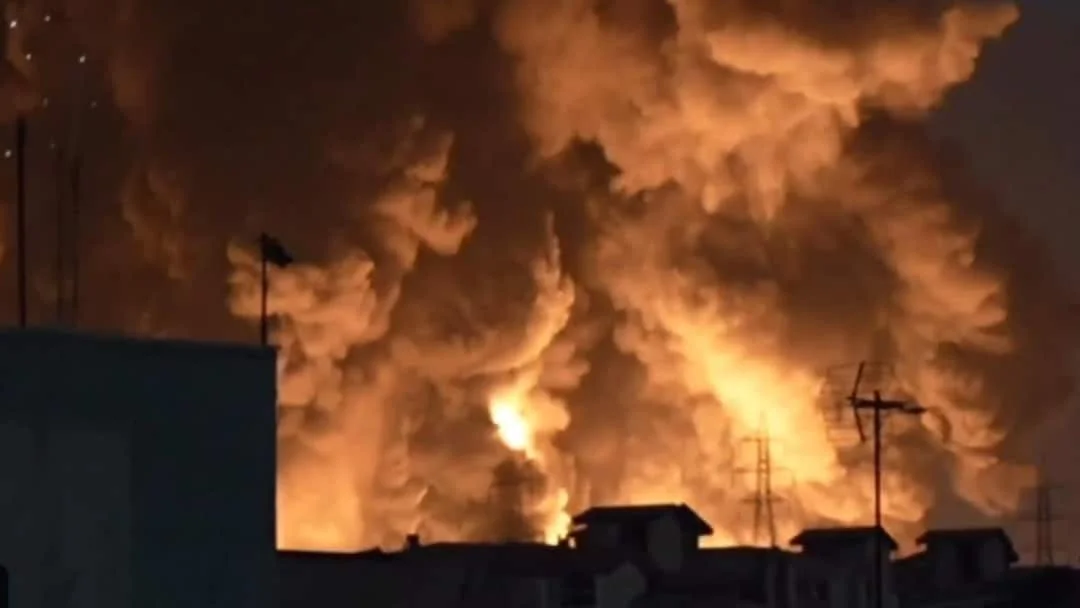
Deadly Drone Attack on Kuwaiti Military Facility Kills Two Italian Nationals
A drone attack on a Kuwaiti military facility has killed two Italian nationals and wounded two others, according to Kuwait's Ministry of Defence. The incident, which occurred on Thursday, November 26, 2026, has sharply escalated tensions in the Gulf region, with Kuwait and several Western governments pointing the finger at Iran. Tehran has vehemently denied any involvement, calling the accusations a pretext for war.
The two victims were Italian technicians working for Rheinmetall Italia, a defense company, at what Kuwait described as a "vital site" — an air-defense surveillance station. Italy's Foreign Ministry confirmed the deaths, and Foreign Minister Antonio Tajani identified the victims as technicians employed by the company. A Kuwaiti national and a Pakistani worker were also injured in the attack and are receiving medical treatment.
Kuwait's Defence Ministry stated that the two Italians died from injuries sustained when debris from the intercepted drones fell on the site. The ministry initially reported material damage and said the injured were taken to hospital. The attack marks a significant widening of the conflict that has embroiled the region since the outbreak of the U.S.-Iran war.
Iran Denies Responsibility, Calls Incident 'Suspicious'
Iran's foreign minister, Abbas Araghchi, held a phone conversation with his Kuwaiti counterpart, Jarrah Jaber Al-Ahmad Al-Sabah, during which he "firmly rejected allegations regarding an Iranian drone attack on Kuwait," according to Iranian state TV. Araghchi stated that the Islamic Republic had "no involvement whatsoever" and offered to conduct a "joint investigation with the Kuwaiti side" into the incident.
In a post on X, Araghchi described the incident as "suspicious" and said it "looks like a precooked recipe for war." Iran's military spokesman, Sardar Shekarchi, also denied any offensive operations in the region, suggesting that the accusations were a "cover for continuing evil" and pointed to the "role of the Zionist regime and American forces in using false flags and regional adventures."
The denial comes as the United States and its allies have accused Iran of launching a series of attacks across the Gulf, including a deadly strike on a Saudi refinery in Jazan that killed a Nepali worker and injured several others. The Saudi-led coalition blamed Yemen's Houthi rebels, who are backed by Iran, for that attack. The Houthis also claimed responsibility for an attack on Riyadh's financial district on Wednesday.
EU Calls for Increased Pressure on Tehran
European Commission President Ursula von der Leyen responded to the deadly assault by calling for more pressure on Tehran. "Today's events are yet another reminder that security in the Gulf is a matter of security for us all," she said. Her statement underscores the growing concern in Europe that the conflict could destabilize the wider region and disrupt global energy supplies.
The attack on Kuwaiti soil — a key U.S. ally and host to American military forces — has raised fears of a broader conflagration. Kuwait has largely avoided direct involvement in the U.S.-Iran conflict, but the strike on its air-defense facility suggests that the war is spilling over into neighboring states. The presence of Italian technicians at the site highlights the international dimension of the conflict, with European nationals now among the casualties.
Oil Prices Rise as Conflict Threatens Gulf Shipping
Global oil prices, which had dropped about 20% in recent weeks amid a stalemate in the U.S.-Iran war, have risen again slightly as Tehran threatens to increase attacks on ships and fighting between its Houthi allies and Saudi Arabia escalates. The attack on the Saudi Jazan refinery forced a temporary shutdown of some operations, and ADNOC confirmed the death of a missing Jordanian crew member following an earlier attack on its vessel in the Strait of Hormuz.
The Strait of Hormuz, a chokepoint for about one-fifth of global oil consumption, has become a flashpoint in the conflict. Iran has threatened to close the strait in response to U.S. sanctions and military pressure. The recent attacks on shipping and energy infrastructure have raised concerns about the reliability of Gulf oil exports, prompting jittery markets.
Background: A Region on Edge
The drone attack on Kuwait comes amid a wider escalation of hostilities between Iran and its adversaries. The U.S.-Iran war, which began earlier this year, has seen a series of tit-for-tat strikes. The United States has accused Iran of providing intelligence to militants targeting U.S. bases, while Iran has blamed the U.S. and Israel for covert operations on its soil.
President Donald Trump, speaking at Mar-a-Lago on Thursday, downplayed the significance of intelligence sharing between Iran and its allies Russia and China. "I think that they're very little involved with Iran," Trump said, adding that both countries want to see the conflict end. His comments came after reports that Russia had been providing intelligence to Iran regarding U.S. positions in the Middle East.
The conflict has also drawn in regional proxies. The Houthis in Yemen have stepped up attacks on Saudi Arabia, including a strike on Riyadh's financial district and an oil refinery in the east. The Saudi-led coalition has responded with airstrikes on Houthi-held territory, including the capital Sanaa. The fighting has killed dozens and displaced thousands, worsening a humanitarian crisis in Yemen.
International Reactions and Investigations
Italy has confirmed the deaths of its citizens and is likely to press for a thorough investigation. The presence of Italian technicians at the Kuwaiti site suggests a defense cooperation agreement between Italy and Kuwait. Rheinmetall Italia, a subsidiary of the German defense giant, specializes in air-defense systems, which may have been the target of the drone attack.
Kuwait has yet to formally accuse Iran of responsibility, but its defence ministry described the attack as "heinous Iranian aggression." The Kuwaiti government has called for calm and said it is investigating the incident. The United Nations has not yet commented on the attack, but diplomats at the Security Council are expected to discuss the matter in the coming days.
The attack also raises questions about the effectiveness of air-defense systems in the region. If drones could penetrate Kuwaiti airspace and strike a military facility, other Gulf states may be vulnerable. The incident could prompt a rush to acquire more advanced counter-drone technology.
What This Means for Gulf Security
The deadly drone strike in Kuwait marks a dangerous new phase in the U.S.-Iran conflict. By targeting a facility hosting Italian technicians, the attackers have broadened the war's footprint and drawn Europe deeper into the crisis. The EU's call for increased pressure on Tehran signals a hardening of Europe's stance, which could lead to new sanctions or other measures.
For Iran, the denial of involvement is a delicate balancing act. Tehran seeks to avoid a direct confrontation with the U.S. and its allies while supporting its proxies in the region. However, if evidence emerges linking Iran to the Kuwait attack, the international response could be swift and severe. The offer of a joint investigation may be a way for Iran to buy time and deflect blame.
The attack also complicates efforts to stabilize global oil markets. Any disruption to Gulf shipping or energy infrastructure could send prices soaring, worsening inflation and slowing economic growth. The Biden administration, already grappling with the fallout of the war, faces pressure to respond decisively while avoiding a wider conflict.
As the region braces for further escalation, the Kuwaiti attack serves as a stark reminder of the fragility of Gulf security. With diplomatic channels seemingly stalled, the risk of miscalculation grows. The coming days will be crucial in determining whether the conflict remains contained or spirals into a broader war.
Comments