
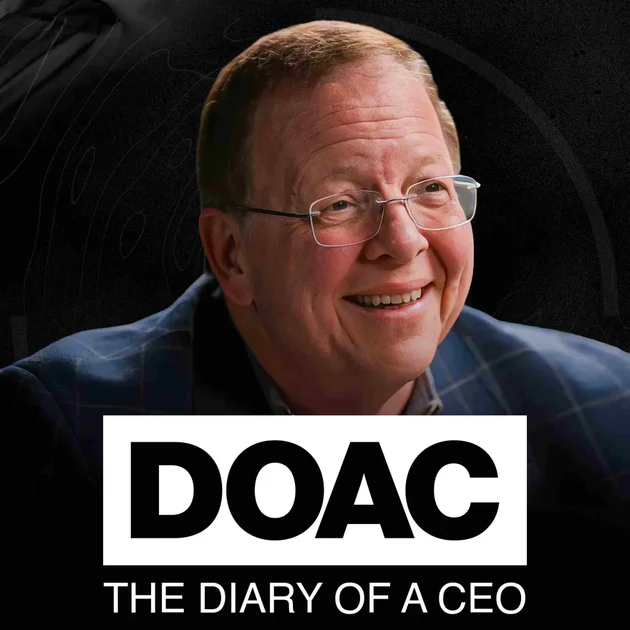
Steven Bartlett’s Podcast Warns of 70% Chance of US Ground Operation in Iran
Steven Bartlett, host of the world’s second-biggest podcast Diary of a CEO, is at the center of a mounting geopolitical firestorm. In an episode released July 23, 2026, Bartlett interviewed Iran war expert and political scientist Robert Pape, who issued a stark warning: the United States is on the brink of a ground invasion of Iran, with a probability now bordering on 70% by the end of this week.
Pape, who has modeled the bombing of Iran for two decades and advised every White House from 2001 to 2024, told Bartlett that the US has entered a dangerous “escalation trap.” The interview, which has since gone viral, paints a picture of an America locked in a nine-day bombing campaign against Iranian positions, unable to eliminate the drone and missile threat hidden across the country. “We’re like on the Titanic and we’re about to hit the iceberg,” Pape said. “When the iceberg hits, there’s not enough lifeboats for everybody.”
Bartlett’s show, which is on the cusp of overtaking Joe Rogan as the world’s number one podcast, has increasingly rebranded itself from a business-and-hustle platform into a serious geopolitical and cultural interview outlet. The Pape episode marks its most dramatic pivot yet, blending high-stakes analysis with the host’s characteristic calm, credulous style.
Why Bartlett’s Iran Interview Matters: From Hustle Culture to War Coverage
Bartlett’s journey from teenage entrepreneur to podcast titan has been remarkable. Since launching Diary of a CEO in 2017 as a live memoir of his business adventures, the show has evolved beyond its early mercenary titles like “£100m in Revenue Aged 27.” Today, it sits at the intersection of libertarian podcasting and mainstream news, a space dominated by figures like Joe Rogan, Lex Fridman, and Theo Von.
The Iran episode is significant because it shows Bartlett leveraging his massive platform—tens of millions of monthly listeners—to shape the conversation around an escalating global conflict. Pape’s warnings are not abstract: he predicts that if the US does not conduct a limited ground operation, Iran’s control over the Strait of Hormuz could trigger a world economic crisis, a recession, or worse. “The choice is, do we have a global economic crisis, possibly recession, possibly worse, or do we let Iran control the Strait of Hormuz?” Pape asked.
Bartlett’s interview style, once criticized for amplifying health misinformation (a BBC investigation accused his show of doing exactly that), is now being applied to matters of war and peace. The episode has already drawn comparisons to Rogan’s influence on the 2024 US presidential election, where libertarian podcasters helped propel Donald Trump back to the White House. Bartlett is now the British counterpart in that ecosystem, his reserved demeanor masking a powerful editorial voice.
Broader Implications: The Podcasting Landscape and Geopolitical Influence
The Diary of a CEO episode is a microcosm of a larger shift in media. As traditional news outlets struggle with trust and reach, long-form podcasts have become the primary source of information for millions. Bartlett’s show, alongside Rogan, Fridman, and others, now dictates the narrative on everything from AI to war. The Pape interview, with its dire predictions of mass casualty attacks and oil shortages, is the latest example of how podcasters are filling the void left by legacy journalism.
The interview also underscores the fragility of the global energy system. Pape’s modeling suggests that the world is “knocking on the door of literally running out of oil,” a crisis compounded by Iran’s ability to hide drones and missiles across its territory. For listeners, the implications are immediate: energy prices could spike, supply chains could break, and the US could be drawn into a ground war it has avoided for decades.
Bartlett’s role in all this is paradoxical. He built his brand on “grindset” and “hustle” culture, terms now criticized as vapid corporate jargon. Yet his show’s metamorphosis reflects a broader truth: the podcasting boom, with its unregulated free-for-all, has created new power centers. Whether Bartlett is a serious journalist or a curious host along for the ride, his platform now carries the weight of warning the world about its next catastrophe.
Related Context: The Escalating Conflict
The interview arrives amid a backdrop of heightened tensions. The US has been bombing Iranian positions for nine consecutive days, a campaign Pape describes as insufficient. He warns that controlling pieces of Iranian territory is the “biggest risk factor for suicide terrorism,” raising the specter of a mass casualty attack on US soil. Meanwhile, the global economy is already feeling the strain of the conflict, with oil prices fluctuating and markets jittery. For a deeper look at how energy crises affect other industries, see our coverage of Frontier Airlines Faces $17.6M Taxi Time Crisis as Fuel Costs Spike.
What This Changes
For Steven Bartlett, the Iran interview is a defining moment. It cements his transition from entrepreneur guru to geopolitical interlocutor, a shift that may redefine the Diary of a CEO brand. For the public, it’s a stark reminder that today’s most influential news sources are no longer newspapers or cable networks—they are podcasts hosted by charismatic individuals. And for policymakers, it signals that the conversation around Iran is no longer confined to Washington think tanks; it is being shaped in real time by a former reality TV contestant who drinks Huel on air.
As Pape put it, the next few months will bring a growing world economic crisis. Whether Bartlett’s audience is ready for that reality—or whether they will tune in for the next episode on AI or fatherhood—remains to be seen. But one thing is clear: the podcast era has arrived, and Steven Bartlett is now at its helm.
Comments