
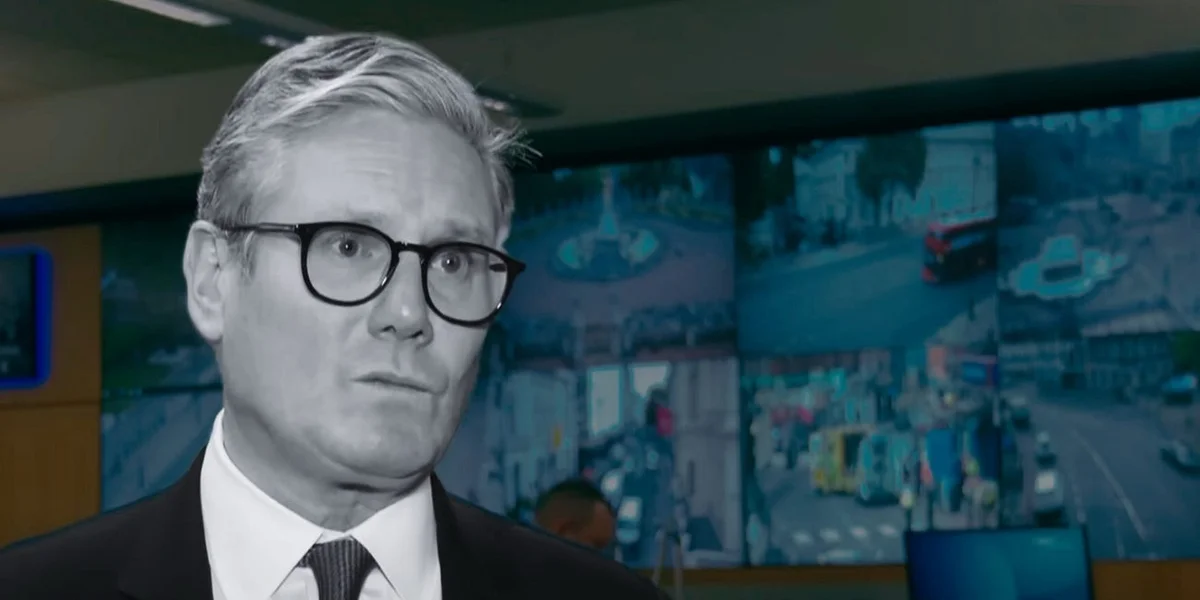
A Prime Minister on the Defensive
Keir Starmer arrived at Prime Minister's Questions on Wednesday, April 22, with his authority visibly diminished. The immediate trigger was the explosive testimony of Sir Olly Robbins, the former head of the Foreign Office who was sacked after the controversy surrounding Lord Mandelson's security vetting came to light. Robbins, speaking before the Commons Foreign Affairs Committee, described Downing Street's conduct as carrying a "dismissive attitude" toward the vetting process, while revealing that No 10 had pushed to install Mandelson in Washington "at pace."
Speaking in the Commons, Starmer categorically denied that his office had applied pressure on vetting officials. When Conservative leader Kemi Badenoch pressed him on whether he stood by a previous parliamentary statement that due process had been followed in Mandelson's appointment, the Prime Minister replied: "Yes, I do." He further argued that Robbins's admission that he had not informed anyone in No 10 about security concerns surrounding Mandelson "puts to bed all the allegations levelled at me."
However, Starmer's insistence that the matter is closed sits uneasily with what Robbins described during nearly two and a half hours of testimony — an account that, by most political observers' assessments, was far from exculpatory for Downing Street.
The Robbins Testimony: What Was Revealed
A New Revelation Compounds the Crisis
While Robbins's confirmation that he did not brief No 10 on the specifics of the vetting process initially appeared to offer Starmer some relief, the broader picture that emerged from his evidence session was damaging. Robbins painted a portrait of a Downing Street consumed by a singular drive to secure Mandelson's posting as US ambassador, at times at the expense of institutional caution.
Critically, Robbins made an entirely separate revelation during his testimony: that No 10 had also attempted to place another Labour-affiliated figure in a different diplomatic post — someone who, it later emerged, had their own controversial associations. The disclosure widened the scope of the scandal significantly, suggesting a pattern of behaviour around diplomatic appointments rather than an isolated misjudgement.
MPs are now set to question Morgan McSweeney, Starmer's former chief aide who had previously taken "full responsibility" for advising the Prime Minister on Mandelson's appointment, in the coming week. His appearance before the committee will be closely watched.
Cabinet Loyalty Erodes
Perhaps the most politically significant development is the visible fracturing of cabinet solidarity around the Prime Minister. In the days surrounding Robbins's testimony, several senior ministers broke ranks in ways that were impossible to ignore.
Energy Secretary Ed Miliband, mid-interview, appeared to abandon the government line, openly conceding that appointing Mandelson had been a mistake. Home Secretary Yvette Cooper, questioned about No 10's reported interest in finding a diplomatic posting for Matthew Doyle — Starmer's former communications chief and a close associate of a convicted sex offender — declined to defend the conduct, calling it wrong. Perhaps most tellingly, Pat McFadden, long considered one of Starmer's most loyal cabinet allies, refused on three separate occasions during a radio interview to affirm that Starmer had been right to dismiss Robbins.
For a government that came to power in 2024 with a historically large parliamentary majority, the speed of this internal deterioration has been striking.
Why This Crisis Matters
Security, Accountability, and Trust in Institutions
The Mandelson vetting row touches on questions that go well beyond internal Labour politics. The role of security vetting in high-profile diplomatic appointments is a matter of genuine public interest. The allegation — fiercely disputed by Downing Street — is that the machinery of government was bent to serve political imperatives, with officials overridden or sidelined when their assessments were inconvenient. If Robbins's account is accurate, it raises serious concerns about how national security standards are applied when political loyalty and urgency come into conflict.
This parallels broader debates in several Western democracies about the integrity of appointments processes when powerful political figures are involved. Across the Atlantic, the Trump administration has faced its own scrutiny over personnel decisions and institutional norms — a comparison cartoonist Martin Rowson drew explicitly this week in The Guardian, depicting the two leaders' troubled premierships side by side.
The Broader Political Trajectory
Starmer's government is entering dangerous political territory. The Prime Minister retains the protection of a substantial parliamentary majority, which means his position is not under immediate threat from a confidence vote. But political capital, once squandered, is difficult to recover.
Commentators across the political spectrum are now openly discussing whether Starmer has the capacity to reset his leadership. The suggestion that cabinet ministers can no longer meet the Prime Minister's gaze in meetings — that collective purpose has curdled into sullen endurance — points to an administration that may be losing the intangible quality of forward momentum that any government needs to govern effectively.
McSweeney's forthcoming appearance before MPs will be a decisive moment. If his testimony contradicts or complicates Starmer's account of events, the pressure for further accountability — up to and including the Prime Minister's own position — will intensify considerably. For now, Starmer insists the matter is closed. Very few around him appear to believe him.
Comments