
Iran Strikes Three Ships and Seizes Two in Strait of Hormuz
Iran's Islamic Revolutionary Guard Corps (IRGC) fired on three container ships and seized two vessels in the Strait of Hormuz on Wednesday morning, April 22, 2026, in a dramatic escalation that threatens to unravel a fragile ceasefire between Tehran and Washington.
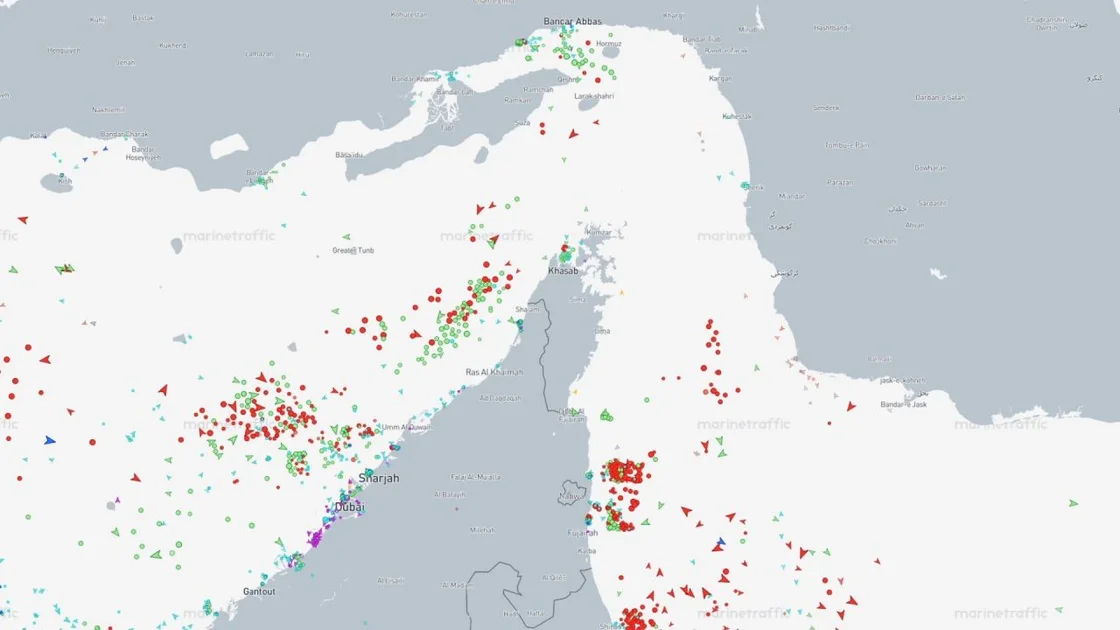
The UK Maritime Trade Operations (UKMTO) centre confirmed that three cargo ships were attacked within hours of each other. The first vessel targeted was the Epaminondas, a Greek-owned container ship, struck approximately 15 nautical miles northeast of Oman at around 7:55 a.m. local time. IRGC gunboats opened fire with gunfire and rocket-propelled grenades, causing heavy damage to the ship's bridge, though all crew members were reported safe. The second vessel, the Panama-flagged Euphoria, owned by a UAE-based company, came under fire roughly 8 nautical miles west of Iran and was stopped dead in the water.
The MSC Francesca: A Key Target
The third ship attacked was the MSC Francesca, a Panama-flagged container ship that had been sailing from the port of Dammam in Saudi Arabia toward Sri Lanka. It was targeted approximately six nautical miles off the Iranian coast. The IRGC subsequently announced the seizure of both the MSC Francesca and the Epaminondas, stating the vessels were detained for "operating without the required authorisation and for manipulating navigation systems." Both ships were escorted to Iranian ports. Iranian state media linked the MSC Francesca to what it described as ties with the "Zionist regime," a charge that could not be independently verified at the time of publication.
A Ceasefire Under Severe Strain
The maritime attacks came on the very day that US President Donald Trump had extended a two-week ceasefire with Iran that was due to expire. Trump announced that the US military would maintain its blockade of Iranian ports until Tehran produced a "unified proposal" and negotiations were concluded "one way or the other." The timing of the IRGC's actions was widely interpreted as a direct challenge to that diplomatic signal.
Advisors close to Iran's parliamentary leadership were quick to frame Trump's ceasefire extension with suspicion. One advisor to Parliament Speaker Ghalibaf publicly declared the extension was "certainly a ploy to buy time for a surprise strike," insisting that "the losing side cannot dictate terms" and that "the time for Iran to take initiative has come." The statement underscored the deep distrust on the Iranian side, even as diplomatic back-channels remained nominally open.
The Economic and Energy Stakes
The Strait of Hormuz is one of the world's most critical maritime chokepoints, through which roughly 20 to 21 percent of global oil trade passes daily. Any sustained disruption to navigation in the strait carries enormous consequences for energy markets worldwide. Financial analysts had already flagged Iran-related uncertainty as a key headwind for economic forecasts — a concern reflected in recent corporate outlooks. Equifax, for instance, cited Iran-driven interest rate volatility as a cap on its full-year guidance when it reported Q1 2026 results, illustrating how the conflict is rippling far beyond the region.
Reports also circulated on Wednesday that dozens of Iranian tankers carrying oil had bypassed the US blockade, suggesting that economic pressure on Tehran, while significant, has not proven fully airtight.
International Response and the Road Ahead
The seizure of the MSC Francesca and the Epaminondas prompted an immediate international reaction. Military planners from more than 30 nations gathered in London on Wednesday for a two-day conference co-hosted by the United Kingdom and France at the UK's Permanent Joint Headquarters in Northwood. The talks, which build on diplomatic groundwork laid by UK Prime Minister Sir Keir Starmer and French President Emmanuel Macron in Paris the previous week, aim to establish a joint defensive mission to protect freedom of navigation in the Strait of Hormuz once a sustainable ceasefire is secured.
UK Defence Secretary John Healey described the conference's purpose as translating "diplomatic consensus into a joint plan to safeguard freedom of navigation in the strait and support a lasting ceasefire."
Broader Implications for Global Trade and Diplomacy
Wednesday's events highlight a deepening paradox at the heart of the US-Iran standoff: diplomatic overtures and military provocations are occurring simultaneously, with neither side willing to fully back down. Trump's ceasefire extension has been characterised by critics as another instance of what analysts have called "TACO" diplomacy — threats that are announced and then walked back — while Iran's seizure of international commercial vessels signals that Tehran still holds significant leverage over global supply chains.
For shipping companies, insurers, and oil markets, the seizure of the MSC Francesca is a stark warning that the Strait of Hormuz remains a high-risk corridor regardless of diplomatic proclamations. Airlines have already begun adjusting routes and pricing amid fuel supply concerns tied to the conflict. The broader pattern points to a prolonged period of instability in one of the world's most consequential waterways, with the international community scrambling to build frameworks for protection that may not be operational until after the damage is already done.
Comments