
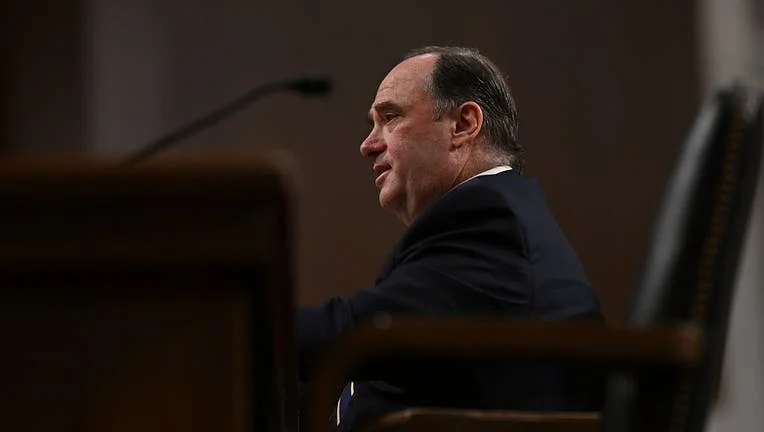
Navy Secretary John Phelan Out, Hung Cao Steps In
The Pentagon announced on Wednesday, April 22, 2026, that Navy Secretary John Phelan was leaving his post "effective immediately," with no official reason provided for his sudden exit. Pentagon spokesman Sean Parnell confirmed the departure in a statement posted to social media, adding that Navy Undersecretary Hung Cao would assume the role of acting secretary of the Navy.
The announcement caught many observers off guard. Just one day before his departure was made public, Phelan had addressed a large audience of sailors and defense industry professionals at the Navy's annual conference in Washington, D.C., and had spoken to reporters about his policy agenda. The abruptness of his exit left questions unanswered, though Reuters cited a source indicating that Phelan had been fired rather than having resigned voluntarily.
A Departure With No Explanation
As has been the pattern with several high-profile departures under Defense Secretary Pete Hegseth, the Pentagon offered no explanation for Phelan's removal. Phelan, who had no prior military service or civilian defense leadership experience before being nominated by President Donald Trump in late 2024, was primarily known as a major campaign donor and the founder of private investment firm Rugger Management LLC. His main connection to defense matters had come through an advisory role with Spirit of America, a nonprofit supporting democratic allies in Ukraine and Taiwan.
Who Is Hung Cao?
Hung Cao brings a dramatically different profile to the role. A 25-year Navy veteran, Cao has served in active combat zones and carries a personal story that has defined much of his public identity. Born in Vietnam, Cao fled the country with his family in 1975 following the fall of Saigon, spending time in West Africa before eventually settling in Virginia.
From Naval Academy to the Political Arena
Cao was among the first graduating class of Thomas Jefferson High School for Science and Technology in Alexandria, Virginia, before being commissioned as a Special Operations Officer — specializing in Explosive Ordnance Disposal and Deep Sea Diving — from the United States Naval Academy. His military background gives him a level of institutional credibility that his predecessor lacked.
In 2024, Cao mounted a Republican Senate campaign in Virginia, seeking to unseat Democratic incumbent Tim Kaine. He secured former President Trump's endorsement in a competitive primary but ultimately fell short in the general election. During the campaign, Cao drew on his personal history, invoking the fall of communist Vietnam as a cautionary lens through which he viewed American political trends — language that resonated with the conservative base but drew criticism from opponents.
His elevation to acting Navy secretary now places him at the helm of one of the most consequential military institutions at a particularly volatile moment in U.S. foreign policy.
A Critical Moment for the U.S. Navy
The timing of Phelan's departure — and Cao's ascension — could hardly be more sensitive. The U.S. Navy is currently enforcing a blockade of Iranian ports and actively targeting vessels linked to Tehran around the globe, all while a fragile ceasefire in the broader Iran conflict remains in place. The situation in and around the Strait of Hormuz remains tense, with recent reports of Iranian ship seizures adding further pressure on naval command. For more on those developments, see our earlier coverage: Iran Seizes MSC Francesca and Two Other Ships in Strait of Hormuz, Threatening Fragile US Ceasefire.
Leading the Navy through this operational environment without a Senate-confirmed secretary adds an additional layer of institutional uncertainty. Acting officials, while empowered to carry out day-to-day functions, often face limitations in long-term decision-making authority and may lack the same political capital as a confirmed counterpart.
A Pattern of Leadership Disruption at the Pentagon
Phelan's removal is not an isolated incident. In recent months, Defense Secretary Hegseth has fired or forced out several senior military figures, including Army Chief of Staff Gen. Randy George and multiple generals and admirals. Critics have characterized this pattern as a systematic effort to reshape the armed forces in alignment with the administration's political priorities, while supporters frame it as necessary housecleaning of a bloated and ideologically misaligned defense establishment.
The cumulative effect, however, is a Pentagon leadership landscape marked by significant turbulence at a time when the United States is engaged in an active naval conflict and navigating a delicate diplomatic ceasefire.
Broader Implications for Civil-Military Relations
Hung Cao's appointment as acting Navy secretary reflects broader tensions within the Trump administration's approach to defense governance. The preference for military veterans with strong political loyalty over traditional technocratic or donor-class appointees signals a potential recalibration — though the "acting" designation also underscores how quickly the administration is cycling through leadership roles.
For Cao, the role is both an opportunity and a high-stakes test. His operational background gives him immediate credibility with naval personnel, but managing an active blockade, a fragile ceasefire, and the institutional demands of the Pentagon's largest service branch will require far more than biographical authority. Whether Trump nominates him for a permanent role — or turns to another candidate entirely — may depend on how this next chapter unfolds.
What is clear is that the U.S. Navy is entering a period of transition at one of the most operationally demanding moments in recent decades, with a new acting leader, an unresolved conflict at sea, and an administration still actively reshaping the civilian and military command structure of the American armed forces.
Comments