
Senate Push to Redefine Birthright Citizenship Gains Momentum
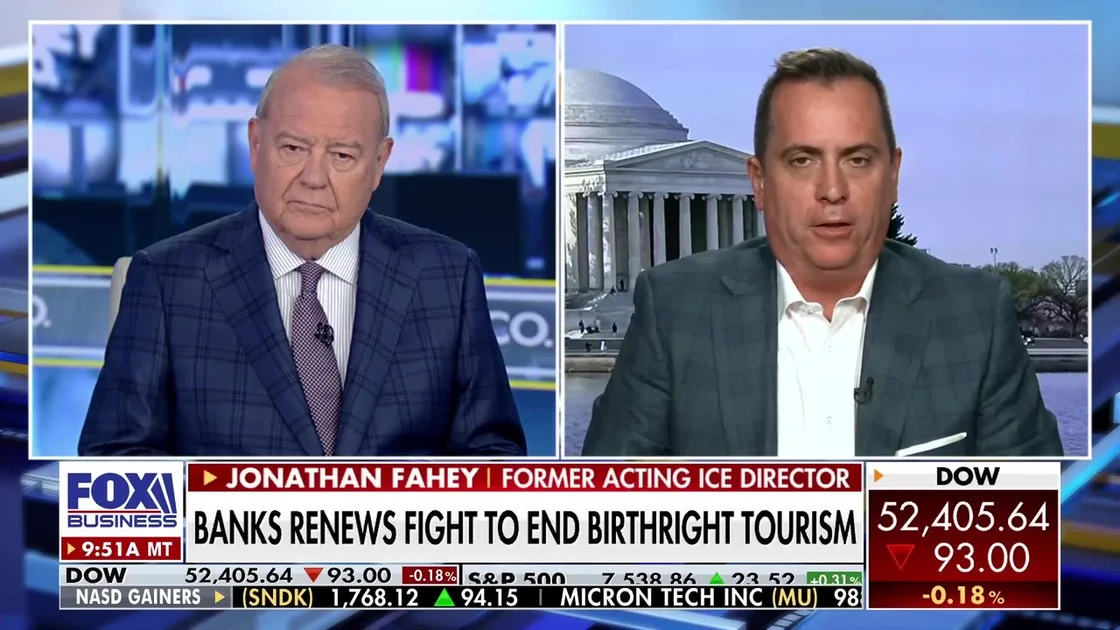
Senator Jim Banks (R-IN) is set to introduce the Citizenship Act on Monday afternoon, a legislative effort that seeks to end birthright citizenship for children of individuals he defines as "invaders" under federal law. The bill, announced on July 13, 2026, directly responds to the Supreme Court’s late-June ruling in Trump v. Barbara, which struck down President Donald Trump’s executive order on birthright citizenship. Banks’ proposal leans heavily on a concurring opinion from Justice Brett Kavanaugh, who suggested that Congress could create statutory exceptions to the 14th Amendment’s Citizenship Clause.
The legislation would amend the Immigration and Nationality Act to exclude children born to anyone who enters the United States without authorization or for the purpose of birth tourism. According to a summary obtained by Fox News Digital, the bill declares that "any person who enters the United States without authorization or for the purpose of engaging in birth tourism is considered an invader." This classification is borrowed from Trump’s earlier executive order, which described illegal immigration across the southern border as an "invasion."
Banks’ move comes just days after Trump urged Senate Republicans to accelerate action on his legislative agenda, telling them they were "not fighting hard enough" on the issue. In a June 30 interview with Human Events, Banks recalled Trump’s frustration and pledged to deliver a bill that would push the boundaries of the Court’s ruling.
The Supreme Court Roadmap: Kavanaugh’s Concurrence
A Closer Look at Trump v. Barbara
The Supreme Court’s 6-3 decision in Trump v. Barbara dealt a significant blow to the administration’s efforts to unilaterally end birthright citizenship. The majority opinion, joined by five justices, held that the 14th Amendment’s guarantee of citizenship to "all persons born or naturalized in the United States" applies to children of undocumented immigrants and temporary visa holders. Justice Brett Kavanaugh provided the sixth vote but wrote a separate concurrence that has since become the blueprint for Banks’ legislation.
Kavanaugh argued that while Trump’s executive order conflicted with existing federal statutes, Congress has the authority to amend those laws to create new exceptions. He cited the 1898 case United States v. Wong Kim Ark, which identified three categories of people not entitled to birthright citizenship: children of foreign diplomats, children born to enemy forces during hostile occupation, and children born to tribes owing direct allegiance to a foreign power. Kavanaugh suggested that Congress could expand these categories through statutory action.
Why ‘Invaders’?
Banks has seized on the third category—children of invasion forces—to craft his legislation. The bill argues that undocumented immigrants and birth tourists constitute an "invasion" as defined under federal law, thereby denying their U.S.-born children automatic citizenship. This approach directly mirrors language from Trump’s 2025 executive order, which declared the southern border crisis an invasion and directed federal agencies to treat illegal crossings as a breach of national sovereignty.
Legal experts remain divided on the viability of this strategy. Supporters argue that Kavanaugh’s concurrence provides a constitutional path forward, while critics contend that the "invader" label is a rhetorical device that does not align with legal definitions of invasion in immigration law. The bill’s summary acknowledges this tension, stating that it "cites the Barbara decision" and "leaves that avenue open for Congress."
Broader Context: The Battle Over Birthright Citizenship
Trump’s Executive Order and the DOJ Crackdown
President Trump’s executive order on birthright citizenship, signed in early 2025, was one of his most controversial policy moves. It directed federal agencies to deny citizenship to children born in the United States to undocumented immigrants or temporary visitors. The order was immediately challenged by civil rights groups and several states, leading to the Trump v. Barbara case.
Following the Supreme Court’s ruling, the Department of Justice launched a crackdown on birth tourism—a practice where individuals enter the U.S. or overstay visas specifically to give birth and secure citizenship for their children. The DOJ’s initiative targets visa fraud and illegal immigration schemes, but it does not address the broader birthright citizenship issue. Banks’ bill aims to fill that gap by providing a legislative fix.
Republican Strategy: From Executive Action to Legislation
The shift from executive action to legislation reflects a broader strategic recalibration among Republicans. After the Court rejected Trump’s unilateral approach, GOP lawmakers have turned to Congress as the only viable avenue for change. Banks has framed his bill as a necessary step to reclaim national sovereignty, arguing that birthright citizenship has become "intertwined with broader questions of national sovereignty and foreign influence."
In a social media post previewing his move, Banks also highlighted his support for the SAVE America Act, which would require proof of citizenship to vote in federal elections. This dual focus on citizenship and election integrity signals a concerted push to tighten immigration laws ahead of the 2026 midterm elections.
The Immigration Debate: A New Front Opens
Definition of ‘Invader’ Sparks Constitutional Questions
The Citizenship Act’s central innovation—defining unauthorized entrants as "invaders"—has already drawn sharp criticism from legal scholars and immigrant advocacy groups. The term "invasion" in U.S. law typically applies to armed hostilities by a foreign power, not to civilian migration. The bill’s supporters counter that the scale of illegal crossings, which peaked at over 2.5 million encounters in 2023, constitutes a non-military invasion that justifies extraordinary measures.
Kavanaugh’s concurrence did not explicitly endorse this interpretation, but his reference to the Wong Kim Ark exception for children of enemy forces has given Banks the legal cover he needs. The bill’s summary notes that the Supreme Court’s ruling "leaves that avenue open for Congress," implying that lawmakers have the discretion to define what constitutes an invasion for citizenship purposes.
Bipartisan Reactions and Political Fallout
Reaction to the bill has been predictably polarized. Conservative commentators have praised Banks for his innovative use of Kavanaugh’s roadmap, while Democrats have condemned the legislation as unconstitutional and divisive. House Democratic Leader Hakeem Jeffries called the bill "a transparent attempt to circumvent the 14th Amendment" and vowed to block it if it reaches the floor.
Moderate Republicans have also expressed caution. Some worry that labeling undocumented immigrants as invaders could inflame tensions and alienate Latino voters, a key demographic in swing states. Others question whether the bill can survive a legal challenge, given that the Supreme Court has repeatedly affirmed birthright citizenship during the past decade.
Implications for the Broader Immigration Landscape
A Test for Judicial Precedent
If passed, the Citizenship Act would almost certainly face an immediate legal challenge. The question of whether Congress can define a civilian population as an "invasion" for citizenship purposes is untested in federal courts. Proponents argue that Kavanaugh’s concurrence provides a clear constitutional path, but legal experts note that a majority of justices did not join that opinion. The eventual ruling could either narrow the scope of Wong Kim Ark or reaffirm the broad interpretation of the 14th Amendment.
Impact on Birth Tourism and Border Policy
The bill’s focus on birth tourism reflects a growing concern among lawmakers about the exploitation of U.S. citizenship laws. Federal data shows that tens of thousands of children are born each year to parents who entered the country specifically for delivery, often through visa overstays or fraudulent entry. The DOJ’s crackdown has already led to several high-profile prosecutions, but advocates say legislation is needed to close the loophole permanently.
Immigration hardliners see the bill as a template for broader reforms. If successful, it could embolden other Republicans to introduce similar measures targeting temporary visa holders and legal permanent residents who sponsor family members. The broader goal, articulated by Trump and echoed by Banks, is to end what they call "chain migration" and restore a merit-based system.
What This Changes: The Future of Citizenship in America
Beyond the Immediate Bill
The introduction of the Citizenship Act marks a significant escalation in the decades-long debate over birthright citizenship. It transforms what was once a fringe legal theory into a mainstream legislative proposal with high-level GOP support. Even if the bill fails to pass, its mere introduction shifts the Overton window, making future restrictions on birthright citizenship more palatable.
Banks’ strategy also signals a new era of judicial-legislative interplay. By explicitly citing a Supreme Court concurrence, he is testing the boundaries of how far Congress can go in responding to Court rulings without provoking a constitutional crisis. This approach could become a model for other contentious issues, from abortion to gun rights, where lawmakers seek to work around unpopular precedents.
A Polarizing Lens for the 2026 Elections
With the midterm elections just months away, the Citizenship Act is poised to become a rallying cry for both parties. For Republicans, it energizes the base and fulfills a key campaign promise. For Democrats, it provides a stark contrast on civil rights and immigration. The bill’s fate will likely depend on whether Senate Majority Leader John Thune brings it to the floor, a move that could force vulnerable incumbents to take a difficult vote.
The broader trend is unmistakable: birthright citizenship, once considered settled law, is now a live political issue. The Supreme Court’s ruling in Trump v. Barbara did not end the debate—it merely shifted it from the Oval Office to the halls of Congress. Banks’ bill is the first major test of that new reality.
Related coverage: This legislative push comes amid broader debates over immigration enforcement and national identity. For more on how Labour’s internal divisions over immigration policy are playing out in the UK, see our report on Burnham Backs Mahmood Immigration Bill Despite Labour Rebellion.
Comments