
Congress Tightens the Screws on Hegseth
Bipartisan Bill Targets Travel Funds
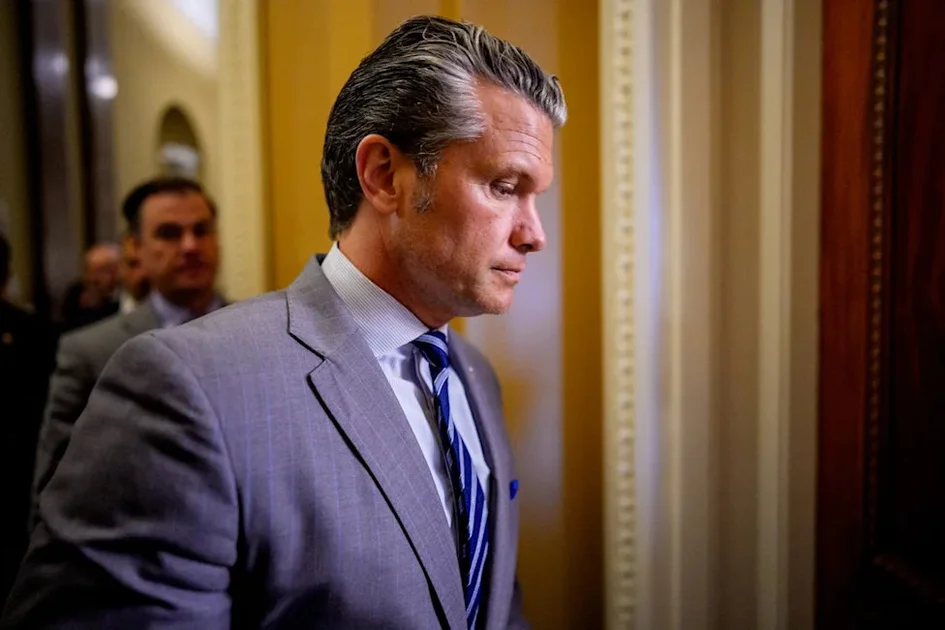
Defense Secretary Pete Hegseth is facing a humiliating rebuke from Capitol Hill as a Republican-led Senate committee moves to freeze the bulk of his travel budget. The Senate Armed Services Committee has filed a defense policy bill stipulating that no more than 25 percent of Hegseth’s travel funds can be used until the Pentagon hands over unredacted civilian harm investigations and video footage related to controversial military strikes in the Middle East and Latin America.
According to the bill, the committee—led by Republican Senator Roger Wicker—singled out the April 2025 strikes in Yemen that killed dozens and the February 2026 bombing of the Minab girls’ school in Iran, which killed at least 150 students and staff. Lawmakers also demanded unedited video of boat strikes conducted by U.S. Southern Command in the Caribbean, a campaign that has drawn sharp criticism for its lack of transparency. Democratic Senator Jack Reed praised the bill for forcing Hegseth to be “more accountable to Congress,” warning it would help “prevent many errors of the past from being repeated.”
Second Attempt in Less Than a Year
This is the second time lawmakers have used Hegseth’s travel budget as leverage. Late last year, Congress passed defense legislation cutting a quarter of his travel funds under similar demands. The new bill raises the stakes by withholding 75 percent until the Pentagon complies. The escalation signals that lawmakers—including several of Donald Trump’s MAGA allies—are growing impatient with the administration’s secrecy around national security decisions. Hegseth’s Pentagon declined to comment, but the move underscores a deepening rift between the executive branch and Republican senators who want more oversight over U.S. military operations.
Why the Secrecy Matters
From Iran to the Caribbean
The Pentagon’s refusal to share intelligence with Congress has fueled bipartisan frustration. In March, House Armed Services Committee Chairman Mike Rogers, a Republican, complained that the Trump administration wasn’t giving lawmakers enough information about its Middle East plans. “We want to know more about what’s going on, what the options are, and why they’re being considered,” he said. “And we’re just not getting enough answers.”
The Minab school strike is a particular flashpoint. Pentagon intel initially misidentified the school as an Iranian military base. The blast killed roughly 175 people, most of them children, according to Iranian officials. The DOD initially denied responsibility. Meanwhile, the Caribbean boat campaign—which began in September 2025 and has killed at least 205 people—has been criticized as a “massive waste of resources” after the administration admitted there was no intelligence linking the boats to fentanyl smuggling into the U.S. Instead, the vessels were carrying cocaine bound for Europe.
Hegseth’s NATO Gaffe
Hegseth’s credibility took another hit on June 17 when he arrived at a NATO defense ministerial in Brussels dressed in a red-and-blue vest, plaid flannel, athletic pants, Nike sneakers, and a trucker hat. Social media users mocked him for looking like a “frat boy” or a “hillbilly,” drawing comparisons to Pokémon trainer Ash Ketchum. The diplomatic misstep comes as Hegseth was expected to urge European allies to increase defense spending to 5 percent of GDP—a tough sell given the administration’s erratic approach to the alliance. President Trump recently blamed NATO for not doing enough to support the U.S. in the Iran war, even as he announced a peace deal with Tehran that critics say is nearly identical to prewar terms.
Broader Implications for Pentagon Accountability
A Trend of Congressional Pushback
The travel-budget freeze is part of a wider pattern of Congress reasserting its authority over the Defense Department. Lawmakers have grown weary of being kept in the dark on major operations, from troop deployments to drone strikes. The Wicker-Reed bill, if enacted, could set a precedent for tying funding to transparency. It also comes amid broader scrutiny of the Pentagon’s use of AI tools, including Elon Musk’s Grok chatbot, which the DOD revealed was used to fire 2,000 missiles at Iran—a revelation that has sparked legal battles and ethical concerns.
What’s Next for Hegseth?
Hegseth’s relationship with Congress is likely to remain strained as the Iran peace deal undergoes bipartisan criticism. The deal loosened U.S. sanctions on Iran and mirrors terms the U.S. rejected before the war, raising questions about whether the conflict was necessary. For now, Hegseth faces a choice: comply with the committee’s demands or risk grounding himself. With the travel budget effectively handcuffed, he may find it hard to manage crises abroad—which is precisely the leverage lawmakers are counting on.
As the debate escalates, the outcome will test whether the Trump administration can maintain control over military operations without congressional oversight. For senators on both sides of the aisle, the stakes are clear: trust must be rebuilt, or the Pentagon’s purse will remain clipped.
For more on the growing fiscal tensions in Washington, read about the Trump and Hegseth's $1.5T Defense Budget Faces GOP Rebellion on Capitol Hill.
Comments